
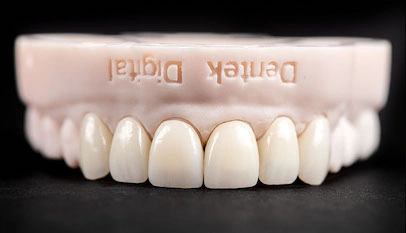
Full arch implant cases are among the most demanding restorations in modern dentistry. Even small errors in the implant impression process can lead to significant fit problems down the line. That is why implant verification jigs have become such a critical step in delivering successful full arch outcomes.
At Dentek Digital, we work with dentists and dental practices across the Greater Phoenix area every day. We see firsthand how verification jigs protect both the patient and the provider. They confirm that the implant positions captured in the impression are accurate before any final restoration is fabricated.
If you are treating full arch implant patients in Phoenix, Scottsdale, Chandler, or anywhere in the Valley, understanding this step can save you time, money, and chair time. Let us walk you through why verification jigs matter and how they fit into a precise digital workflow.
What Is a Verification Jig?
A verification jig is a rigid framework used to confirm the accuracy of an implant-level impression. It connects multiple implant analogs or scan bodies together. The goal is to verify that the spatial relationships between implants are recorded correctly.
Without this confirmation, even a well-executed impression can contain distortion. Impression materials shift. Trays flex. These subtle changes affect the fit of the final restoration. Therefore, the verification jig acts as a quality-control checkpoint.
How a Verification Jig Works
The jig is typically fabricated from the initial impression. It is then seated intraorally and checked for passive fit. If it seats perfectly without rocking or gaps, the impression is considered accurate. If it does not seat passively, the impression must be retaken or corrected.
This process sounds simple, but it is incredibly valuable. It catches errors before they become costly lab remakes. Additionally, it gives the clinician confidence before moving forward with the final prosthetic design.
Why Verification Jigs Are Essential for Full Arch Cases
Full arch restorations involve multiple implants placed across a wide span. Because of this, even minor inaccuracies multiply across the arch. A small deviation at one implant can create significant stress at another. Over time, that stress can cause prosthetic failure or bone loss.
Single-implant cases are more forgiving. Full arch cases are not. The stakes are higher, the spans are longer, and the margin for error is much smaller. Moreover, the investment — in time, cost, and surgical effort — makes accuracy non-negotiable.
The Risk of Skipping This Step
Some clinicians skip the verification jig to save a step. However, this shortcut often leads to longer problems. A restoration that does not fit passively will stress the implants. It may cause screw loosening, fractures, or patient discomfort.
In full arch cases using CAD/CAM dentistry, the digital design is only as good as the data it is built from. If the impression data is inaccurate, the most advanced milling technology in the world cannot correct it. Therefore, verification is not optional — it is foundational.
What Can Go Wrong Without Verification
Here are some common issues that arise when verification is skipped:
- Prosthetic rocking: The restoration does not seat evenly across all implants.
- Screw loosening: Uneven forces cause screws to back out over time.
- Bone stress: Poorly fitting restorations transfer harmful loads to the bone.
- Patient discomfort: Ill-fitting restorations cause soreness and pressure.
- Costly remakes: Discovering fit problems after delivery means starting over.
Each of these outcomes affects patient trust and practice reputation. Furthermore, they add unexpected time and cost to a case that should have been straightforward.
Verification Jigs in a Digital Workflow
Digital dentistry has transformed how labs and clinicians work together. At Dentek Digital, we operate entirely within a CAD/CAM workflow. This means we design and fabricate restorations using precise digital data rather than physical plaster models alone.
However, the digital workflow still depends on accurate physical records at the implant level. Intraoral scanners have improved dramatically, but scanning full arch implant cases remains challenging. Soft tissue movement, saliva, and scanner angle all affect scan accuracy. Because of this, many experienced clinicians still rely on physical impressions combined with verification jigs for full arch implant work.
Digital Scanning vs. Physical Impression With Verification
Both approaches have their place. Digital scans are fast and eliminate impression material distortion. On the other hand, full arch implant scans require exceptional technique and the right equipment to achieve the needed accuracy.
Physical impressions with verification jigs offer a time-tested method for confirming accuracy. Many clinicians in the Tempe and Mesa markets prefer this combined approach for complex full arch cases. The jig acts as the final check before data goes to the lab.
At Dentek Digital, we work with both workflows. Our team communicates directly with clinicians to confirm which approach is best suited for each case. Contact our team to discuss your full arch workflow and find the right solution for your patients.
How to Use a Verification Jig Correctly
Getting the most out of a verification jig requires the right technique. Here is a general overview of the process that experienced clinicians follow:
- Take the initial impression: Use an open-tray technique with implant-level impression copings for best accuracy in full arch cases.
- Pour the model: Send the impression to the lab so the verification jig can be fabricated.
- Seat the jig intraorally: The jig connects to all implants simultaneously and should seat without any movement.
- Check for passive fit: Use the single-screw test. Tighten one screw and check whether the jig lifts away from any other implant.
- Correct if needed: If the jig does not fit passively, section it, reconnect it intraorally, and have the lab re-pour the model with the corrected positions.
- Confirm and proceed: Once passive fit is confirmed, the lab can proceed with the final design.
This process may seem like extra work. In reality, it saves significant time by catching problems early. Additionally, it protects the patient by ensuring the final restoration will function correctly from day one.
The Single-Screw Test: A Simple but Powerful Check
The single-screw test is a standard clinical technique for evaluating passive fit. You tighten the screw at one implant only. Then you visually and tactilely check all other connection points. If the jig lifts, rocks, or shows any gap, the fit is not passive.
This quick check gives clinicians immediate feedback. Therefore, it is widely used by experienced implant practitioners as a reliable first-pass verification method.
Why Partner With a Lab That Understands Verification
Not all dental labs are equally experienced with full arch implant workflows. At Dentek Digital, we have been a leader in digital implant restorations for years. We understand that accurate verification is not just a technical step — it is a partnership between the clinician and the lab.
We serve dental practices throughout the Greater Phoenix area, including Gilbert, Scottsdale, Mesa, and Chandler. Our team communicates proactively with clinicians at every stage of a full arch case. We flag potential fit concerns early and work collaboratively to resolve them before final fabrication.
Furthermore, our CAD/CAM technology allows us to design and mill restorations with exceptional precision. But we always emphasize that technology is only as good as the foundational data. Verification jigs are part of how we protect that data.
Our Full Arch Implant Capabilities
Dentek Digital fabricates a full range of implant-supported restorations. Our full arch solutions include milled bars, screw-retained bridges, and implant-supported overdentures. Each restoration begins with accurate data — and verification jigs are a key part of that accuracy.
We also offer digital implant planning services to help clinicians design surgical and prosthetic workflows before the first incision. This comprehensive approach supports better outcomes for patients across the Valley.
Explore your options by reaching out to our team today. We are ready to support your next full arch case from start to finish.
Frequently Asked Questions About Implant Verification Jigs
What materials are verification jigs typically made from?
Verification jigs are most commonly made from rigid acrylic resin or light-cured composite. The key requirement is dimensional stability. The material must not flex or warp under intraoral conditions.
Can I use a digital scan instead of a verification jig?
In some cases, yes. However, full arch implant scans require precise technique and validated equipment. Many clinicians still prefer physical verification for complex full arch cases. Talk with your lab to determine the best approach for your specific situation.
How do I know if my verification jig fits passively?
Use the single-screw test. Tighten one screw and check all other connection points for lifting or rocking. All connections should sit flush with no movement. If any gap exists, the fit is not considered passive.
What happens if the jig does not fit passively?
Section the jig between implants and reconnect the pieces intraorally using autopolymerizing resin. This corrects the spatial relationship. Send the re-indexed jig back to your lab so the model can be corrected before fabrication continues.
Do all full arch cases require a verification jig?
Most experienced clinicians recommend verification for any full arch implant case involving multiple implants. The longer the span and the more implants involved, the more important verification becomes. It is considered a best-practice step for full arch fixed restorations.
Work With a Lab That Gets Full Arch Right
Full arch implant restorations are some of the most rewarding cases in dentistry. They also demand the highest level of accuracy at every step. Implant verification jigs are one of the most reliable tools available to ensure that accuracy from the very beginning.
At Dentek Digital, we combine advanced CAD/CAM technology with deep clinical knowledge to support your most complex cases. We work closely with dentists and practices throughout Phoenix, Gilbert, Scottsdale, and the broader Valley to deliver restorations that fit, function, and last.
Ready to start your next full arch case? Contact our team at Dentek Digital today. We are here to help you deliver exceptional outcomes for your patients — one precise restoration at a time.