Full arch restorations are among the most complex cases a dental practice can take on. The margin for error is narrow, and the stakes for patients are high. Understanding the most common full arch challenges before you start can make a significant difference in case outcomes.
For dental practices across the Greater Phoenix area — from Scottsdale to Chandler — having a reliable digital lab partner is essential. Dentek Digital has supported dentists through hundreds of full arch cases using advanced CAD/CAM workflows.
In this post, we break down the most common obstacles in full arch cases and how a digital approach helps address them efficiently.
Why Full Arch Cases Are Uniquely Demanding
Full arch restorations involve replacing or restoring an entire arch of teeth. That means every decision — from implant placement to occlusal design — carries weight. Furthermore, small errors compound quickly across a full arch.
Unlike single-unit restorations, full arch cases require precise coordination. The lab, the clinician, and the patient all need to be aligned from the start. Additionally, the timeline is often longer, which increases the risk of communication gaps.
The Digital Difference
Traditional workflows rely heavily on physical impressions and analog fabrication. These methods introduce variables at every step. In contrast, a digital workflow using CAD/CAM dentistry reduces those variables significantly.
Digital scans capture precise data that travels directly to the lab. As a result, fit accuracy improves and remakes decrease. Practices in Mesa and Gilbert have experienced firsthand how digital workflows streamline complex full arch cases.
Challenge #1: Inaccurate or Incomplete Records
One of the most frequent full arch challenges is receiving incomplete case records. Missing bite registrations, poor scan quality, or absent photos can delay fabrication. Moreover, they can lead to restorations that simply don’t fit the patient’s anatomy.
Every full arch case needs a complete record set. This includes a full-arch intraoral scan, a jaw relationship record, and quality photos. Without these, even the best lab technician is working with incomplete information.
What to Send for a Strong Start
- High-quality intraoral scans of both arches and the bite
- Photographs showing the smile, profile, and occlusion
- A clear prescription with material preferences and shade
- A bite registration or verified centric relation record
- Any relevant CBCT data for implant-supported cases
Submitting complete records upfront avoids back-and-forth delays. Therefore, both the dentist and the patient benefit from a faster, smoother process.
Challenge #2: Occlusal Complexity
Occlusion is one of the most nuanced aspects of any full arch case. However, it becomes especially critical when you’re restoring an entire arch or both arches simultaneously. Getting the vertical dimension and bite plane right is essential.
Many clinicians in the Tempe and Phoenix areas work with patients who have significant wear or collapsed vertical dimension. These cases require careful planning before any restoration is fabricated. Rushing this step often leads to costly remakes.
Planning Vertical Dimension Carefully
Vertical dimension of occlusion (VDO) defines how open or closed the bite is at rest. Opening or closing VDO impacts not only aesthetics but also patient comfort. Furthermore, changes to VDO must be stable before a final restoration is made.
Dentek Digital recommends using a provisional restoration phase whenever VDO is being altered. This allows the patient to adapt and the clinician to verify the result. Then the final restoration can be fabricated with confidence.
Challenge #3: Implant Position and Angulation
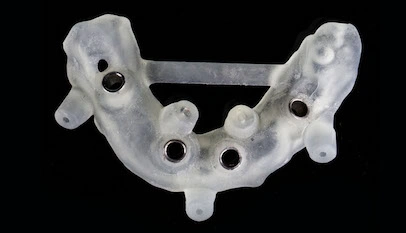
Implant-supported full arch cases introduce another layer of complexity. Specifically, the position and angulation of implants directly affect how the prosthesis is designed. Poorly placed implants can limit restoration options significantly.
Digital implant planning tools help clinicians visualize placement before surgery. At Dentek Digital, we offer digital implant planning as part of our advanced services. This proactive approach reduces surprises at the restorative stage.
When Implant Angulation Creates Problems
Angled implants are sometimes necessary due to bone anatomy. However, they require custom-angled abutments or specific prosthetic designs to compensate. As a result, the lab needs clear documentation of the implant positions.
Scan bodies and implant-level scans are critical in these cases. Without them, the lab cannot accurately design the prosthesis. Always confirm which implant system you’re using so the correct components are sourced.
Challenge #4: Tissue and Lip Support
Full arch restorations must support the patient’s soft tissue and facial profile. This is especially important for patients who have experienced bone loss. Moreover, a restoration that doesn’t provide adequate lip support can look unnatural.
This challenge is common in full arch implant cases where the patient has worn a denture for years. The soft tissue and bone have often resorbed significantly. Because of this, the prosthesis must compensate for the lost volume.
Balancing Aesthetics and Function
The lab team must have clear photos showing the patient’s facial profile and smile line. These guide decisions about flange design, tooth position, and overall aesthetic outcome. Additionally, a wax-up or digital mock-up helps the clinician confirm the plan before fabrication.
Practices in Chandler and Scottsdale frequently send us detailed photo sets for this reason. The more context we have, the better the aesthetic result we can deliver. Great communication between the clinician and the lab is the foundation of every successful case.
Challenge #5: Managing Patient Expectations
Full arch cases involve significant investment — financially and emotionally — for patients. Therefore, misaligned expectations are a real risk. Patients may expect a specific aesthetic outcome that isn’t achievable given their anatomy.
Clear communication before treatment begins is essential. Show patients digital smile designs or provisional outcomes early in the process. This creates alignment and reduces disappointment at delivery.
The Role of Provisionals in Expectation Management
Provisionals serve a dual purpose. First, they allow the patient to evaluate the look and feel before the final restoration. Second, they give the clinician important functional feedback.
At Dentek Digital, we can fabricate high-quality provisionals as part of the full arch workflow. These help bridge the gap between treatment planning and final delivery. As a result, patients feel more confident and invested in the process.
If you’re working through a complex case right now, contact Dentek Digital to discuss your options with our experienced lab team.
Challenge #6: Communication Gaps Between Clinician and Lab
Even with great records, full arch cases can stall due to poor communication. Unclear prescriptions, delayed responses, or vague material requests slow down fabrication. Furthermore, they increase the risk of a mismatch between what the clinician envisioned and what the lab delivers.
The best outcomes happen when the clinician and the lab work as true partners. At Dentek Digital, we encourage open dialogue throughout every case. We’re here to answer questions before, during, and after fabrication.
Tips for Better Lab Communication
- Be specific on your prescription — include shade, material, and design preferences
- Send photos with every case — they provide context no scan can fully capture
- Flag complex cases early — give the lab time to plan appropriately
- Request a case review before committing to a design if you’re unsure
A strong lab relationship is one of the most valuable assets a dental practice can have. Moreover, it directly impacts the quality of care your patients receive.
Frequently Asked Questions: Full Arch Case Challenges
What are the most common reasons full arch cases need to be remade?
The most common reasons include inaccurate bite registrations, incomplete records, and poor scan quality. Additionally, unclear communication about design expectations can lead to remakes. Investing time in complete records upfront reduces this risk significantly.
How does a digital workflow reduce full arch challenges?
Digital workflows improve accuracy at every stage — from scanning to design to milling. They reduce human error and allow for virtual verification before fabrication begins. As a result, fit accuracy improves and chair time at delivery decreases.
Do I need CBCT data for every full arch implant case?
Not always, but CBCT data is strongly recommended for implant-supported cases. It provides critical information about bone volume, sinus position, and nerve location. Furthermore, it supports better implant planning and reduces surgical surprises.
How do provisionals help in full arch cases?
Provisionals allow the clinician to verify occlusion, aesthetics, and patient comfort before committing to the final restoration. They are especially important when altering vertical dimension. Additionally, they help patients visualize and adapt to their new smile.
What should I include when submitting a full arch case to Dentek Digital?
Send full-arch intraoral scans, a bite registration, quality photos, and a detailed prescription. For implant cases, include implant-level scans, scan body positions, and CBCT data if available. The more information you provide, the better we can serve you and your patient.
Partner With Dentek Digital for Your Full Arch Cases
Full arch cases are rewarding — but they require the right support. From planning to final delivery, having an experienced digital lab behind you makes every stage smoother. Dentek Digital has helped practices throughout Phoenix, Mesa, Tempe, Chandler, Scottsdale, and Gilbert navigate even the most complex cases.
We combine leading CAD/CAM technology with skilled craftsmanship to deliver restorations that meet your standards and your patients’ expectations. Our team is ready to be a true partner in your full arch workflow.
Ready to take the next step? Explore your options and reach out to the Dentek Digital team today. We’re here to help you deliver exceptional full arch outcomes — one case at a time.