
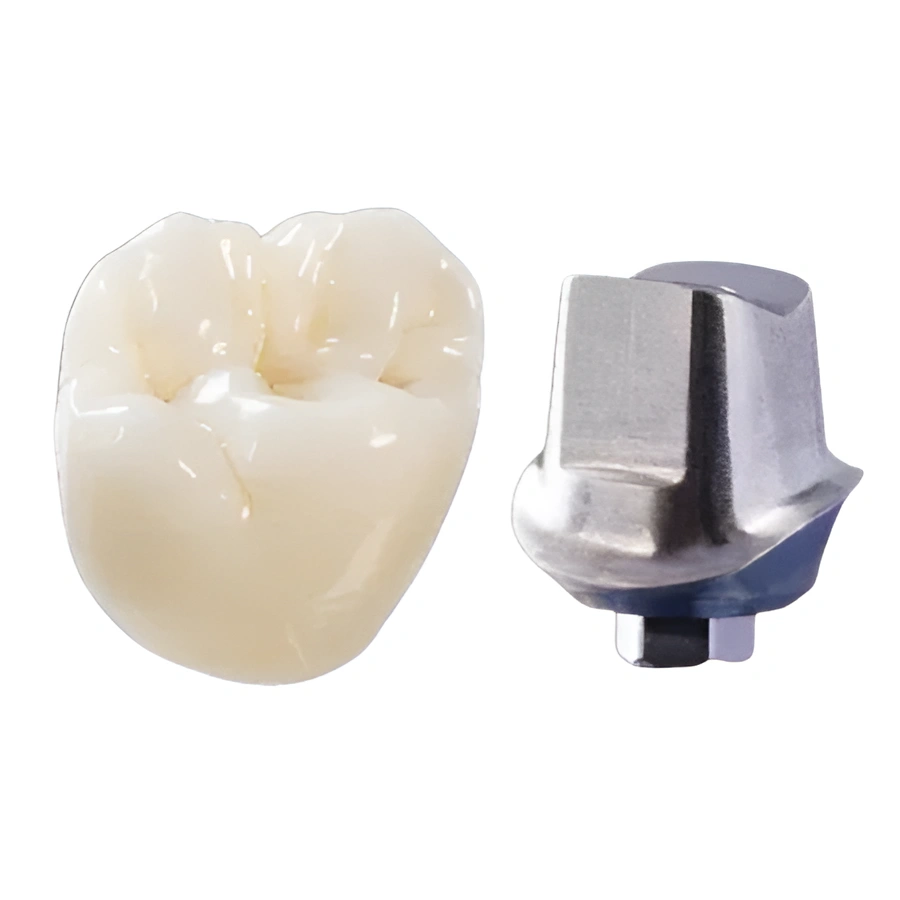
Every successful fixed restoration starts with one non-negotiable requirement: passive fit. Without it, even the most aesthetically beautiful crown or bridge can fail over time. Dentists across the Greater Phoenix area understand that fit is not just a technical detail — it is the foundation of a long-lasting restoration.
So what exactly does passive fit mean? Simply put, it means the restoration seats fully on the prepared tooth or implant without requiring force. There is no stress on the underlying structure when the prosthetic is in place. That absence of stress is what makes passive fit so critical.
At Dentek Digital, we have built our entire workflow around achieving this level of precision on every case. Our digital CAD/CAM process gives us tools that traditional analog labs simply could not match. In this post, we will explain why passive fit matters, how digital dentistry improves it, and what Phoenix-area dentists should expect from their lab partner.
What Is Passive Fit in Fixed Prosthetics?
A fixed prosthetic — such as a crown, bridge, or implant-supported restoration — must seat precisely on the prepared surface. Passive fit means the restoration rests in its correct position without generating internal stress on the tooth, abutment, or surrounding bone.
When fit is not passive, the restoration creates constant tension. That tension does not go away. Instead, it transfers to the cement layer, the tooth structure, or the implant components. Over time, that stress causes problems.
What Happens When Fit Is Not Passive?
Poor fit leads to a range of clinical complications. These issues often develop gradually, making them harder to trace back to the original cause. Here are some of the most common consequences:
- Cement failure or microleakage — gaps allow bacteria to penetrate beneath the restoration
- Screw loosening or fracture — especially problematic in implant-supported cases
- Bone loss around implants — chronic stress can trigger resorption over time
- Porcelain chipping or fracture — uneven seating concentrates occlusal forces in one area
- Patient discomfort — bite irregularities and sensitivity are early warning signs
These outcomes are frustrating for both dentists and patients. Furthermore, they are largely preventable when precision is built into the fabrication process from the start.
Why Digital CAD/CAM Technology Improves Passive Fit
CAD/CAM dentistry has transformed how dental labs design and mill restorations. Traditional methods relied on physical impressions, hand-poured stone models, and analog waxing techniques. Each step introduced small but compounding variables. Digital workflows eliminate many of those variables entirely.
At Dentek Digital, we were among the earliest adopters of digital CAD/CAM workflows in the country. That early investment gave us a depth of experience that directly benefits our dental partners across Phoenix, Scottsdale, Mesa, and Chandler.
Digital Impressions Reduce Distortion
Intraoral scans capture the prepared tooth geometry with remarkable accuracy. Because of this, there is no risk of tray distortion, pour errors, or stone expansion that can alter a physical impression. The digital model we receive reflects the actual clinical situation more faithfully.
Additionally, digital files can be reviewed and refined before any milling begins. Our technicians inspect the scan, evaluate margins, and flag any concerns before fabrication starts. This proactive review is a key advantage of the digital process.
CAD Software Designs for Precision Seating
Our CAD software allows technicians to design restorations with exact internal fit parameters. We control spacer values, margin adaptation, and occlusal contacts at a level of precision that handcrafting simply cannot replicate consistently. As a result, each restoration is engineered to seat passively from the very first try-in.
Moreover, the software flags potential fit issues during the design phase. Therefore, problems are caught and corrected before the restoration is ever milled. This saves time for the dentist and delivers a better outcome for the patient.
Milling Accuracy Translates Design to Reality
Even the best digital design means nothing if the milling process introduces inaccuracies. High-quality milling machines operate within very tight tolerances. Our equipment is maintained and calibrated regularly to ensure that what is designed in the software is what is delivered to the dental practice.
For zirconia restorations in particular, proper sintering after milling is also essential. Zirconia shrinks predictably during sintering, and our lab accounts for that shrinkage in the design phase. This careful planning is what produces a passive, well-adapted final restoration.
Passive Fit and Implant Restorations: A Higher Standard
When we talk about fixed prosthetics, implant-supported restorations deserve special attention. The margin for error is smaller with implants than with tooth-supported crowns. Teeth have a periodontal ligament that provides slight natural flexibility. Implants do not. Therefore, any misfit in an implant restoration is transferred directly to the implant body and surrounding bone.
Dentists in Gilbert, Tempe, and across the Phoenix metro area frequently partner with us on implant cases precisely because of our precision workflow. We understand that implant restorations require an even higher standard of fit than conventional crowns and bridges.
The Role of Verified Fit in Implant Cases
For multi-unit implant cases, verified fit becomes especially important. We recommend using verification jigs or scan bodies to confirm passivity before final restoration fabrication. Additionally, our team reviews every implant case carefully to ensure that abutment selection, emergence profile, and occlusal design all support a passive outcome.
If you are planning complex implant cases, contact Dentek Digital early in the treatment process. Involving the lab at the planning stage leads to better results and fewer adjustments at delivery.
How Dentists Can Support Passive Fit From the Chair
Achieving passive fit is a team effort. The lab does its part through precise design and fabrication. However, the quality of the information we receive also determines how well we can do our job. Here are practical steps dentists can take to support the best possible fit:
- Use high-quality intraoral scanners — outdated or poorly calibrated scanners produce inaccurate data
- Capture clean, dry margins — tissue management and moisture control are critical before scanning
- Provide full arch scans — partial scans reduce the lab’s ability to plan occlusion accurately
- Include accurate bite registration — even a slightly off bite registration creates adjustment challenges
- Communicate case details clearly — share clinical photos, implant system details, and any patient-specific notes
When the data we receive is accurate and complete, we can fabricate restorations that seat passively and deliver confidently. Strong communication between the dental practice and the lab is one of the most underrated factors in restoration quality.
Zirconia Restorations and the Passive Fit Advantage
Zirconia has become one of the most popular materials for fixed prosthetics — and for good reason. It offers excellent strength, biocompatibility, and aesthetics. However, zirconia restorations must be designed and milled with precision to achieve passive fit. The material itself does not compensate for design errors the way some softer materials might.
At Dentek Digital, zirconia is one of our core specialties. We design every zirconia crown and bridge with careful attention to internal fit, margin adaptation, and occlusal anatomy. Furthermore, our sintering process is tightly controlled to ensure dimensional accuracy after the material contracts.
Practices throughout the Phoenix metro — from Scottsdale to Chandler — trust our zirconia workflow to deliver restorations that seat right, look natural, and last. We would love to show you the difference precision makes on your next zirconia case.
Frequently Asked Questions About Passive Fit
How do I know if a restoration has passive fit?
A restoration with passive fit seats fully without requiring hand pressure or force to reach its final position. Additionally, there should be no rocking, no gaps at the margin, and no patient discomfort when the restoration is placed. Many clinicians also use a bite stick or light tapping to confirm full seating before cementing.
Can a poorly fitting restoration be adjusted at delivery?
Minor occlusal adjustments are normal. However, significant internal misfit cannot be corrected chairside. If a restoration does not seat passively, it should be returned to the lab for evaluation and correction before cementing. Cementing a poorly fitting restoration rarely ends well.
Is passive fit more important for implants than for natural teeth?
Yes. Natural teeth have a periodontal ligament that absorbs some stress. Implants are rigidly anchored in bone. Therefore, any misfit in an implant restoration places direct stress on the implant and bone. This makes passive fit especially critical in implant-supported cases.
How does a digital lab achieve better passive fit than a traditional lab?
Digital labs use precise scan data, CAD software with exact fit parameters, and calibrated milling machines. Each of these tools reduces the variables that lead to fit inaccuracies. Traditional analog methods involve more manual steps, and each step can introduce small errors that compound over the fabrication process.
Does material choice affect passive fit?
Material choice affects how fit must be engineered. Zirconia, for example, requires precise compensation for sintering shrinkage. On the other hand, milled PMMA or composite materials have different properties. A skilled digital lab understands these differences and adjusts the design parameters accordingly for each material.
Partner With a Lab That Prioritizes Precision
Passive fit is not a bonus feature — it is the baseline standard that every fixed restoration should meet. When fit is right, restorations last longer, patients are more comfortable, and dentists spend less time on adjustments. It is the kind of quality that builds trust between a practice and its patients.
At Dentek Digital, precision is built into every step of our digital workflow. From the moment we receive your scan to the moment the restoration ships, we are focused on delivering work that performs. Our team serves dental practices across Phoenix, Mesa, Scottsdale, Gilbert, Tempe, Chandler, and communities throughout the Greater Phoenix area.
Ready to experience the difference that a precision-focused digital lab makes? Contact Dentek Digital to send us your next case or to explore how our digital workflow can support your practice and your patients.