
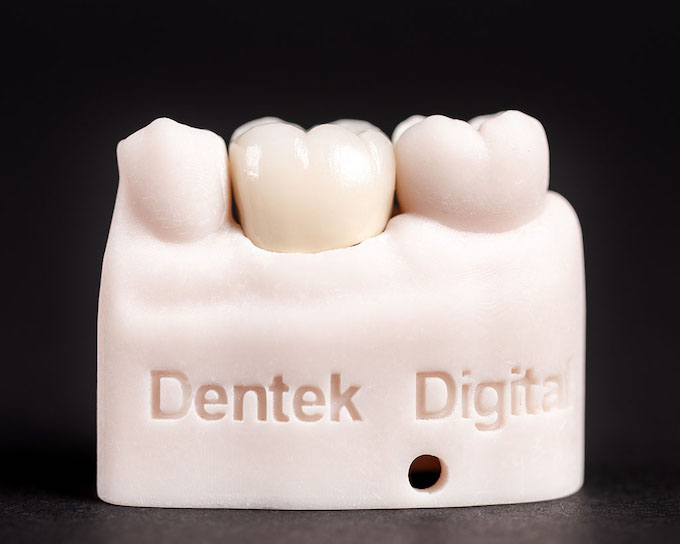
Accuracy matters more than ever in modern dentistry. Dental practices across Phoenix, Scottsdale, Mesa, and Chandler expect restorations that fit precisely — the first time. Digital quality control makes that level of precision consistently achievable in today’s dental labs.
Traditional quality checks relied heavily on manual inspection. However, digital workflows bring measurable, repeatable verification to every step of fabrication. As a result, both dentists and patients benefit from restorations that meet tighter tolerances than ever before.
At Dentek Digital, quality is built into every stage of the process. We combine advanced CAD/CAM technology with skilled craftsmanship to deliver reliable results for dental practices throughout the Greater Phoenix area. In this post, we break down how digital quality control works and why it matters for your practice.
What Is Digital Quality Control in a Dental Lab?
Digital quality control refers to the use of technology to verify accuracy at every stage of dental restoration fabrication. It replaces guesswork with measurable data. Furthermore, it creates a consistent, documented process that manual methods simply cannot match.
In a modern digital lab, quality control is not a single step at the end. Instead, it runs continuously throughout the workflow — from the initial digital scan all the way to the finished restoration.
Key Stages Where Digital Quality Control Applies
- Digital impressions and scan verification: Incoming scans are reviewed for completeness and accuracy before design begins.
- CAD design review: Each restoration is evaluated digitally for proper contacts, margins, and occlusion before milling or printing.
- Milling and printing precision: Machines are calibrated regularly to ensure output matches the approved design.
- Post-fabrication inspection: Finished restorations are checked against the original digital design using scanning and measurement tools.
- Shade and aesthetics review: Visual and digital checks confirm the restoration meets the prescribed shade and contour.
Each of these stages adds a layer of confidence. Together, they create a reliable system that reduces remakes and improves fit.
Why Digital Quality Control Matters for Dentists
Every dental practice wants to deliver excellent care. However, the quality of a restoration depends largely on what happens at the lab. Because of this, the lab’s quality control process directly impacts the patient experience in your chair.
Poor-fitting restorations cause delays, remakes, and patient frustration. On the other hand, a restoration fabricated under strict digital quality standards seats predictably and comfortably. This saves chair time and builds patient trust in your practice.
Fewer Remakes, Better Outcomes
Remakes are costly — in time, materials, and patient confidence. Digital quality control significantly reduces the remake rate. Additionally, when every case is verified at multiple checkpoints, problems are caught early rather than after delivery.
For practices in Gilbert, Tempe, or anywhere across the Phoenix metro, fewer remakes mean more efficient scheduling. Moreover, it means patients get their restorations faster and with greater predictability.
Consistent Results Across Every Case Type
Digital workflows excel at consistency. Whether a lab is fabricating a single crown, a multi-unit bridge, or a full-arch implant restoration, the same verification steps apply. Therefore, dentists can expect the same high standard regardless of case complexity.
At Dentek Digital, we apply rigorous digital quality control to every category of restoration we produce — from fixed restorations and removables to splints, nightguards, and implant components. Consistency is not accidental. It is built into our process.
How CAD/CAM Technology Powers Quality Control
CAD/CAM dentistry has transformed how dental restorations are designed and fabricated. The digital design environment allows technicians to evaluate a restoration in three dimensions before a single block of material is touched. This proactive approach is one of the most powerful quality control advantages in modern dental labs.
Milling machines and 3D printers operate within tight tolerances. Furthermore, they produce results that are repeatable from one case to the next. When a design is approved digitally, the machine executes it with a level of precision that hand-crafted methods cannot easily replicate.
Scan-to-Finish Traceability
One of the most valuable features of a digital workflow is traceability. Every file, design decision, and fabrication step is recorded digitally. Therefore, if a question arises about a case, the lab can review the entire process from the original scan to the finished product.
This traceability supports better communication between the lab and the dental practice. Additionally, it creates accountability at every stage. Dentists in Phoenix and surrounding communities can feel confident knowing there is a clear digital record behind every restoration they receive.
Real-Time Adjustments During Design
Digital design software allows technicians to make precise adjustments in real time. For example, a technician can modify a contact point, refine a margin, or adjust occlusal clearance with a few precise movements. Because of this, issues are resolved before fabrication begins rather than after.
This real-time capability speeds up the quality review process. Moreover, it ensures that the final design accurately reflects the clinical prescription provided by the dentist.
Digital Quality Control and Dental Implants
Implant restorations demand exceptional precision. A poorly fitting implant component can lead to clinical complications. Therefore, digital quality control is especially critical in implant cases.
At Dentek Digital, we combine digital implant planning with precise fabrication to deliver implant restorations that fit accurately at the abutment interface. Our team verifies every implant component against the original design before it leaves the lab. Additionally, our advanced services support practices across Scottsdale, Chandler, Mesa, and the broader Phoenix metro that are incorporating implant dentistry into their offerings.
If your practice is exploring implant restorations, contact Dentek Digital to discuss your case and learn how our digital workflow supports predictable implant outcomes.
The Role of Skilled Technicians in a Digital Lab
Technology alone does not guarantee quality. Skilled technicians are still essential. In fact, the best digital labs combine advanced tools with experienced craftsmanship to achieve results that neither could produce alone.
At Dentek Digital, our technicians are trained to work seamlessly within the digital workflow. They understand both the technology and the clinical requirements behind each case. Furthermore, they apply their expertise at every quality checkpoint — not just at the end of the process.
Training and Calibration Are Ongoing
Digital equipment requires regular calibration and maintenance. Additionally, technicians need ongoing training to stay current with evolving software and materials. A commitment to continuous improvement is what separates a good lab from a great one.
As one of the earliest adopters of the digital CAD/CAM workflow in the country, Dentek Digital has built deep expertise over years of practice. We apply that experience every day to serve dental practices across Greater Phoenix.
Practical Tips for Dentists: Getting the Most from Your Digital Lab
Quality control is a two-way process. Dental practices can take steps to support better outcomes from their lab partner. Here are some practical guidelines to keep in mind.
- Send complete, accurate scans: High-quality digital impressions are the foundation of a precise restoration. Review your scans before submitting.
- Provide clear prescriptions: Detailed shade, occlusion, and margin information helps technicians design to your specifications.
- Communicate clinical context: Share relevant patient history or occlusal concerns that might affect the design.
- Give timely feedback on remakes: When a remake is needed, detailed feedback helps the lab identify and correct the root cause.
- Partner with a lab that values communication: An open line of communication between your practice and your lab is itself a quality control measure.
These habits create a stronger partnership and support better restorations for your patients. Meanwhile, they reduce delays and unnecessary back-and-forth between your office and the lab.
Frequently Asked Questions About Digital Quality Control in Dental Labs
What does digital quality control mean in a dental lab setting?
It refers to using digital tools and verification steps throughout the fabrication process. Each stage — from scan review to final inspection — is checked against measurable standards. This reduces errors and improves consistency across all case types.
How does digital quality control reduce remakes?
Problems are identified early in the digital design phase rather than after fabrication. Because of this, errors are corrected before materials are used. The result is fewer finished restorations that fail to meet clinical requirements.
Does digital quality control apply to all restoration types?
Yes. Digital quality control applies to fixed restorations, removables, implant components, splints, and nightguards. The specific checkpoints vary by case type, but the commitment to verification is consistent across all categories.
How does traceability benefit dental practices?
Traceability means the lab can review every step of a case if a question arises. Additionally, it supports clearer communication between the lab and the dental practice. Dentists can ask about specific design decisions and receive informed, documented answers.
What should I look for in a dental lab’s quality control process?
Look for a lab that verifies quality at multiple stages — not just at the end. Furthermore, choose a lab that uses calibrated digital equipment, employs trained technicians, and maintains open communication. A strong quality control process is one of the clearest signs of a reliable lab partner.
Partner with Dentek Digital for Precision You Can Count On
Digital quality control is not a feature — it is a standard. At Dentek Digital, we have built our entire workflow around it. From the first scan review to the final inspection, every restoration we produce is held to the highest standards of precision and craftsmanship.
We proudly serve dental practices across Phoenix, Scottsdale, Mesa, Chandler, Gilbert, Tempe, and throughout the Greater Phoenix area. Our team is ready to support your practice with restorations that fit, function, and deliver for your patients.
Ready to experience the Dentek Digital difference? Explore your options and send us a case today. Our team is here to help you deliver the best possible outcomes for every patient.