
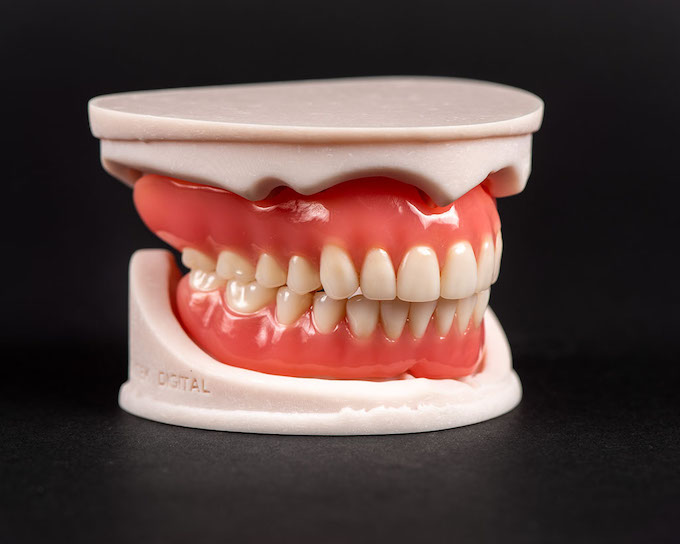
Dental implant restorations have advanced significantly over the past decade. Among the most widely used solutions today, cement retained implant crowns remain a preferred choice for many clinical situations. They offer a streamlined, natural-looking result that both dentists and patients appreciate.
For dental practices looking to deliver consistent, high-quality implant restorations, partnering with a reliable digital lab makes all the difference. Furthermore, understanding the nuances of cement-retained designs helps you choose the right solution for each unique case.
At Dentek Digital, we fabricate precision implant crowns using advanced CAD/CAM technology. Our team partners with dentists across the country to support better patient outcomes — one restoration at a time.
What Are Cement-Retained Implant Crowns?
Cement-retained implant crowns attach to an implant abutment using dental cement. Therefore, they function much like a traditional crown placed over a natural tooth. The crown sits on a custom or stock abutment and is cemented into place.
This approach differs from screw-retained designs, which use a screw to fix the crown directly to the implant. On the other hand, cement-retained restorations often provide better aesthetics, especially in the anterior region. They also tend to offer a more natural emergence profile.
Key Components of a Cement-Retained Design
Understanding the components helps you plan each case with confidence. A cement-retained implant crown typically includes three main parts.
- The implant fixture: The titanium post placed into the bone by the surgeon.
- The abutment: A connecting piece that supports the crown. It can be stock or custom-milled.
- The crown: The visible restoration, fabricated in zirconia, PFM, or other materials.
Additionally, the type of cement used plays an important role. Temporary or retrievable cements allow for future removal if needed. Permanent cements offer a stronger, long-term hold.
Clinical Advantages of Cement-Retained Implant Crowns
Many clinicians prefer cement-retained designs for specific case types. First, they provide excellent aesthetics in areas where screw access holes would compromise the occlusal surface. Next, they allow for passive seating without the complexity of screw angulation.
Moreover, cement-retained crowns can be easier to fabricate when implant angulation is not ideal. Because of this, they are often selected for posterior restorations where functional demands are high and esthetics are secondary to strength.
Aesthetic Benefits
Cement-retained designs eliminate the need for a screw access hole. As a result, the occlusal or lingual surface remains intact and natural-looking. This is especially valuable in the anterior zone, where appearance matters most.
Furthermore, the crown can be shaped and contoured without the limitations imposed by screw channel placement. This gives the lab more freedom to create a lifelike, custom result.
Functional Considerations
In posterior regions, cement-retained crowns handle occlusal loading well. Additionally, the cemented interface distributes stress effectively across the abutment. However, the clinician must ensure proper cement removal to avoid peri-implant complications.
Excess cement left subgingivally is a known risk factor. Therefore, careful technique and material selection during cementation are essential steps in a successful outcome.
How CAD/CAM Technology Elevates the Result
Digital fabrication has transformed implant crown production. At Dentek Digital, we use industry-leading CAD/CAM systems to design and mill each restoration with exceptional precision. This technology reduces human error and improves fit consistency across every case.
Meanwhile, digital workflows allow for faster turnaround times without sacrificing quality. Dentists in Parkland and across the country benefit from restorations that arrive ready to seat with minimal chairside adjustment.
Custom Abutment Design
One of the most impactful advantages of CAD/CAM is custom abutment fabrication. We can design abutments that follow the natural tissue contour of each patient. As a result, the emergence profile looks and functions like a natural tooth.
Stock abutments are convenient, but they do not always fit the unique anatomy of every patient. Therefore, custom-milled abutments often deliver superior long-term soft tissue health and esthetics.
Material Options for Cement-Retained Crowns
Material selection depends on the case requirements and patient expectations. We offer several high-quality options for cement-retained implant crowns.
- Full-contour zirconia: Extremely strong and biocompatible. Ideal for posterior cases.
- Layered zirconia: Combines strength with lifelike esthetics for anterior restorations.
- PFM (porcelain-fused-to-metal): A proven, time-tested option with reliable longevity.
- Lithium disilicate: Offers excellent optical properties for highly esthetic cases.
Moreover, our lab team can guide you through material selection based on the implant position, opposing dentition, and patient bite forces. We are here to help you make the best choice for every patient.
Cement-Retained vs. Screw-Retained: Choosing the Right Design
Both retention methods have a place in implant dentistry. However, the right choice depends on the clinical situation. Understanding the key differences helps you plan each case more effectively.
Screw-retained crowns are retrievable and eliminate cementation risks. On the other hand, cement-retained designs offer superior esthetics and do not require ideal implant angulation for a great result. Finally, some cases may call for a hybrid approach using a screw-retained custom abutment with a cemented crown.
When to Choose Cement-Retained
Cement-retained implant crowns tend to work best in specific scenarios. Consider this design when:
- The implant is placed at an angle that makes screw access difficult.
- Esthetics are a high priority, especially in the anterior region.
- The occlusal surface must remain free of access holes.
- The patient has a limited interocclusal space that restricts screw-retained options.
Additionally, cement-retained designs can simplify the restoration process for practices that are newer to implant prosthetics. Because of this, many general dentists find them approachable and clinically manageable.
Supporting Dental Practices Nationwide from Our Phoenix, Arizona Lab
Dentek Digital is based in Phoenix, Arizona, and serves dental practices nationwide. We are one of the earliest adopters of the digital CAD/CAM workflow in the country. Our team has built a reputation for quality, precision, and responsive service.
We partner with practices in communities across the Greater Phoenix area, including Mesa, Scottsdale, Chandler, and Gilbert. Moreover, we work with dentists far beyond Arizona — including practices in Parkland, FL — who are looking for a trusted digital lab partner.
Our streamlined case submission process makes it easy to work with us, no matter where your practice is located. Furthermore, our team is always available to answer clinical questions and provide guidance on complex implant cases.
Our Digital Implant Workflow
Sending a case to Dentek Digital is straightforward. First, you submit your digital scan or impression along with the case details. Next, our designers create a custom restoration using precise CAD software. Then, our milling team fabricates the crown with exacting accuracy. Finally, each restoration goes through quality checks before shipping.
Additionally, we offer digital implant planning services. This advanced option allows you to plan implant placement virtually before the surgical phase. As a result, you can achieve better prosthetic-driven implant positions from the start.
Frequently Asked Questions About Cement-Retained Implant Crowns
What is the biggest risk with cement-retained implant crowns?
The main concern is excess cement remaining subgingivally after seating. Therefore, careful cementation technique and cement removal are critical steps. Using a retrievable cement can also help reduce this risk.
Can I use a digital scan for cement-retained implant cases?
Yes. Digital scans work excellently for implant crown cases. Additionally, they improve accuracy and eliminate the distortion that can occur with traditional impressions. Most modern intraoral scanners capture implant scan bodies with high precision.
How long do cement-retained implant crowns last?
With proper care and good oral hygiene, implant crowns can last many years. However, longevity depends on many factors, including material selection, occlusal forces, and home care. We do not guarantee specific outcomes, but high-quality fabrication gives your patients the best foundation for long-term success.
Is zirconia a good material for cement-retained crowns?
Zirconia is one of the most popular choices for implant restorations today. It is strong, biocompatible, and highly esthetic. Moreover, full-contour zirconia requires no porcelain overlay, which reduces chipping risk in high-stress posterior areas.
Do you work with practices outside of Arizona?
Absolutely. Dentek Digital serves dental practices across the country. Furthermore, our digital submission process makes collaboration easy regardless of location. Practices in Florida, Texas, California, and beyond send us cases regularly.
Partner with Dentek Digital for Your Implant Crown Cases
Choosing the right lab partner is one of the most important decisions a dental practice can make. At Dentek Digital, we combine advanced CAD/CAM technology with skilled craftsmanship to deliver results you and your patients can trust.
We understand that every implant case is unique. Therefore, we take a collaborative approach to every restoration we fabricate. Our team is ready to assist with cement-retained implant crowns, custom abutments, and a full range of digital dental solutions.
Whether your practice is in Parkland, FL, or anywhere else in the country, we are here to support you. Contact Dentek Digital today to send us a case or discuss your next implant restoration. We look forward to becoming your trusted digital lab partner.