
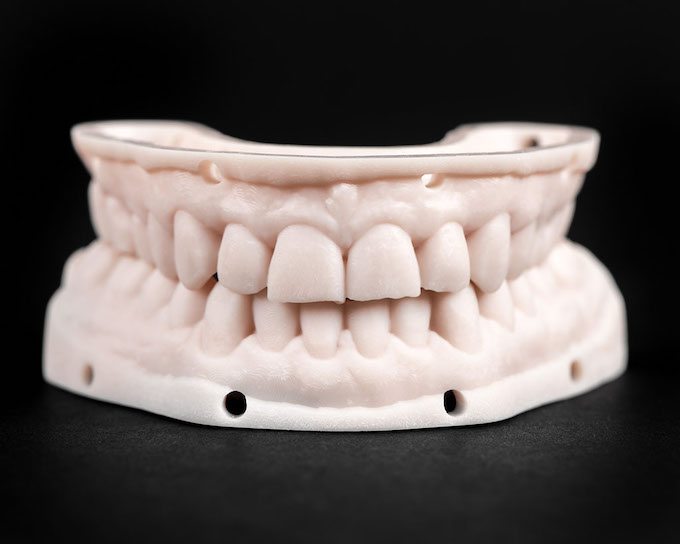
Delivering predictable implant restorations starts with choosing the right retention strategy. Cement retained implant crowns remain one of the most widely used options in implant dentistry today. They offer a clean aesthetic, a familiar placement workflow, and reliable results when fabricated with precision.
At Dentek Digital, we work with dentists across Phoenix, Mesa, Tempe, Scottsdale, and beyond to produce cement-retained crowns built on an advanced CAD/CAM workflow. Our restorations are designed to fit accurately, look natural, and support long-term clinical success.
Whether you are new to implant restorations or simply looking for a more dependable lab partner, this guide covers what you need to know about cement-retained implant crowns.
What Are Cement-Retained Implant Crowns?
Cement-retained implant crowns attach to an implant abutment using dental cement. This is similar to how a traditional crown bonds to a prepared natural tooth. The crown itself does not have a visible screw access hole on the occlusal surface.
Because of this, cement-retained crowns tend to offer excellent aesthetics. They also allow for minor angulation corrections through custom abutment design. Additionally, the cementation process feels familiar to most restorative dentists.
How They Differ from Screw-Retained Crowns
Screw-retained crowns attach directly to the implant through a screw channel. They are retrievable without damaging the restoration. However, they require favorable implant angulation for proper access hole placement.
Cement-retained crowns, on the other hand, are better suited for cases where implant angulation makes screw access difficult. They also tend to achieve a more seamless emergence profile in the final restoration. The trade-off is that retrievability can be more challenging once the crown is cemented.
Common Clinical Scenarios for Cement Retention
Many dentists choose cement retention in posterior single-unit restorations. Furthermore, cement-retained crowns work well when the implant angle would place a screw hole in an unfavorable aesthetic or functional position. They are also a practical choice when the interocclusal space is sufficient for a custom abutment.
The CAD/CAM Advantage in Cement-Retained Crown Fabrication
Precision matters in implant restorations. Even minor inaccuracies in margin adaptation or abutment design can lead to clinical complications. Therefore, the fabrication method plays a critical role in the outcome.
At Dentek Digital, we use an advanced digital CAD/CAM workflow to design and mill every cement-retained implant crown. This process starts with a digital scan and ends with a restoration that fits predictably and accurately.
Digital Scanning and Design
The workflow begins when your practice sends us a digital impression or scan. We then use specialized implant software to design a custom abutment and crown that match the patient’s anatomy. As a result, the final restoration integrates seamlessly with surrounding teeth and soft tissue.
Our team carefully evaluates occlusion, emergence profile, and margin placement during the design phase. This attention to detail reduces the likelihood of adjustments at delivery. Moreover, it supports a faster, more confident seating appointment for your team.
Milling and Materials
Once the digital design is approved, our milling units fabricate the restoration from high-quality dental materials. We work with zirconia, lithium disilicate, and other proven materials depending on the clinical need. Each material offers a different balance of strength, translucency, and aesthetics.
For cement-retained crowns in the posterior, high-strength zirconia is often the right choice. For anterior cases where aesthetics are the priority, layered or monolithic translucent zirconia may be more appropriate. Additionally, our experienced technicians finish and characterize each crown by hand for a natural result.
Why the Abutment Design Makes All the Difference
The custom abutment is the foundation of a well-fitting cement-retained crown. A poorly designed abutment can create issues with cement retention, excess cement removal, and long-term tissue health. Therefore, abutment design deserves careful attention.
At Dentek Digital, we design custom abutments digitally for each case. We consider the subgingival margin depth, emergence angle, and occlusal clearance. This approach helps minimize excess cement below the gumline, which is one of the most cited concerns with cement-retained implant restorations.
Managing Cement Margin Depth
Excess cement below the tissue margin is a known risk with cement-retained crowns. However, thoughtful abutment design significantly reduces this risk. When the margin is positioned correctly, excess cement is easier to remove during the delivery appointment.
We recommend placing the margin no more than 1-2mm subgingivally when possible. Furthermore, using a provisional restoration to condition the tissue before final delivery helps create a more defined and manageable sulcus. These small steps make a meaningful difference in outcomes.
Working with Angled Implants
Implant angulation is one of the primary reasons dentists choose cement retention. A custom CAD/CAM abutment can compensate for implant angles that would otherwise compromise the aesthetics or function of a screw-retained restoration. As a result, dentists gain more flexibility in treatment planning without sacrificing the final result.
Our team regularly handles cases with angulation challenges. We collaborate with dentists in the Phoenix metro area — including practices in Chandler, Gilbert, Scottsdale, and Mesa — to find the best path forward for each unique case.
Sending Us Your Cement-Retained Implant Cases
Getting started with Dentek Digital is straightforward. We accept digital impressions from all major intraoral scanners. Additionally, we can work from traditional impressions when needed. Our team communicates clearly throughout the process so you always know where your case stands.
Here is a simple overview of what to include when submitting a cement-retained implant case:
- Digital scan or impression of the implant site with the scan body in place
- Opposing arch scan for accurate occlusal design
- Bite registration in centric occlusion
- Shade selection with a reference photo when possible
- Implant system and component information including the implant brand, size, and connection type
- Any clinical notes about tissue height, angulation concerns, or material preferences
The more information you provide upfront, the smoother the fabrication process will be. Moreover, clear documentation helps us deliver a restoration that meets your expectations on the first delivery.
Practical Tips for Delivering Cement-Retained Crowns
Even the best-fabricated crown requires a thoughtful delivery appointment. Therefore, having a consistent protocol in place helps reduce complications and supports better outcomes for your patients.
Before Cementation
First, verify the fit of the abutment on the implant before trying in the crown. Check the screw torque to the manufacturer’s specification. Then, trial-fit the crown on the abutment and evaluate the margins, contacts, and occlusion.
Also, use a cotton pellet or similar material to block the abutment screw access before cementation. This prevents cement from entering the screw channel. Additionally, mark the crown or abutment so you can orient it quickly during final seating.
During and After Cementation
Apply a minimal amount of cement to the internal surface of the crown. Seat the crown with steady pressure and remove excess cement thoroughly before it sets. Furthermore, use dental floss and an explorer to check all margins carefully after seating.
Take a final periapical radiograph to confirm fit and check for subgingival cement. This step is important for long-term peri-implant tissue health. Finally, document the torque value and materials used for the patient record.
Frequently Asked Questions About Cement-Retained Implant Crowns
Are cement-retained crowns retrievable?
Cement-retained crowns can be retrieved, but it is typically more difficult than removing a screw-retained crown. Retrieval usually requires cutting the crown off and replacing it. Therefore, case selection and long-term maintenance planning are important considerations.
What materials work best for cement-retained implant crowns?
High-strength zirconia is a popular choice for posterior cement-retained crowns because of its durability. For anterior cases, translucent zirconia or lithium disilicate may offer better aesthetics. Your Dentek Digital technician can help you choose the right material for each case.
How do I minimize the risk of excess cement?
Custom abutment design with an appropriate margin depth is the most effective strategy. Additionally, using the right amount of cement and removing excess carefully before it fully sets are both essential steps. Radiographic verification after cementation is also strongly recommended.
Can I use cement-retained crowns with any implant system?
Most major implant systems support cement-retained restorations through compatible abutment options. However, it is important to confirm that the components you are using are compatible with your implant platform. Dentek Digital works with a wide range of implant systems and connections.
How long does it take to receive a cement-retained crown from Dentek Digital?
Turnaround times vary depending on the complexity of the case and current production volume. We work efficiently to deliver restorations within a timeline that supports your schedule. Contact our team directly for current turnaround estimates and rush options.
Partner with Dentek Digital for Your Implant Crown Cases
Dentek Digital is a recognized leader in digital dentistry, serving dental practices across the Greater Phoenix area, including Scottsdale, Chandler, Mesa, Tempe, and Gilbert. We combine advanced CAD/CAM technology with skilled craftsmanship to deliver implant restorations that perform well and look great.
Our team understands the clinical demands of implant restorations. We are committed to supporting dentists with precise fabrication, clear communication, and reliable turnaround times. As a result, your patients receive restorations that meet the highest standards of quality.
If you are ready to elevate your implant crown cases, contact Dentek Digital today to send us your next case or to discuss how we can support your practice.