
The dental lab industry is changing fast. Across the country, labs are making a serious lab printing investment to stay competitive and deliver better results. This shift is not just a trend — it reflects a deeper transformation in how dental restorations are designed and built.
For dental practices in Phoenix, Mesa, Scottsdale, and Chandler, this matters. The lab your practice partners with directly affects patient outcomes. Therefore, understanding why labs are moving toward 3D printing helps you make smarter decisions for your practice.
At Dentek Digital, we were among the earliest adopters of digital CAD/CAM workflows in the country. We have seen firsthand how 3D printing technology elevates the quality, speed, and precision of dental restorations. Here is what is driving this shift — and why it benefits you.
What Is 3D Printing in a Dental Lab?
3D printing in dentistry uses digital files to build physical objects layer by layer. In a dental lab, this means fabricating crowns, surgical guides, models, splints, and more with exceptional accuracy. Additionally, the process starts with a digital scan and ends with a finished, precise restoration.
This technology works alongside CAD/CAM dentistry, which stands for computer-aided design and computer-aided manufacturing. Together, these tools form the backbone of a modern digital dental lab workflow. As a result, labs can produce restorations that fit better and require fewer adjustments.
How 3D Printing Differs from Traditional Methods
Traditional lab methods rely on hand-poured models, wax-ups, and analog fabrication. These approaches require more manual steps and more time. On the other hand, 3D printing reduces manual handling while maintaining — and often improving — precision.
Furthermore, digital workflows create a consistent, repeatable process. Every printed model follows the same digital blueprint. This consistency is difficult to achieve at scale with purely manual techniques.
Why Labs Are Making the Investment Now
Several forces are pushing labs toward 3D printing at the same time. First, materials have improved dramatically. Modern printable resins and other materials now meet clinical-grade standards. Next, printer hardware has become more reliable and accessible for professional dental labs.
Meanwhile, dentists are requesting faster turnaround and more digital-friendly workflows. Practices in Gilbert, Tempe, and throughout the Greater Phoenix area expect lab partners who can keep pace with in-office digital scanning. Because of this, labs that invest in 3D printing gain a real competitive advantage.
Efficiency and Speed
3D printing speeds up production without sacrificing quality. A model that once required hours of manual pouring and trimming can now be printed in a fraction of the time. Additionally, digital queuing allows labs to run multiple jobs simultaneously.
For dental practices, faster lab turnaround means shorter patient wait times. Therefore, the investment in 3D printing creates value not just for the lab — but for the entire care chain, from the lab bench to the patient chair.
Precision and Fit
One of the strongest arguments for 3D printing is accuracy. Digital fabrication removes many of the variables that lead to poor-fitting restorations. Moreover, a well-fitting restoration reduces chair time, remakes, and patient discomfort.
At Dentek Digital, precision is a core commitment. Our digital workflow, including 3D printing, helps us deliver restorations that seat accurately and perform reliably. This matters whether we are fabricating a single crown for a Scottsdale patient or a full-arch case for a Mesa practice.
What Types of Restorations Benefit from 3D Printing?
3D printing is not a one-size-fits-all solution. However, it excels across a wide range of dental lab applications. Understanding where it adds the most value helps dental practices appreciate what their lab partner can offer.
Surgical Guides and Implant Planning
Surgical guides are one of the clearest wins for 3D printing. These guides must fit precisely to ensure accurate implant placement. Therefore, digital fabrication is practically essential for high-quality implant planning workflows.
At Dentek Digital, we offer advanced digital implant planning services. Our process combines 3D printing with sophisticated planning software. As a result, dental professionals across Phoenix and the surrounding communities receive guides they can trust in the operatory.
Diagnostic and Working Models
Printed models are replacing traditional poured plaster models in many labs. They are cleaner, more consistent, and faster to produce. Furthermore, digital models can be stored and reprinted as needed, eliminating the risk of damage or loss.
For practices in Chandler and Gilbert that use intraoral scanners, digital models are a natural extension of that workflow. The scan flows directly into the lab’s digital system, and a printed model is ready quickly.
Splints, Nightguards, and Removables
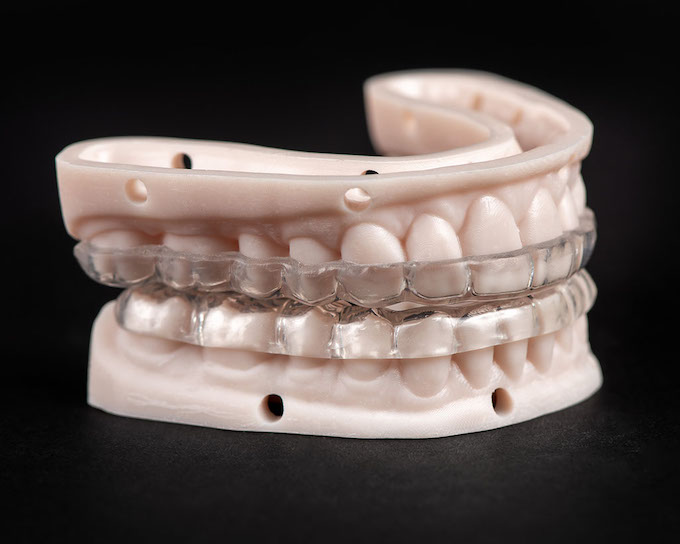
3D printing is also transforming how labs fabricate splints, nightguards, and removable appliances. Printed splints offer consistent thickness and accurate occlusal surfaces. Additionally, materials engineered for these applications have improved in durability and biocompatibility.
Dentek Digital fabricates splints and nightguards using our full digital workflow. This means your patients receive appliances that fit well from the start. Moreover, our digital records allow for efficient remakes if a replacement is ever needed.
The Role of Materials in Driving Lab Printing Investment
A major barrier to 3D printing adoption in the past was material quality. Early printable resins were not always suitable for long-term clinical use. However, material science has advanced considerably in recent years.
Today, labs have access to a growing library of clinical-grade printable materials. These include resins for models, surgical guides, temporaries, and occlusal devices. Because of this material expansion, labs can confidently invest in 3D printing for a broader range of applications.
Temporary Restorations and Prototyping
Printed temporary restorations have become a practical clinical tool. They allow dentists to evaluate esthetics, occlusion, and function before finalizing a case. Additionally, printed temporaries protect prepared teeth during the treatment timeline.
This prototyping capability is especially valuable for complex cases involving implants, full-arch restorations, or significant esthetic changes. Therefore, labs that offer printed temporaries provide an important clinical service for their dental practice partners.
How 3D Printing Supports the Full CAD/CAM Workflow
3D printing does not work in isolation. It is one part of a broader digital ecosystem. The most effective dental labs integrate printing with digital design, milling, and finishing to create a seamless workflow.
At Dentek Digital, every case begins with a digital foundation. Our team uses advanced design software to plan each restoration before it is ever fabricated. Then, we choose the best fabrication method — milling, printing, or a combination — based on the case requirements.
Milling vs. Printing: Choosing the Right Tool
Milling and printing are complementary, not competing, technologies. Milling is ideal for high-strength materials like zirconia. On the other hand, printing excels for models, guides, and certain resin-based restorations.
Furthermore, a lab that offers both can match the fabrication method to each case type. This flexibility is a key advantage of full digital lab investment. As a result, dental practices get the best possible outcome for every case they send.
If you want to explore what a fully digital workflow can do for your practice, contact Dentek Digital and our team will walk you through your options.
Benefits for Dental Practices Partnering with a Digital Lab
When your lab invests in 3D printing, you feel the difference in your practice. Cases come back faster, fit better, and require fewer adjustments. Moreover, digital communication between lab and practice becomes smoother and more efficient.
Dental practices across Tempe, Mesa, and greater Phoenix are already experiencing these advantages. They send digital scans and receive high-quality restorations with reliable turnaround. Additionally, digital records make case communication and remake management easier for everyone.
Fewer Remakes and Adjustments
Remakes cost practices time and money. They also frustrate patients. Therefore, working with a lab that uses precise digital fabrication methods directly improves practice efficiency.
3D printing, as part of a full digital workflow, reduces the variables that lead to poor fits. Because of this, practices that partner with digital labs tend to experience fewer remakes over time. That is a practical benefit every dentist can appreciate.
Frequently Asked Questions About Lab 3D Printing
What does a lab printing investment actually involve?
It typically includes professional-grade 3D printers, post-processing equipment, clinical materials, and digital design software. Labs also invest in technician training. Together, these elements create a capable, reliable printing workflow.
Is 3D-printed dental work as good as traditionally made restorations?
For many applications, yes — and sometimes better. Printed models, surgical guides, and splints often outperform traditional alternatives in fit and consistency. However, the final outcome depends on the lab’s expertise, materials, and quality controls.
How does 3D printing affect turnaround time for dental practices?
In most cases, it speeds things up. Digital fabrication reduces manual handling steps and allows for faster production queuing. Therefore, practices typically see improved turnaround when working with a lab that uses 3D printing.
Which types of cases benefit most from 3D printing?
Surgical guides, diagnostic models, splints, nightguards, and printed temporaries are among the strongest use cases. Additionally, printed working models support milled restorations in the broader CAD/CAM workflow.
Can any dental practice partner with a digital lab like Dentek Digital?
Yes. Dentek Digital works with dental practices throughout the Greater Phoenix area, including Chandler, Gilbert, Scottsdale, Tempe, and Mesa. You do not need to upgrade your in-office technology to get started. We will guide you through the process.
Partner with a Lab That Leads in Digital Dentistry
The move toward 3D printing in dental labs is accelerating. Labs that make this investment deliver better restorations, faster turnaround, and a more connected digital experience for their dental practice partners. Furthermore, patients benefit from more precise, comfortable results.
At Dentek Digital, we have been ahead of this curve for years. Our commitment to digital innovation is why dental practices across the Greater Phoenix area trust us with their most demanding cases. We combine skilled craftsmanship with advanced technology to deliver results you can count on.
Whether you are in Scottsdale, Mesa, Chandler, or anywhere else in the Phoenix metro, our team is ready to support your practice. Explore your options — reach out to the Dentek Digital team today to discuss your next case and discover how our digital workflow can benefit your patients.