
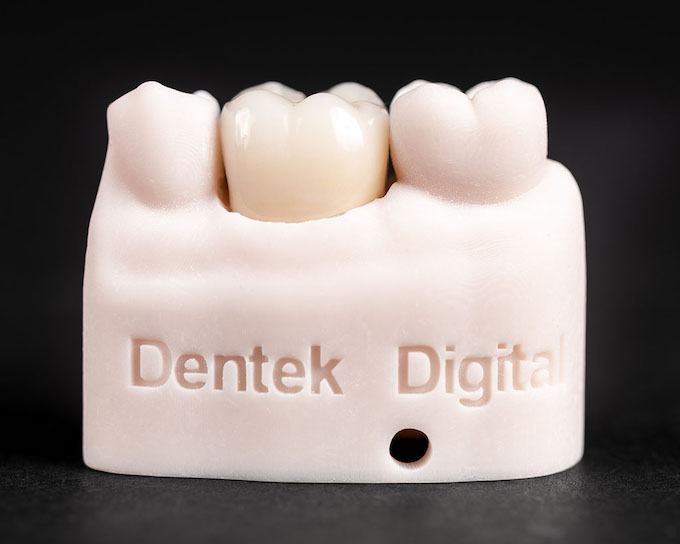
Full arch cases are among the most demanding workflows in modern dentistry. They require precision, coordination, and a reliable lab partner who understands digital workflows from start to finish. Full arch printing has become a critical part of delivering these complex restorations accurately and efficiently.
At Dentek Digital, we work with dentists and dental practices across the Greater Phoenix area — from Scottsdale to Chandler — to fabricate high-quality full arch restorations using advanced CAD/CAM technology. We understand what it takes to get these cases right.
In this post, we break down the role that 3D printing plays in full arch cases, why it matters, and how it fits into a modern digital dentistry workflow.
What Is Full Arch Printing and Why Does It Matter?
Full arch printing refers to the use of 3D printing technology to fabricate components used in full arch dental restorations. These components can include surgical guides, printed trial arches, denture bases, and more. Each plays a specific role in the overall case workflow.
Moreover, printing allows the lab and the clinician to work from the same digital file. This creates consistency that is difficult to achieve with traditional analog methods. Because of this, full arch cases become more predictable for both the dentist and the patient.
How Printing Fits Into the Larger CAD/CAM Workflow
CAD/CAM dentistry uses computer-aided design and computer-aided manufacturing to create dental restorations digitally. In full arch cases, this workflow typically starts with a digital scan. Next, the lab uses specialized software to design the restoration. Then, the design is sent to a printer or milling machine for fabrication.
Printing plays a unique role in this process. It excels at producing complex geometries, lightweight structures, and components that need to fit together with high accuracy. For full arch cases, that precision is essential.
Key Components Produced Through Full Arch Printing
Not everything in a full arch case is printed. However, several critical components benefit greatly from 3D printing technology. Understanding these components helps dentists know what to expect from their lab.
Printed Trial Arches
Trial arches are printed versions of the proposed restoration. They allow the dentist to evaluate the fit, function, and aesthetics before the final restoration is fabricated. Furthermore, they give the patient a chance to preview the outcome and provide feedback.
Additionally, trial arches can be adjusted and reprinted quickly. This flexibility is especially valuable in complex full arch cases where small changes can have a significant impact on the final result.
Surgical Guides for Implant Placement
In implant-supported full arch cases, surgical guides are an essential printed component. These guides direct the surgeon to place implants at the exact position, angle, and depth planned in the digital design. As a result, the restoration fits more predictably at delivery.
At Dentek Digital, we also offer advanced digital implant planning services. This means we can help plan the case from the implant position through the final restoration — all in a connected digital workflow.
Denture Bases and Printed Frameworks
Printing is also used to fabricate denture bases and certain framework structures. These components form the foundation of the full arch restoration. Therefore, their accuracy directly affects how well the final prosthetic fits and functions.
In addition, printed bases can be produced with consistent material properties. This reduces the variability that sometimes occurs with traditional denture fabrication methods.
The Advantages of Printing in Full Arch Cases
Dentists in Mesa, Tempe, Gilbert, and across the Phoenix metro area are increasingly requesting digital workflows for full arch cases. The reasons are clear. Printing offers several meaningful advantages over traditional fabrication methods.
- Greater accuracy: Digital files reduce the risk of human error during fabrication.
- Faster turnaround: Printed components can often be produced more quickly than traditionally crafted ones.
- Easier adjustments: Because the design is stored digitally, reprints and modifications are straightforward.
- Better case communication: Printed trial arches and models help dentists and patients visualize the outcome before committing to the final restoration.
- Consistent quality: The digital workflow delivers repeatable results across cases.
However, printing is not a standalone solution. It works best when it is part of a fully integrated digital workflow that includes scanning, design, and skilled lab craftsmanship. That combination is what sets high-quality results apart.
Where Printing Has Limits in Full Arch Cases
It is important to understand where printing fits — and where it does not. Not every component of a full arch restoration is best served by printing. For example, final restorations that require maximum strength or specific optical properties are often milled from solid blocks or fabricated using other methods.
Furthermore, print quality varies based on the materials and equipment used. At Dentek Digital, we invest in advanced printing technology and use carefully selected materials. This ensures that every printed component meets our high standards before it leaves our Phoenix lab.
Printed vs. Milled Components: Knowing the Difference
Milling is better suited for dense, high-strength restorations like zirconia crowns and bridges. Printing, on the other hand, excels for components that require complex shapes, fine detail, or rapid iteration. In full arch cases, both technologies often play a role.
Therefore, a well-equipped digital dental lab uses both printing and milling strategically. The goal is always the same — deliver the most accurate, durable, and aesthetic result possible for the patient.
How Dentek Digital Supports Full Arch Cases
Dentek Digital was one of the earliest digital dental labs in the country to adopt the full CAD/CAM workflow. We have developed deep expertise in full arch cases over many years of working with dentists across the Greater Phoenix area.
Our services cover the entire full arch restoration process. This includes digital implant planning, printed surgical guides, trial arches, final frameworks, and finished prosthetics. We also offer our exclusive TattooTH service, which brings an additional level of customization to full arch restorations.
In addition, we work closely with each dentist to ensure the workflow fits their clinical approach. If you are in Scottsdale, Chandler, or anywhere else in the Phoenix metro, we are here to support your cases from the first scan to the final delivery.
Ready to take your full arch cases to the next level? Contact Dentek Digital to discuss your next case with our team.
Practical Tips for Dentists Working on Full Arch Cases
If you are preparing to send a full arch case to a digital dental lab, a few simple steps can make the process smoother and improve the final outcome.
- Use a full-arch intraoral scanner: High-quality digital impressions are the foundation of a good full arch workflow. Poor scan quality limits what the lab can achieve.
- Share detailed case notes: Include information about the patient’s bite, occlusal preferences, and any clinical considerations. More context leads to better results.
- Plan for a trial arch appointment: Build time into your treatment plan for the patient to evaluate and approve a trial arch before the final restoration is made.
- Communicate early about implant planning: If the case is implant-supported, involve your lab during the planning phase — not after the implants are placed.
- Ask your lab about their printing materials: Not all printed materials are the same. Understanding what your lab uses helps you set appropriate expectations.
Frequently Asked Questions About Full Arch Printing
What types of full arch cases benefit most from 3D printing?
Cases that involve surgical guides, trial arches, or custom denture bases benefit most from 3D printing. Furthermore, implant-supported full arch cases often rely heavily on printed components throughout the workflow.
How accurate is 3D printing for full arch dental restorations?
Modern 3D printing technology produces highly accurate components when used correctly. However, the quality of the digital scan and the design software also affect the final fit. A skilled digital lab maximizes accuracy at every step.
Can printed components be used as the final restoration?
In some cases, yes. Printed denture bases and certain prosthetic frameworks can serve as final restorations when fabricated from appropriate materials. On the other hand, high-stress components like implant-supported bridges are often better served by milling.
How long does it take to receive printed components from a digital lab?
Turnaround times vary depending on the complexity of the case and the specific components needed. Generally, digital workflows allow for faster turnaround than traditional methods. Your lab can provide a specific timeline when you submit your case.
Does Dentek Digital offer full arch printing services?
Yes. Dentek Digital offers a full range of digital full arch services, including printed surgical guides, trial arches, denture bases, and complete restorations. We serve dentists across Phoenix, Mesa, Tempe, Chandler, Gilbert, Scottsdale, and the surrounding area.
Partner With a Digital Lab That Understands Full Arch Cases
Full arch cases require more than good technology. They require a lab partner with the experience, equipment, and commitment to deliver outstanding results consistently. At Dentek Digital, we bring all three to every case we handle.
We combine cutting-edge CAD/CAM technology with skilled craftsmanship to support your clinical goals. Whether you are in Phoenix, Chandler, or Scottsdale, our team is ready to work with you.
Explore your options and contact Dentek Digital today to get started on your next full arch case.