
In modern dental labs, printing accuracy has become one of the most important factors in delivering reliable clinical outcomes. When a restoration fits precisely, the patient benefits and the dentist saves valuable chair time. Because of this, more dental professionals across Greater Phoenix are paying close attention to how digital workflows shape their results.
At Dentek Digital, we have built our lab around the idea that accuracy is not optional. It is the foundation of everything we fabricate. Therefore, understanding what drives printing accuracy — and what can affect it — is essential knowledge for any dentist working with a digital dental lab.
In this post, we break down how CAD/CAM dentistry and 3D printing technology work together to influence clinical outcomes. We also share practical guidance for dental practices in Phoenix, Scottsdale, Chandler, and Mesa who want to get the most from their lab partnership.
What Is Printing Accuracy in a Dental Lab?
Printing accuracy refers to how closely a 3D-printed output matches the intended digital design. In dental applications, this matters enormously. Even small deviations can affect how a crown seats, how a splint fits, or how an implant component aligns.
Several factors influence accuracy. These include the printer technology used, the quality of the digital scan, and how well the lab validates its outputs. Furthermore, the materials selected for printing also play a role in dimensional stability.
Resolution and Layer Thickness
Most 3D printers used in dental labs build objects layer by layer. Finer layers generally produce smoother surfaces and tighter tolerances. However, layer thickness alone does not determine accuracy. The printer’s overall calibration and the resin or material properties matter just as much.
At Dentek Digital, we use advanced CAD/CAM equipment to maintain consistent output quality. Additionally, our team regularly validates printed parts against digital design files. This ensures that what leaves our lab reflects what the dentist prescribed.
Scan Quality as a Starting Point
Printing accuracy begins before the printer is even turned on. The quality of the intraoral or model scan directly affects the digital file we work from. Therefore, a clean, complete scan is one of the most important things a dental practice can provide.
When scan data is incomplete or distorted, the downstream outputs suffer. Moreover, corrections made after the fact take time and can introduce additional variability. Starting with a high-quality scan sets the entire workflow up for success.
How Printing Accuracy Affects Clinical Outcomes
Clinical outcomes depend on how well a restoration performs in the patient’s mouth over time. Fit, function, and longevity are the three pillars. Printing accuracy influences all three directly.
A poorly fitting restoration creates problems fast. It can cause discomfort, affect the bite, and lead to early failure. On the other hand, a precisely fabricated restoration seats cleanly, adapts well to the margin, and supports long-term patient satisfaction.
Fit and Marginal Integrity
Marginal integrity is a key indicator of restoration quality. When a crown or bridge margin fits tightly and accurately, it reduces the risk of microleakage and secondary decay. Additionally, it makes cementation more predictable for the dentist.
At our Phoenix lab, marginal fit is one of the first things we evaluate during quality checks. We do not release a case until it meets our standards. Because of this, dentists across the Gilbert and Tempe areas trust us with their most demanding cases.
Occlusal Accuracy and Patient Comfort
Occlusal accuracy — meaning how the restoration meets the opposing teeth — is equally important. A restoration that is too high or too low creates immediate problems for the patient. Furthermore, poor occlusion puts stress on surrounding teeth and jaw joints.
Digital workflows help us design and print restorations with precise occlusal relationships. However, this still depends on accurate bite registration data from the clinical team. When the lab and the practice communicate well, outcomes improve significantly.
Implant Components and Surgical Guides
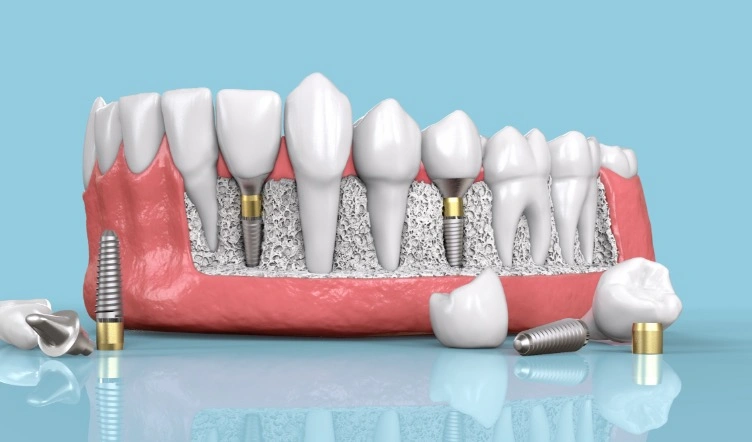
For implant cases, printing accuracy becomes even more critical. Surgical guides printed with poor dimensional accuracy can misdirect implant placement. As a result, the final prosthetic outcome may be compromised before surgery even begins.
Dentek Digital offers advanced implant planning and fabrication services. We work closely with dentists in Scottsdale and Chandler who rely on precise surgical guide outputs. Therefore, we hold our implant-related prints to the highest standards in our lab.
The Role of Technology in Maintaining Accuracy
Technology is only as good as the people using it. However, investing in the right equipment does create a meaningful foundation for consistent accuracy. Dentek Digital was among the earliest adopters of digital CAD/CAM workflows in the country. This gives us a deep understanding of what works — and what does not.
We use validated printers and materials that are designed specifically for dental applications. In addition, we continuously update our processes as technology evolves. This means our lab partners benefit from both experience and innovation.
Material Selection and Dimensional Stability
Not all dental printing materials behave the same way. Some resins shrink slightly during post-curing. Others may warp if not handled correctly. Therefore, material selection is a critical part of maintaining print accuracy across different restoration types.
For each restoration category — crowns, nightguards, splints, surgical guides — we select materials that are validated for that application. Additionally, we follow strict post-processing protocols to minimize distortion. The goal is always a final product that matches the digital design as closely as possible.
Calibration and Quality Control
Even the best printers drift over time. Regular calibration is essential to catching this before it affects patient cases. At Dentek Digital, quality control is built into every stage of our workflow — not just at the end.
Moreover, our experienced technicians review each case for fit and finish before it ships. This hands-on oversight adds a layer of quality that technology alone cannot fully replace. First, we trust the data. Then, we verify with skilled eyes and hands.
Practical Tips for Dental Practices to Support Printing Accuracy
Dentists and their teams play a direct role in the accuracy of printed restorations. A few practical habits can make a significant difference in the quality of what comes back from the lab.
- Submit complete, high-resolution scans. Avoid scans with voids or stitching errors in critical areas.
- Include accurate bite registrations. Occlusal data is essential for designing restorations that fit and function correctly.
- Communicate margin locations clearly. When margin placement is ambiguous, lab technicians must guess — and that introduces risk.
- Provide clinical photos when helpful. Photos give the lab context that data alone sometimes cannot capture.
- Discuss material preferences upfront. Different clinical situations call for different printed materials. Talking this through early prevents delays.
Dental practices in Mesa and Tempe that follow these steps consistently report smoother case delivery and fewer remakes. Furthermore, a strong working relationship with the lab supports better communication on complex cases.
If you want to improve your digital workflow, contact Dentek Digital and our team will walk you through the process step by step.
Frequently Asked Questions About Printing Accuracy and Clinical Outcomes
What is a reasonable level of printing accuracy for dental restorations?
High-quality dental printers can produce restorations with very tight tolerances. However, the acceptable range varies by restoration type. Fixed restorations require tighter fits than printed study models. Always ask your lab about the validation standards they use for each product category.
Does printing accuracy vary by restoration type?
Yes. Different restorations have different clinical requirements. For example, a surgical guide demands higher precision than a diagnostic wax-up model. Because of this, labs should use validated workflows and materials specific to each application.
How does scan quality affect the final printed restoration?
The digital scan is the starting point for the entire workflow. A poor scan introduces errors that carry through to the final print. Therefore, investing in good scanning technique and equipment is one of the best ways to improve clinical outcomes.
Can 3D-printed restorations match the quality of milled restorations?
In many applications, 3D-printed restorations now rival milled alternatives in fit and function. The technology has advanced significantly. Moreover, printing allows for geometry that milling cannot always achieve. The right choice depends on the specific case and material requirements.
How does Dentek Digital ensure printing accuracy across all cases?
We use a combination of validated equipment, quality-controlled materials, and skilled technician review. Additionally, we have years of experience refining our digital workflows. Our team is always available to discuss accuracy standards for specific case types.
Partner With a Lab That Prioritizes Accuracy
Printing accuracy is not a technical detail reserved for engineers. It is a clinical concern that affects every patient who receives a digital restoration. Therefore, choosing the right lab partner matters more than ever.
Dentek Digital serves dental practices throughout Greater Phoenix — including Scottsdale, Chandler, Gilbert, Mesa, and Tempe. We combine cutting-edge technology with experienced craftsmanship to deliver restorations that perform. Furthermore, we are always available to consult on complex cases or help your practice optimize its digital workflow.
Send us a case and experience the Dentek Digital difference for yourself. Our team is ready to support your practice with the precision and reliability your patients deserve.