
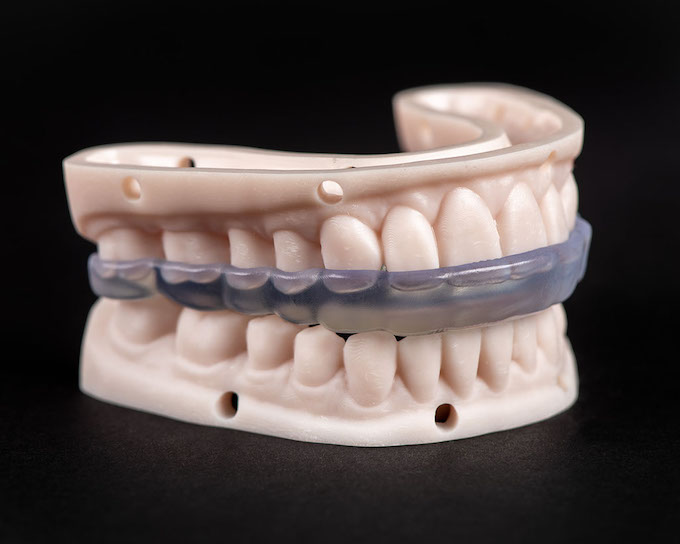
Dental 3D printing is reshaping how practices operate across the country. For dentists in Phoenix, Mesa, Chandler, and Scottsdale, the conversation is no longer just about technology. It is about value, efficiency, and long-term return. Understanding dental printing ROI is essential before making any investment decision.
However, the economics of dental 3D printing can feel complicated at first. There are upfront costs, ongoing material expenses, training requirements, and workflow changes to consider. Therefore, it helps to break this topic down clearly and practically.
In this post, we explore what dental 3D printing actually costs, where the value comes from, and how partnering with a digital dental lab like Dentek Digital can change the equation entirely.
What Is Dental 3D Printing and Why Does It Matter?
CAD/CAM dentistry has fundamentally changed how dental restorations are designed and fabricated. 3D printing is one of the most exciting extensions of that workflow. It allows labs and practices to produce physical objects directly from digital files with remarkable speed and accuracy.
For dental practices, this means faster turnaround times, more consistent results, and fewer remakes. Additionally, digital workflows reduce reliance on traditional impression materials and manual fabrication steps. As a result, both labs and practices can operate more efficiently.
Furthermore, patients benefit from restorations that fit better and look more natural. That improvement in quality directly supports patient satisfaction and retention.
Common Dental Applications for 3D Printing
3D printing is used across a wide range of dental applications today. Here are some of the most common uses in modern dental labs and practices:
- Surgical guides for implant placement
- Nightguards and splints for occlusal protection
- Diagnostic and study models
- Temporary restorations and provisional crowns
- Removable partial denture frameworks
- Custom trays for impressions or bleaching
Each of these applications has its own cost profile. Therefore, the ROI calculation will differ depending on how a practice or lab uses the technology.
Understanding the True Cost of Dental 3D Printing
Many dentists focus on the printer price alone. However, that is only part of the picture. The full cost of owning and operating a 3D printer in a dental setting includes several layers.
First, there is the hardware investment. Printers range widely in price depending on their capabilities and resolution. Next, there are ongoing material costs. Resins and other printing materials must be replenished regularly. Then there are post-processing supplies, such as washing stations and curing units.
Additionally, staff training takes time and money. Someone in the practice must learn how to scan, design, print, and finish each case. Moreover, software subscriptions and equipment maintenance add recurring expenses over time.
Hidden Costs Practices Often Overlook
Beyond the obvious line items, there are costs that practices in Gilbert, Tempe, and across the Valley often underestimate. Consider the following:
- Downtime during training — Staff productivity may drop during the learning curve.
- Failed prints — Early-stage errors waste both materials and chair time.
- Calibration and maintenance — Printers require regular upkeep to maintain accuracy.
- Regulatory compliance — Certain printed devices must meet FDA guidelines for clinical use.
- Space requirements — Post-processing equipment takes up valuable operatory space.
Because of this, many practices discover that in-house printing is more resource-intensive than expected. On the other hand, those who plan carefully and build strong workflows can achieve meaningful returns.
Where the Real Value Comes From
Despite the costs, dental 3D printing delivers real value when used strategically. The key is identifying where that value is greatest for your specific practice model.
For high-volume practices, speed is often the biggest win. In-house printing can eliminate lab turnaround time for select items. As a result, same-day or next-day delivery becomes possible for certain cases. That efficiency can improve scheduling and patient flow significantly.
Furthermore, practices that offer implant services can benefit greatly from printed surgical guides. Accurate guide fabrication supports more predictable implant placement. That precision reduces complications and supports better patient outcomes.
Evaluating Dental Printing ROI Over Time
Dental printing ROI is not always immediate. In fact, most practices see the strongest returns after the initial learning curve has passed. At that point, staff becomes efficient, workflows stabilize, and material waste decreases.
A useful way to think about ROI is to compare the cost of producing an item in-house versus sending it to a lab. However, this comparison must also account for staff time, overhead, and the cost of errors. Additionally, quality must remain consistent for the comparison to be valid.
Therefore, a realistic ROI assessment looks at total cost per unit produced, not just the material cost alone. Practices that track this data carefully are better positioned to make smart decisions over time.
In-House Printing vs. Partnering With a Digital Dental Lab
One of the most important decisions a practice faces is whether to bring printing in-house or rely on a trusted lab partner. Both approaches have merit. The right choice depends on your volume, case mix, staff capacity, and goals.
In-house printing offers control and speed for certain item types. However, it also requires ongoing investment in equipment, training, and quality assurance. For practices with limited staff or complex case needs, this can stretch resources thin.
On the other hand, partnering with a digital dental lab like Dentek Digital gives practices access to advanced technology without the overhead. Moreover, lab partners bring deep expertise in fabrication, materials science, and quality control that is difficult to replicate in a clinical setting.
What Dentek Digital Brings to the Table
Dentek Digital is one of the earliest adopters of digital CAD/CAM workflows in the country. Based in Phoenix, we serve dentists and practices across the Greater Phoenix area, from Scottsdale to Chandler and beyond. Our team combines cutting-edge technology with skilled craftsmanship on every case.
Our services include fixed restorations, removables, splints and nightguards, dental implants, and advanced solutions like TattooTH and digital implant planning. Additionally, we work directly with dental professionals to support better outcomes for their patients.
When you partner with Dentek Digital, you gain a lab that invests continuously in the latest equipment and training. Therefore, you get consistently high-quality results without carrying that investment yourself. Contact Dentek Digital today to explore how our digital lab services can support your practice.
Making a Smart Decision for Your Phoenix-Area Practice
Every dental practice is different. A high-volume implant practice in Scottsdale has different needs than a general dentistry office in Gilbert or a growing multi-location group in Mesa. Therefore, the decision to invest in 3D printing should be driven by your specific clinical and business goals.
Here are some practical questions to ask before investing in dental 3D printing:
- What specific items do you want to print in-house, and at what volume?
- Do you have staff with the capacity and interest to manage the workflow?
- What is the cost per unit compared to your current lab fees?
- How will you handle quality control and failed prints?
- Is your current digital workflow (scanning, design software) already in place?
Additionally, consider whether a hybrid approach makes sense. Many practices print certain low-complexity items in-house while sending complex or esthetic cases to a trusted digital lab. This model can offer the best of both worlds.
Frequently Asked Questions About Dental Printing ROI
How long does it take to see a return on a dental 3D printer?
The timeline varies based on print volume, case mix, and how efficiently the workflow is managed. However, most practices begin to see measurable returns after the initial training period, typically within several months to a year of consistent use.
Is it more cost-effective to print in-house or use a dental lab?
It depends on your volume and case types. In-house printing can be cost-effective for high-volume, simple items. However, for complex or esthetic restorations, a skilled digital lab often delivers better quality and consistency at a comparable or lower total cost when you factor in staff time and overhead.
What materials are used in dental 3D printing?
Most dental 3D printers use photopolymer resins designed for specific clinical applications. Different resins are formulated for models, surgical guides, splints, temporaries, and denture bases. Material selection directly affects both quality and cost per unit.
Can 3D-printed restorations be used long-term?
Some printed items, such as surgical guides and study models, are not intended for long-term use. Others, like printed nightguards or denture bases, are designed for extended wear. However, the longevity of any printed device depends heavily on material quality, printing accuracy, and proper finishing.
How does Dentek Digital support Phoenix-area practices with digital workflows?
Dentek Digital works closely with dental practices across Phoenix, Mesa, Tempe, Chandler, Scottsdale, and Gilbert to support seamless digital case submission and fabrication. We accept digital scans and files, fabricate restorations using advanced CAD/CAM technology, and deliver precise results your patients can count on.
Partner With Dentek Digital to Maximize Your Digital Dentistry Investment
The economics of dental 3D printing are real and worth understanding. Whether you are evaluating in-house equipment or looking for a more efficient lab partnership, the right information helps you make better decisions for your practice and your patients.
At Dentek Digital, we have spent years building expertise in digital dentistry and CAD/CAM fabrication. We are proud to support dental professionals across the Greater Phoenix area with the highest quality restorations available today. Furthermore, we stay ahead of evolving technology so you do not have to.
Ready to explore how Dentek Digital can support your practice? Send us a case and experience the Dentek Digital difference firsthand.