
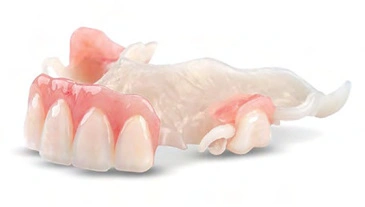
Every successful full arch restoration begins long before the lab receives a case. It begins with one critical assessment: prosthetic space. Without adequate space, even the most advanced CAD/CAM fabrication cannot deliver a restoration that fits, functions, and lasts.
For dentists across Phoenix, Mesa, Chandler, and Scottsdale, understanding prosthetic space requirements is essential. It helps avoid costly remakes and protects patient outcomes. Therefore, this guide covers what you need to know from a digital dentistry and dental lab perspective.
At Dentek Digital, we work closely with dental practices throughout the Greater Phoenix area. We see firsthand how prosthetic space planning shapes the success of full arch cases. Additionally, we use advanced CAD/CAM technology to fabricate restorations that meet precise spatial requirements.
What Is Prosthetic Space?
Prosthetic space refers to the three-dimensional room available between the implant platform or abutment and the opposing arch. In full arch cases, this space must accommodate the restoration material, the framework, and the attachment system.
Without enough space, restorations become too thin. As a result, they are more prone to fracture, wear, and mechanical failure. On the other hand, too much space can create biomechanical challenges and esthetic issues.
Furthermore, prosthetic space is not just vertical. It includes both the vertical and horizontal dimensions. Both must be evaluated carefully before treatment planning begins.
Vertical Dimension of Occlusion
The vertical dimension of occlusion, or VDO, defines the height of the lower face when the teeth are in contact. In full arch implant cases, clinicians often need to open the VDO. This creates the room needed for the restoration components.
However, opening the VDO must be done carefully. It should support natural jaw function and patient comfort. Therefore, digital planning tools help clinicians visualize and measure these changes before any preparation begins.
Interarch Space and Material Thickness
Interarch space is the measurable distance between the implant platform and the opposing arch. Different restoration materials require different minimum thicknesses. For example, zirconia, acrylic, and hybrid materials each have specific requirements.
Additionally, the attachment system, titanium bar, or framework adds to the overall space requirement. Therefore, the lab and the clinician must communicate clearly about material choices early in the process. This prevents problems at delivery.
Why Prosthetic Space Planning Matters in Full Arch Cases
Full arch restorations are among the most complex cases in implant dentistry. Because of this, proper planning is not optional. It is foundational. Adequate prosthetic space ensures the restoration is strong, functional, and esthetic.
Moreover, digital dentistry has made space evaluation more precise than ever. CAD/CAM dentistry allows labs like Dentek Digital to virtually design restorations before fabrication begins. This means spatial issues can be identified and resolved before any material is milled or printed.
In communities like Gilbert and Tempe, more dental practices are adopting digital workflows. As a result, the quality and predictability of full arch cases in the Greater Phoenix area continues to improve.
Common Consequences of Insufficient Space
When prosthetic space is inadequate, several problems can arise. First, the restoration may fracture under occlusal load. Next, screw access holes may be compromised. Then, attachment systems may not seat properly.
- Material fracture: Thin restorations lack the structural integrity to handle chewing forces.
- Poor esthetics: Insufficient space limits tooth contour and emergence profile design.
- Attachment failure: Locators, bars, and other attachments need adequate room to function correctly.
- Screw access problems: Limited vertical space can prevent proper screw channel angulation.
- Remake costs: Cases that arrive at the lab without adequate space often require clinical modification or full restarts.
Therefore, identifying space issues before the lab stage saves time, money, and patient discomfort. Early collaboration with your dental lab makes a measurable difference.
How Digital Tools Help Identify Space Issues Early
Digital scanning and virtual planning software allow clinicians to measure prosthetic space with precision. Intraoral scans, CBCT data, and digital study models work together. As a result, the clinician and lab can visualize the available space before any implant is placed.
At Dentek Digital, we use advanced CAD software to evaluate space during the design phase. Furthermore, we can flag cases where material minimums are not being met. This creates an open dialogue with the referring practice before fabrication begins.
If your practice in Phoenix, Scottsdale, or surrounding communities is transitioning to a fully digital workflow, contact Dentek Digital to discuss how we can support your full arch cases from planning through delivery.
Minimum Space Requirements by Restoration Type
Different restoration designs have different spatial demands. Understanding these requirements helps clinicians plan implant depth, abutment height, and occlusal adjustments appropriately. While exact minimums vary by system and material, general ranges apply across most full arch scenarios.
Fixed Implant-Supported Restorations
Fixed full arch restorations, such as implant-supported zirconia bridges, typically require more space than removable options. The framework, veneering material, and screw access all consume vertical and horizontal room.
Additionally, the implant platform level relative to the opposing arch matters greatly. Therefore, implant placement depth should be planned with the final prosthesis in mind. Collaboration between the surgeon, restorative dentist, and dental lab is essential for optimal outcomes.
Implant-Retained Removable Overdentures
Overdentures supported by implants also require careful space assessment. The denture base, attachment housing, and acrylic tooth setup each need adequate room. Moreover, the attachment system must be fully contained within the denture without compromising tooth position or flange thickness.
In cases with minimal bone resorption, space may be limited. Therefore, the clinician must plan carefully to ensure the attachment system fits without thinning the prosthesis to the point of weakness.
Hybrid and All-on-X Restorations
Hybrid restorations, sometimes called All-on-X or fixed-detachable prostheses, combine a titanium or zirconia framework with acrylic or composite teeth. These restorations require space for the bar, the acrylic, and the denture teeth.
Because of this, they often demand the most prosthetic space of any full arch design. Digital planning ensures the lab can accurately account for each component’s thickness before milling begins.
Best Practices for Ensuring Adequate Prosthetic Space
Successful full arch outcomes depend on a consistent, collaborative process. Here are general best practices that Dentek Digital recommends for dental practices across the Greater Phoenix area.
- Evaluate space before implant surgery: Use digital planning to confirm adequate room before placing implants.
- Communicate material choices early: Discuss restoration type with your lab before finalizing the surgical plan.
- Use digital impressions: Intraoral scans capture detail that traditional impressions often miss.
- Share CBCT data with your lab: Three-dimensional imaging gives the lab critical spatial information.
- Plan abutment selection with the lab: Custom abutments can help maximize usable prosthetic space.
- Request a pre-op consultation: Many labs, including Dentek Digital, offer case reviews before treatment begins.
Furthermore, consistent case documentation helps avoid miscommunication. Sending complete records ensures your lab can design with confidence and accuracy.
How Dentek Digital Supports Your Full Arch Cases
As one of the earliest adopters of the digital CAD/CAM workflow in the country, Dentek Digital brings deep expertise to every full arch case. We understand the relationship between prosthetic space and long-term restoration success.
Moreover, our team works as a true partner to dental practices in Phoenix, Mesa, Chandler, Gilbert, Scottsdale, and Tempe. We evaluate each case individually. Additionally, we flag potential space concerns before fabrication begins, keeping your treatment plan on track.
Our solutions cover Fixed restorations, Removables, Implant prosthetics, Splints, and Nightguards. We also offer advanced services including digital Implant Planning to support complex full arch cases from start to finish.
Reach out to our team to send us a case or explore how our digital lab services can support your practice. We make it easy to collaborate, communicate, and deliver exceptional results for your patients.
Frequently Asked Questions About Prosthetic Space
What is the minimum prosthetic space needed for a full arch zirconia restoration?
Minimum space requirements vary by system, material, and design. However, full arch zirconia restorations generally require more vertical space than hybrid or acrylic options. Consult your dental lab early to confirm the requirements for your specific case design.
Can prosthetic space be created after implants are placed?
In some cases, space can be modified through occlusal adjustment, abutment selection, or a VDO change. However, it is far more predictable to plan for adequate space before surgery. Therefore, pre-surgical digital planning is strongly recommended for full arch cases.
How does CAD/CAM technology help with prosthetic space evaluation?
CAD/CAM software allows the lab to virtually design the restoration and check material thickness against available space. As a result, issues are identified before milling begins. This reduces remakes and improves case predictability significantly.
What happens if a case arrives at the lab without enough space?
When adequate prosthetic space is not available, the lab may need to reach out to the clinician to discuss modifications. In some situations, the case may need to be placed on hold until a clinical solution is found. Therefore, early collaboration between the dentist and lab is always the best approach.
Does Dentek Digital offer pre-op case consultations for complex full arch cases?
Yes. Dentek Digital partners with dental practices to review cases before treatment begins. We can evaluate digital records, flag space concerns, and recommend design solutions. This helps practices in Phoenix and across the Greater Phoenix area deliver better outcomes for their patients.
Partner With Dentek Digital for Full Arch Excellence
Prosthetic space is one of the most important factors in full arch implant success. Furthermore, it is one of the most frequently overlooked. When space is planned correctly from the start, the entire case moves more smoothly — from surgery to delivery.
Dentek Digital combines advanced CAD/CAM technology with experienced craftsmanship to fabricate full arch restorations that meet the highest standards. We serve dental practices throughout the Greater Phoenix area, including Mesa, Scottsdale, Chandler, Tempe, and Gilbert.
We are ready to support your next full arch case. Explore your options and contact Dentek Digital today to get started.