
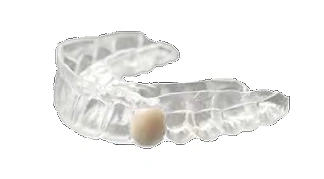
Full arch occlusion is one of the most demanding challenges in restorative dentistry. When every tooth in an arch must work together, even small errors can create big problems. Therefore, getting occlusion right from the start is essential to long-term restoration success.
Digital dentistry has changed how dental labs and clinicians approach these complex cases. Advanced CAD/CAM dentistry tools allow lab technicians to design and fabricate restorations with a level of precision that was difficult to achieve with traditional methods. As a result, full-arch cases are more predictable than ever before.
At Dentek Digital, we work with dentists across Greater Phoenix — including practices in Scottsdale, Mesa, Gilbert, and Chandler — to deliver full-arch restorations built on sound occlusal principles. This post covers what every clinician should know before sending a full-arch case to the lab.
What Is Full Arch Occlusion and Why Does It Matter?
Occlusion refers to how the upper and lower teeth come together during contact. In a full-arch case, every restored tooth plays a role in that contact. Therefore, the stakes are much higher than in a single-unit or small-span restoration.
Poor occlusion in a full-arch case can lead to several issues. These include restoration fractures, TMJ discomfort, uneven wear, and patient dissatisfaction. On the other hand, a well-designed occlusal scheme distributes forces evenly and protects both the restorations and the underlying structures.
Because full-arch cases involve the entire dentition, the lab and the clinician must communicate closely. Every detail — from the vertical dimension of occlusion to the anterior guidance — affects the final outcome.
The Role of the Vertical Dimension of Occlusion
The vertical dimension of occlusion (VDO) defines the height at which the teeth contact. In full-arch cases, the VDO is often altered to create space for restorative materials. However, changes to VDO must be carefully planned and tested before final fabrication.
At Dentek Digital, we support clinicians who use diagnostic wax-ups and digital smile design workflows to evaluate VDO changes before committing to final restorations. This planning step saves time and reduces remakes significantly. Moreover, it gives patients a preview of their outcome before treatment is complete.
Anterior Guidance and Its Impact on the Full Arch
Anterior guidance refers to how the front teeth guide the jaw during movement. It directly influences how the posterior teeth are loaded during function. Therefore, establishing correct anterior guidance is foundational in any full-arch occlusal plan.
In digital workflows, anterior guidance can be programmed and tested virtually before any physical restoration is made. This is one of the most powerful advantages of CAD/CAM-based full-arch design. Additionally, it allows for rapid adjustments without wasting clinical chair time.
Digital Workflows and Full Arch Occlusal Design
Digital dentistry has transformed the way full-arch occlusion is planned and executed. With intraoral scanning, digital articulation, and virtual occlusal analysis, the lab can evaluate function before a single restoration is milled or printed. Because of this, potential occlusal problems are caught earlier in the process.
Dentek Digital uses advanced CAD/CAM software to design full-arch cases with attention to every occlusal contact. Our technicians review centric relation, lateral excursions, and protrusive movements for every case. Furthermore, we collaborate directly with clinicians when case complexity requires additional input.
Intraoral Scans vs. Traditional Impressions in Full Arch Cases
High-quality intraoral scans provide accurate digital models that feed directly into the design workflow. They eliminate common impression errors such as bubbles, tears, and distortion. As a result, the digital model reflects the patient’s actual anatomy more reliably.
However, full-arch scanning requires technique and experience. Dentists in Mesa, Gilbert, and Chandler who are new to digital scanning often find that a few practice cases build their confidence quickly. Meanwhile, the lab benefits from cleaner data and fewer clarification calls. We encourage dentists to reach out to the Dentek Digital team early in the process if they have questions about scan quality for full-arch cases.
Bite Registration in the Digital Age
An accurate bite registration is still critical even with digital workflows. The bite record tells the lab how the upper and lower arches relate to each other in centric relation. Therefore, a poor bite registration can undermine even the most precise digital design.
For full-arch cases, we recommend using rigid bite registration materials and capturing the record at the planned VDO. Additionally, some clinicians send a facebow record to help the lab mount the case accurately in a virtual articulator. These steps improve the predictability of the final occlusal result.
Occlusal Schemes for Full Arch Restorations
There are several occlusal schemes used in full-arch restorative dentistry. The most common include mutually protected occlusion, lingualized occlusion, and group function. Each has specific applications depending on the patient’s anatomy and restorative goals.
Choosing the right scheme is a clinical decision. However, the dental lab plays an important role in executing that scheme accurately. At Dentek Digital, our technicians are trained to build restorations that honor the prescribed occlusal scheme. Moreover, we flag cases where the prescribed scheme may be difficult to achieve based on the submitted records.
Mutually Protected Occlusion
Mutually protected occlusion is the most widely used scheme in full-arch restorations. In this design, the anterior teeth protect the posteriors during excursive movements. Meanwhile, the posterior teeth support the anteriors in centric occlusion. This balanced approach distributes functional forces efficiently across the arch.
Group Function vs. Canine-Guided Occlusion
Group function involves multiple teeth sharing the load during lateral movements. Canine-guided occlusion places lateral guidance primarily on the canines. Both schemes are valid depending on the clinical situation. Therefore, clinicians should communicate their preferred scheme clearly when submitting full-arch cases to the lab.
Common Occlusal Challenges in Full Arch Cases
Even with the best planning, full-arch cases can present occlusal challenges at delivery. Understanding the most common issues helps clinicians troubleshoot more efficiently. Additionally, it helps set realistic expectations with patients before treatment begins.
Some of the most frequent occlusal problems in full-arch cases include:
- Premature contacts in centric occlusion — often caused by inaccurate bite records or scan distortion
- Heavy posterior contacts during excursions — may indicate insufficient anterior guidance or incorrect mounting
- Open contacts or uneven interproximal fit — can result from scan gaps or design errors
- Patient-reported sensitivity or discomfort after delivery — sometimes linked to occlusal overload on specific teeth
- Restoration fractures shortly after delivery — often a sign of undetected premature contacts or parafunctional habits
Because of this, thorough occlusal verification at the delivery appointment is always recommended. Using articulating paper in multiple thicknesses and checking in both centric and excursive positions gives the clinician a complete picture. Furthermore, following up with the patient within a few weeks catches any developing issues early.
How Dentek Digital Supports Full Arch Occlusal Accuracy
Our team at Dentek Digital approaches every full-arch case as a collaboration. We review all submitted records carefully before beginning design. If something is unclear or potentially problematic, we contact the sending practice directly before fabrication begins.
We serve practices across the Greater Phoenix area, including Scottsdale, Mesa, Tempe, Chandler, and Gilbert. Our digital workflow is built to support complex cases without sacrificing quality or turnaround time. Additionally, our TattooTH service and digital implant planning solutions give clinicians even more tools for full-arch success.
If you are ready to submit a full-arch case or want to discuss your next complex restoration, contact Dentek Digital and our team will be happy to guide you through the process.
Frequently Asked Questions About Full Arch Occlusion
What records does the lab need for a full-arch occlusal case?
At minimum, the lab needs accurate intraoral scans or impressions of both arches and a reliable bite registration at the correct VDO. A facebow record and diagnostic photos are also helpful for more complex cases. The more complete the records, the more predictable the result.
How does digital design improve full arch occlusion outcomes?
Digital design allows the lab to evaluate every occlusal contact virtually before fabrication begins. Therefore, potential interferences are identified and corrected before the restoration is made. This reduces chairside adjustments and improves first-fit success rates.
What is the best occlusal scheme for implant-supported full arch restorations?
Implant-supported restorations lack the proprioceptive feedback of natural teeth. Because of this, many clinicians prefer a modified occlusal scheme that reduces lateral forces on the implants. Your restorative dentist and the lab should determine the best approach based on the specific case.
Can Dentek Digital help if I am new to full arch digital cases?
Absolutely. We work with clinicians at all experience levels, from first-time digital users to highly experienced restorative specialists. Our team is available to answer questions, review case records, and guide you through the submission process step by step.
How do I submit a full arch case to Dentek Digital?
You can send us a case directly through our online case submission portal. Simply upload your scans, bite records, and case notes. Our team reviews every submission and reaches out if any clarification is needed before fabrication begins.
Partner with Dentek Digital for Your Full Arch Cases
Full arch occlusion requires careful planning, precise records, and a lab partner who understands the complexity involved. Dentek Digital brings advanced digital technology and skilled craftsmanship to every case we fabricate. Moreover, our team is always available to support clinicians throughout the Greater Phoenix area.
Whether you are practicing in Scottsdale, Mesa, Tempe, or anywhere else across Arizona, we are ready to help you deliver outstanding full-arch results for your patients. Explore your options and take the next step toward more predictable full-arch outcomes by reaching out to the Dentek Digital team today.