
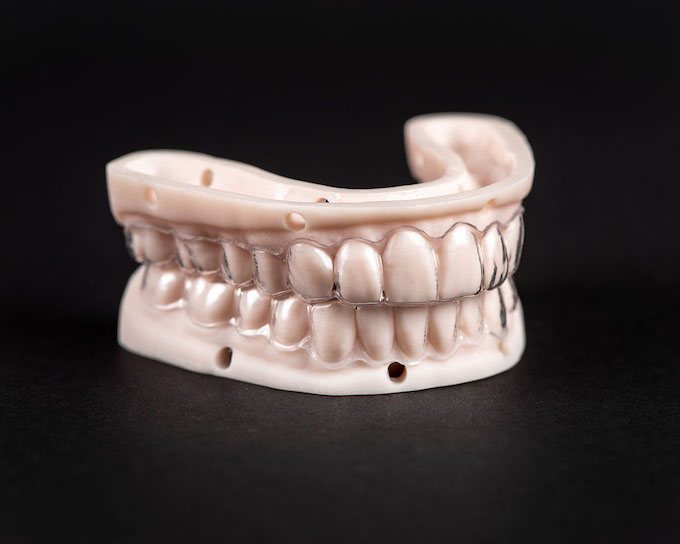
Printed restoration quality is one of the most important topics in digital dentistry today. As 3D printing technology advances rapidly, dental labs and dental practices face new expectations. Every printed crown, splint, or surgical guide must meet precise clinical standards before it ever reaches a patient.
However, achieving consistent quality takes more than good equipment. It requires disciplined processes, skilled technicians, and thorough checkpoints at every stage. Therefore, understanding how quality control works — from design to delivery — matters deeply to every dentist relying on a digital lab.
At Dentek Digital, we serve dental professionals across the Greater Phoenix area, including Mesa, Scottsdale, Chandler, and Gilbert. Our team applies rigorous quality control protocols to every printed restoration we fabricate. This guide walks you through the key steps and why each one matters.
Why Quality Control Matters in 3D-Printed Restorations
3D printing has transformed the dental lab workflow. Additionally, it has raised the bar for what dentists and patients expect from restorations. A printed restoration that fits poorly or lacks strength creates clinical problems and chairside frustration.
Furthermore, printed materials behave differently from milled ceramics or cast metals. Because of this, labs must adapt their quality control strategies specifically for printed outputs. General inspection methods are simply not enough.
Moreover, dental practices in Phoenix and surrounding communities like Tempe and Chandler depend on their lab partners to deliver reliable results. A strong quality control system protects both the dentist’s time and the patient’s outcome.
The Unique Challenges of 3D-Printed Dental Parts
Printed restorations require layer-by-layer fabrication. As a result, any inconsistency in material, orientation, or post-processing can affect the final fit. Even small errors in layer adhesion can compromise strength or marginal integrity.
In addition, different resin materials behave differently under light curing and thermal stress. Therefore, each material type requires its own validated process. Labs cannot use a one-size-fits-all approach to quality control.
Step-by-Step Quality Control for Printed Restorations
A reliable quality control process covers multiple checkpoints. First, it starts at the digital design stage. Then it continues through printing, post-processing, and final inspection. Each step builds on the one before it.
Step 1 — Digital Design Verification
Quality control begins before the printer even starts. First, the digital design file must be reviewed carefully. The technician checks margin placement, occlusal anatomy, and contact points against the case prescription.
Additionally, software tools flag potential issues such as thin walls or undercuts that could cause print failures. Because of this, catching design errors early saves significant time and materials. It also prevents the need for costly remakes.
For example, a crown with an overly thin cusp tip may look correct on screen but fail during post-curing. Therefore, design verification is a non-negotiable first checkpoint in any serious quality control workflow.
Step 2 — Printer Calibration and Material Validation
Next, the printer itself must be properly calibrated before each build. This includes verifying light source intensity, build platform levelness, and resin temperature. Even minor calibration drift can cause dimensional inaccuracies.
Furthermore, every resin material must be validated for the specific printer and settings being used. Manufacturers publish recommended parameters, but labs should verify those settings against their own equipment regularly. On the other hand, skipping this step leads to unpredictable results across different material batches.
Meanwhile, material storage conditions also affect print quality. Resins exposed to heat, light, or humidity before use may underperform even on a perfectly calibrated machine.
Step 3 — Build Orientation and Support Strategy
Build orientation has a direct impact on printed restoration quality. Specifically, the angle at which a restoration is printed affects surface detail, layer line visibility, and strength. Therefore, experienced technicians choose orientation deliberately, not arbitrarily.
Additionally, support structures must be placed carefully. Supports hold the restoration in position during printing, but they also leave marks where they attach. As a result, placing supports away from critical surfaces — like margins and occlusal contacts — is essential.
In addition, nesting multiple restorations in a single build requires attention to spacing and airflow. Poor nesting can cause print failures or inconsistent curing across parts.
Step 4 — Post-Processing Controls
Post-processing is where many quality issues either get resolved or introduced. First, printed parts must be washed properly to remove uncured resin. Incomplete washing leaves a sticky, under-polymerized surface that affects fit and biocompatibility.
Then, the curing stage must deliver the correct light energy dose for the specific material. Under-cured restorations may be too flexible. Over-cured restorations can become brittle or discolored. Therefore, labs must use validated curing units with timed cycles.
Furthermore, support removal requires skill. Aggressive support removal can chip margins or distort the restoration geometry. This step demands trained hands and proper tools. Contact Dentek Digital to learn how our post-processing protocols protect the integrity of every case we fabricate.
Step 5 — Dimensional and Fit Verification
After post-processing, every restoration must be checked against the digital model and the physical model. First, the technician seats the restoration on the model and evaluates marginal fit visually and with an explorer.
Additionally, many labs use digital scanning to compare the printed output against the original design file. This process, sometimes called a scan-to-design comparison, reveals dimensional drift that the naked eye might miss. As a result, it adds a powerful layer of objective verification.
Moreover, contact points and occlusal clearance are checked before any finishing or polishing occurs. Finding fit issues at this stage is far better than discovering them at chairside.
Step 6 — Surface Quality and Finishing Inspection
Surface quality matters both clinically and aesthetically. For example, a rough internal surface can trap cement and affect seating. A rough occlusal surface can wear opposing dentition over time. Therefore, surface finishing must be performed consistently and checked carefully.
In addition, polishing protocols vary by material type. Some printed resins can be polished to a high luster. Others require specific polishing compounds to avoid surface degradation. Following manufacturer guidelines here protects both appearance and longevity.
Finally, the lab technician performs a complete visual inspection under magnification before releasing the case. This final check confirms that the restoration is clean, well-finished, and ready for delivery.
Material-Specific Considerations for 3D Printing Quality
Not all printed restorations are the same. The quality control process must account for the specific material being used. However, some general principles apply broadly across printed dental materials.
Printed Resin Crowns and Bridges
Printed resin crowns and bridges require careful attention to layer adhesion and post-cure hardness. Additionally, color stability over time depends heavily on proper curing and finishing. Therefore, the lab must follow validated workflows for each specific resin class.
Furthermore, resins approved for definitive restorations have stricter quality requirements than those used for temporaries. Labs must track which resins are cleared for long-term use and apply corresponding quality standards.
Surgical Guides and Splints
Printed surgical guides demand exceptional dimensional accuracy. For example, even a small angular error in a guide can affect implant placement significantly. As a result, dimensional verification is especially critical for these appliances.
Meanwhile, printed splints and nightguards must balance flexibility with strength. Proper curing and correct material selection are both essential. Additionally, fit on the model must be evaluated with particular attention to border adaptation and occlusal surface accuracy.
Dental practices in Mesa, Gilbert, and across the Phoenix metro area rely on these appliances to deliver predictable clinical outcomes. Therefore, the quality bar for printed guides and splints must remain consistently high.
Building a Culture of Quality in the Digital Dental Lab
Quality control is not just a checklist. It is a mindset that must be embedded in every part of the lab workflow. Moreover, it requires ongoing training as materials and technologies evolve.
For example, technicians should document quality findings over time. Tracking trends helps identify recurring issues before they become systemic problems. Additionally, regular calibration logs and material batch records support traceability when questions arise.
Furthermore, open communication between the lab and the dental practice is part of quality control. When a dentist in Scottsdale or Tempe sends clear case notes, photos, and accurate impressions or scans, the lab can produce better results. Quality is a shared responsibility.
As a result, the most successful lab-dentist partnerships are built on clear communication, consistent documentation, and mutual accountability. This is the foundation of CAD/CAM dentistry done right.
Frequently Asked Questions About Printed Restoration Quality
What is the most common cause of printed restoration failure?
Most printed restoration failures trace back to post-processing errors. Incomplete washing or incorrect curing times are common culprits. Additionally, poor build orientation can cause layer delamination or margin chipping.
How do labs verify the fit of a printed restoration?
Labs use a combination of physical model seating and digital scan-to-design comparison. First, the technician checks the restoration on the stone or printed model. Then, a 3D scan may be used to measure dimensional accuracy against the original digital file.
Are printed restorations as strong as milled restorations?
Strength depends on the material and application. However, modern printed resins approved for definitive use have improved significantly. For specific strength comparisons, consult the material manufacturer’s clinical data for the product being used.
How often should a dental lab recalibrate its 3D printer?
Calibration frequency depends on print volume and manufacturer recommendations. However, most labs benefit from checking calibration at the start of each work week. Additionally, recalibration should occur after any major maintenance or material change.
Can dental practices in Phoenix request a quality review before a case ships?
Yes. Many digital labs, including Dentek Digital, welcome communication about case-specific quality concerns. Therefore, dental practices should not hesitate to discuss standards and expectations with their lab partner before submitting a case.
Partner With a Digital Lab That Prioritizes Quality
Printed restoration quality does not happen by accident. It is the result of disciplined processes, trained technicians, and a genuine commitment to excellence at every step. Furthermore, it requires a lab that invests in the right technology and the right people.
At Dentek Digital, we have been at the forefront of digital dentistry since the earliest days of CAD/CAM workflows in the United States. We proudly serve dental professionals in Phoenix, Mesa, Scottsdale, Chandler, Gilbert, Tempe, and beyond. Additionally, our team combines advanced technology with hands-on craftsmanship to deliver restorations you and your patients can count on.
Whether you need printed crowns, surgical guides, splints, or full-arch solutions, we are ready to support your practice. Explore your options and contact Dentek Digital today to send us a case or request a consultation with our team.