
Tooth loss affects far more patients than most people realize. For patients who are fully edentulous — meaning they have lost all of their teeth in one or both arches — the impact goes well beyond appearance. It affects chewing, speech, confidence, and long-term bone health. Fortunately, edentulous implants have transformed the way dental professionals approach full-arch tooth replacement.
At Dentek Digital, we work with dentists and dental practices across Phoenix and the Greater Arizona area to fabricate implant restorations that deliver real, lasting results. Our digital CAD/CAM workflow gives us the precision to support complex full-arch cases with consistency and efficiency.
In this post, we’ll walk through the most common implant solutions for edentulous patients, how digital dentistry improves outcomes, and what your lab partnership should look like for these cases.
Understanding Edentulous Patients and Their Restoration Needs
An edentulous patient has lost all teeth in one or both arches. This is different from a partially edentulous patient, who still has some remaining natural teeth. Full edentulism creates unique clinical challenges. Therefore, the restoration approach must account for bone volume, bite forces, and aesthetics all at once.
Many edentulous patients have been wearing conventional dentures for years. However, dentures do not stop bone resorption. Over time, the jaw ridge shrinks, and the fit of a denture becomes less stable. As a result, patients often experience discomfort, poor chewing function, and reduced quality of life.
Implant-supported restorations address these issues directly. They provide a stable foundation anchored in bone. Moreover, they help preserve the remaining bone by stimulating the jaw the way natural tooth roots once did.
Who Is a Candidate for Edentulous Implant Restorations?
Candidacy depends on several clinical factors. Bone density and volume play a major role. Additionally, the patient’s overall health, healing capacity, and commitment to maintenance all matter. Some patients may require bone grafting before implant placement. Others are ready to move forward with minimal preparatory work.
Dentists in Scottsdale, Chandler, Mesa, and Gilbert are increasingly referring complex edentulous cases to labs like Dentek Digital. They understand that digital planning and precision fabrication make a significant difference in outcomes.
Common Implant Restoration Options for Edentulous Patients
Several well-established restoration types serve edentulous patients well. Each option has distinct advantages depending on the patient’s anatomy, lifestyle, and goals. Below, we cover the most widely used solutions.
Implant-Supported Overdentures
An overdenture sits over and attaches to two or more implants. It is removable, which many patients find convenient for cleaning. Furthermore, the implants provide retention and stability that a traditional denture simply cannot match.
Overdentures are often a practical starting point for patients transitioning from conventional dentures. They tend to require fewer implants than fixed alternatives. Because of this, they can be more accessible for a broader range of patients.
At Dentek Digital, we fabricate precision overdenture frameworks and bases using our digital workflow. This ensures accurate fit, proper occlusion, and consistent quality across every case.
Fixed Implant-Supported Bridges (Full-Arch Fixed Restorations)
Fixed full-arch restorations are non-removable prostheses supported by multiple implants. These are often referred to by protocol names like All-on-4 or All-on-X. However, the underlying concept is consistent: a full arch of teeth is permanently anchored to a set of strategically placed implants.
Patients who choose fixed implant restorations often report a dramatically improved sense of normalcy. They eat, speak, and smile with confidence. In addition, the restoration does not shift or slip the way a removable appliance might.
These cases require close collaboration between the dentist and the dental lab. Digital impressions, precise occlusal records, and accurate implant position data are all essential. Therefore, a lab with a true digital workflow is a valuable partner in these cases.
Implant-Supported Zirconia Restorations
Zirconia has become a leading material for full-arch implant restorations. It is strong, biocompatible, and highly aesthetic. Moreover, zirconia resists chipping and staining better than many alternative materials.
At Dentek Digital, we mill zirconia restorations using advanced CAD/CAM technology. This produces highly accurate units with consistent fit and beautiful aesthetics. Dentists in the Phoenix area and beyond trust our zirconia work for their most demanding implant cases.
How Digital Dentistry Elevates Edentulous Implant Cases
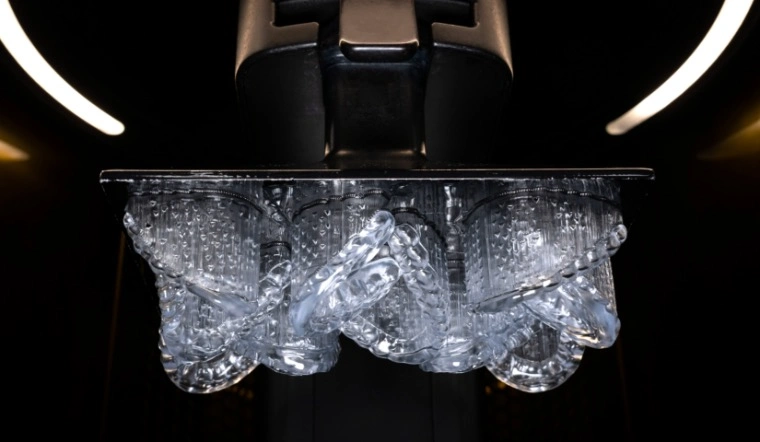
The shift to digital workflows has changed what is possible in implant dentistry. Traditional analog methods rely on physical impressions and manual fabrication. Digital dentistry, by contrast, uses intraoral scans, digital design software, and computer-controlled milling or printing to create restorations with exceptional precision.
For edentulous implant cases specifically, this matters enormously. Full-arch restorations involve multiple implant positions, complex occlusal relationships, and significant aesthetic demands. A small error in any of these areas can compromise the entire case.
CAD/CAM Technology and Full-Arch Accuracy
CAD/CAM dentistry allows labs to design and mill restorations with micron-level precision. This is especially valuable for full-arch implant cases, where passive fit is critical. A framework that does not fit passively can create stress on the implants over time. As a result, precise digital fabrication directly supports long-term implant health.
Dentek Digital was one of the earliest adopters of the CAD/CAM workflow in the country. We have refined our process across thousands of cases. Therefore, our team understands the nuances of full-arch implant fabrication at a level that only comes from experience.
Digital Implant Planning Support
Beyond fabrication, Dentek Digital also offers digital implant planning services. This means dentists can collaborate with our team before surgery, not just after. We help evaluate implant positioning in relation to the planned restoration. This prosthetically driven approach improves outcomes and reduces complications.
Practices in Tempe, Mesa, Scottsdale, and throughout the Phoenix metro area have found this service particularly valuable for full-arch cases. Planning the restoration first — and working backward to implant position — is one of the most effective strategies in complex edentulous cases.
What Dentists Should Send to the Lab for Edentulous Implant Cases
A successful edentulous implant restoration starts with accurate records. The better the information we receive, the better the result we can deliver. Here is a general checklist for submitting full-arch implant cases to Dentek Digital:
- Digital scan or verified PVS impression of the implant positions
- Opposing arch scan or impression for accurate occlusal design
- Bite registration at the correct vertical dimension
- Implant analog or scan body information, including the implant system and platform
- Shade selection or aesthetic preferences for the final restoration
- Any relevant CBCT or planning data if digital implant planning is involved
If you have questions about case submission, our team is always available to help. Contact Dentek Digital before you send your case, and we will walk you through everything you need.
Working with a Digital Lab in the Greater Phoenix Area
Location matters more than many dentists realize when choosing a lab partner. Working with a local digital lab in Phoenix means faster turnaround times, easier communication, and the ability to visit in person when a case requires it.
Dentek Digital serves dental practices throughout the Greater Phoenix area, including Scottsdale, Chandler, Gilbert, Mesa, and Tempe. We understand the patient populations and clinical environments in these communities. Furthermore, our team is accessible and responsive in ways that large national labs often are not.
We combine the technological capabilities of a national leader with the attentiveness of a local partner. That combination is hard to find — and it makes a real difference in how cases get handled.
Our Commitment to Quality and Craftsmanship
Technology alone does not make a great restoration. Skilled craftsmanship and deep clinical understanding are equally important. At Dentek Digital, we pair our advanced milling and design capabilities with experienced technicians who take pride in every case they handle.
This is especially important for edentulous implant cases, which are among the most complex in restorative dentistry. We do not treat these as routine jobs. Instead, we approach each case with the attention it deserves.
Frequently Asked Questions About Edentulous Implant Restorations
What is the difference between an overdenture and a fixed full-arch restoration?
An overdenture is removable and clips onto implants for retention. A fixed full-arch restoration is permanently attached and can only be removed by a dental professional. Both are supported by implants, but they differ in stability, maintenance, and cost.
How many implants are typically needed for a full-arch restoration?
The number varies based on bone volume and the chosen restoration type. Overdentures often use two to four implants. Fixed full-arch restorations typically use four to six or more, depending on the clinical approach and protocol.
Can a patient with significant bone loss still receive edentulous implants?
In many cases, yes. Bone grafting or specialized implant angulation strategies can make implant placement possible even with reduced bone volume. The dentist and treatment team assess bone quality before recommending a course of action.
What materials does Dentek Digital use for full-arch implant restorations?
We work primarily with high-strength zirconia and other proven materials suited to full-arch implant cases. Material selection depends on the case requirements, including aesthetics, bite forces, and the chosen restoration type.
How does digital planning improve edentulous implant outcomes?
Digital implant planning allows the team to design the restoration before surgery. This prosthetically driven approach guides implant placement for optimal support and aesthetics. As a result, it reduces the risk of complications and improves long-term function.
Partner with Dentek Digital for Your Edentulous Implant Cases
Edentulous implant cases are some of the most rewarding in dentistry — for patients and providers alike. They also require a lab partner who understands the complexity involved and has the tools to deliver at a high level.
Dentek Digital brings together advanced CAD/CAM technology, experienced technicians, and a genuine commitment to your success. We are proud to support dentists and practices across Phoenix, Scottsdale, Mesa, Chandler, Gilbert, Tempe, and the surrounding Greater Arizona area.
Whether you are ready to send a case or simply want to explore your options, our team is here to help. Reach out today to discuss your next full-arch implant case and discover what a true digital lab partnership looks like.