
When a patient wants teeth the same day, the pressure on your team is real. Immediate load implants demand precise planning, fast turnaround, and flawless execution. Every step matters, and the dental lab plays a central role in making it work.
Many dentists in Phoenix, Scottsdale, and the surrounding communities are offering same-day or next-day implant solutions. However, the success of these cases depends on more than surgical skill. It also depends on a lab that understands the workflow and moves quickly without cutting corners.
At Dentek Digital, we partner with dental practices across the Greater Phoenix area to support complex implant cases from planning to final delivery. In this post, we break down exactly how a digital dental lab supports immediate load cases — and why the right lab partner makes all the difference.
What Are Immediate Load Implants?
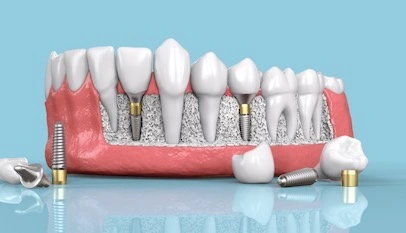
Immediate load implants allow a patient to receive a restoration on the same day as implant placement. Traditional implant protocols require a healing period before loading. However, advances in implant design and digital workflows have made same-day loading a reliable option for many patients.
The term “immediate loading” refers to placing a temporary or final dental restoration on an implant within 48 hours of surgery. This approach offers clear benefits for patients. They leave the office with a functional, esthetic result right away.
Who Are Good Candidates?
Not every patient qualifies for immediate loading. Good candidates typically have adequate bone density and volume. They also need favorable implant stability at the time of placement.
Additionally, patients must be committed to following post-operative guidelines. Because of this, careful patient selection is essential. A well-planned case reduces risk and supports long-term success.
The Lab’s Role in Immediate Load Cases
The dental lab is not just a fabrication center. In immediate load cases, the lab is a true clinical partner. From pre-surgical planning to same-day delivery, the lab’s involvement shapes the outcome.
Moreover, a digital lab brings speed and precision that traditional labs simply cannot match. CAD/CAM technology allows us to design and mill restorations in a fraction of the time. As a result, turnaround times are tighter and accuracy is higher.
Pre-Surgical Planning Support
Successful immediate load cases start well before the patient arrives for surgery. First, the lab works with the dentist to review scans and plan the restoration. This step ensures the implant position supports the planned prosthetic outcome.
Digital planning tools allow us to map the restoration in three dimensions. Therefore, the surgical guide and the final design are aligned from the start. This reduces surprises on the day of surgery.
Dental practices in Mesa, Chandler, and Tempe trust this pre-surgical collaboration to keep cases on track. Planning ahead saves time and prevents costly revisions later.
Surgical Guide Fabrication
A precise surgical guide is one of the most important tools in an immediate load case. It directs implant placement to the exact position the prosthetic design requires. Without it, the restoration may not fit as planned.
At Dentek Digital, we fabricate surgical guides using advanced CAD/CAM technology. Furthermore, our digital workflow ensures each guide is accurate to the planned design. This level of precision supports better clinical outcomes.
Fabricating the Provisional Restoration
In immediate load cases, a provisional restoration is often placed on the day of surgery. This temporary crown or bridge protects the implant and gives the patient immediate esthetics and function. However, it must be fabricated before or quickly after surgery.
Because of this, the lab must receive accurate records well in advance. Digital scans, bite records, and shade information all help the lab prepare the provisional ahead of time. The goal is to have it ready when the patient needs it.
CAD/CAM Milling for Speed and Accuracy
Digital milling allows us to produce high-quality provisionals in a short timeframe. We use CAD/CAM technology to design the restoration digitally and mill it from a high-strength material block. This process is fast, precise, and repeatable.
Additionally, milled provisionals fit better than hand-fabricated alternatives. Better fit means less adjustment time chairside. As a result, the appointment runs more smoothly for both the patient and the clinician.
Same-Day Delivery Options
For practices in the Phoenix metro area, same-day delivery is often possible. We serve dental offices in Gilbert, Scottsdale, Tempe, and surrounding communities. Our proximity to these practices gives us a logistical advantage in urgent cases.
Therefore, practices in our service area can plan tighter timelines with confidence. We work with your schedule to make delivery meet your clinical needs. Communication is key, and we stay in close contact throughout the process.
If you are planning an immediate load case, contact Dentek Digital early to coordinate your timeline and confirm fabrication details before the appointment.
The Transition to the Final Restoration
Immediate load cases do not end with the provisional. The final restoration is the long-term solution, and it requires careful attention to detail. After the implant integrates, the lab fabricates the definitive crown, bridge, or full-arch prosthetic.
Meanwhile, the provisional serves as a blueprint. It captures the approved shape, length, and bite relationship. The lab uses this information to guide the final design.
Using the Provisional as a Design Reference
A well-made provisional communicates a lot to the lab. It shows us what worked and what may need adjustment. Furthermore, a digital scan of the approved provisional can be used directly in the CAD/CAM design process.
This approach reduces guesswork. As a result, the final restoration is more predictable and requires fewer remakes. It also shortens the appointment time for the patient’s final delivery visit.
Material Selection for Final Restorations
The right material depends on the clinical situation. For single-tooth implant restorations, full-contour zirconia is a popular choice. It offers excellent strength and esthetics with minimal bulk.
For full-arch cases, layered zirconia or hybrid materials may be more appropriate. Additionally, the occlusal design must account for implant biomechanics. Our technicians guide material selection based on the specific case requirements.
Full-Arch Immediate Load Cases
Full-arch immediate load cases, sometimes called All-on-4 or similar protocols, are among the most complex in dentistry. However, they are also among the most rewarding for patients. These cases require extensive coordination between the surgeon, restorative dentist, and lab.
The lab’s role in full-arch cases includes fabricating the surgical guide, the immediate provisional arch, and the final prosthetic. Each phase requires precise execution. Moreover, any error at one stage can affect the next.
Full-Arch Provisional Design
A full-arch provisional must meet several demands. First, it must look natural and esthetic. Next, it must function well enough for the patient to eat and speak comfortably. Finally, it must protect the healing implants during the osseointegration period.
We design full-arch provisionals using digital workflows that allow for accurate occlusal planning. This means the provisional is not just a placeholder — it is a clinically sound transitional restoration. Because of this, the path to the final prosthetic is smoother.
Conversion and Final Prosthetic Fabrication
After osseointegration, the provisional is typically replaced with a definitive prosthetic. In many cases, the approved provisional design is converted directly into the final design using digital records. This saves time and maintains the esthetic result the patient already loves.
At Dentek Digital, we offer both milled zirconia and hybrid full-arch solutions. Our team works with practices in Chandler, Mesa, and across the Phoenix metro to complete these cases efficiently.
Tips for Dentists Planning Immediate Load Cases
Immediate load cases reward careful preparation. Here are practical steps to set your case up for success:
- Start planning early. Send scans and case details to the lab before the surgery date. Early coordination prevents last-minute problems.
- Use a digital scan for records. Intraoral scans are faster and more accurate than traditional impressions for implant cases.
- Confirm implant details upfront. Share the implant system, platform, and connection type with your lab before fabrication begins.
- Discuss material options in advance. Talk to your lab about which material suits the case. Not every material works for every loading situation.
- Plan for the final restoration from the start. The provisional and final designs should align. Design the final outcome first, then work backward to plan the provisional.
- Maintain open communication. Keep the lab informed about any clinical changes. A simple message can prevent a costly redo.
Frequently Asked Questions
What does the dental lab need to fabricate an immediate load provisional?
The lab needs a digital scan or accurate impressions, bite records, shade selection, and the implant system details. Additionally, knowing the surgery date helps the lab plan the fabrication timeline. The more information provided upfront, the better the result.
How far in advance should I send an immediate load case to the lab?
Ideally, send the case several days before the surgery date. This gives the lab time to fabricate the provisional without rushing. However, digital workflows allow for faster turnaround when needed. Talk to your lab about their specific lead times.
Can the lab fabricate both the surgical guide and the provisional?
Yes. At Dentek Digital, we fabricate surgical guides, immediate provisionals, and final restorations. Handling all phases in one lab streamlines communication and improves consistency across the case.
What materials work best for immediate load provisionals?
Milled PMMA (a durable acrylic-based material) is commonly used for immediate load provisionals. It is strong enough for temporary function and easy to adjust chairside. For full-arch cases, high-strength milled materials are preferred over hand-processed alternatives.
Does Dentek Digital support full-arch immediate load cases?
Yes. We support single-tooth and full-arch immediate load cases for practices across the Greater Phoenix area. Our digital workflow and experienced team make us a reliable partner for complex implant cases in Phoenix, Scottsdale, Mesa, Tempe, Chandler, and Gilbert.
Partner With a Lab That Moves at Your Pace
Immediate load implants demand speed, accuracy, and seamless coordination. The dental lab is not a passive participant — it is a critical partner at every stage of the case. Choosing the right lab can be the difference between a smooth case and a stressful one.
At Dentek Digital, we combine advanced CAD/CAM technology with deep clinical expertise. We have supported dental practices across Phoenix, Scottsdale, Mesa, Tempe, Chandler, and Gilbert through some of the most demanding implant cases. Furthermore, our digital workflow is built for speed without sacrificing quality.
Whether you are planning your first immediate load case or refining an established protocol, we are here to help. Explore your options and take the next step by visiting our Send Us a Case page to get started with Dentek Digital today.