Modern dental labs no longer rely on a single fabrication method. Instead, they combine the strengths of two powerful technologies to deliver better results. Understanding milling vs printing helps dental professionals make smarter decisions for their patients.
Both milling and 3D printing have transformed how dental restorations are made. Together, they give labs like Dentek Digital greater flexibility, precision, and speed. As a result, dentists across the Greater Phoenix area benefit from restorations that are both accurate and efficient.
This post breaks down how each technology works, when labs use one over the other, and why combining them produces superior outcomes. Whether you serve patients in Scottsdale, Mesa, Chandler, or Gilbert, understanding your lab’s workflow helps you deliver better care.
What Is Milling in a Digital Dental Lab?
Milling is a subtractive process. A machine carves a restoration out of a solid block of material. The block is typically zirconia, ceramic, PMMA, or composite resin.
CAD/CAM software guides the milling machine with extreme precision. The result is a restoration that matches the digital design closely. Furthermore, milled restorations are known for their strength and density.
Common Uses for Milling
Milling works best for restorations that require high strength. Therefore, labs frequently use it for crowns, bridges, and full-arch frameworks. It is also ideal for materials that cannot be printed effectively.
- Zirconia crowns and bridges — durable and esthetic
- Full-contour restorations — milled from solid ceramic blocks
- PMMA temporaries — strong and well-fitting provisional restorations
- Implant frameworks — require tight tolerances and dense material
Milling produces a very smooth surface finish. In addition, the material properties of milled blocks are highly consistent. This consistency is critical for long-term performance in the mouth.
What Is 3D Printing in a Digital Dental Lab?
3D printing is an additive process. The machine builds a restoration layer by layer from a liquid resin or other printable material. This approach opens up design possibilities that milling cannot always achieve.
Modern dental 3D printers operate with impressive accuracy. Moreover, they can produce multiple units simultaneously. This makes printing highly efficient for certain case types.
Common Uses for 3D Printing
Printing excels where complexity and customization matter most. For example, it handles intricate geometries that would be difficult or wasteful to mill. It is also a strong choice for diagnostic and interim applications.
- Surgical guides — precise placement guides for implant procedures
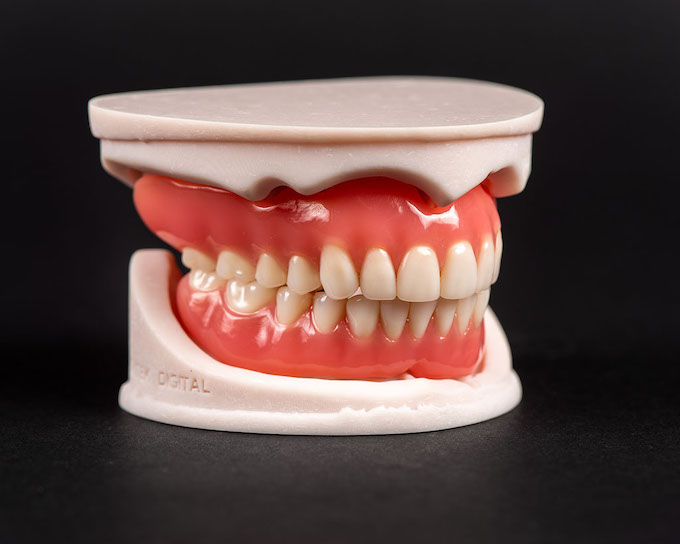
- Denture bases and try-ins — excellent fit with minimal material waste
- Occlusal splints and nightguards — flexible and custom-fit
- Models and study casts — accurate replicas for planning and communication
- Wax-up patterns — used in the casting workflow for metal restorations
Because of this versatility, printing has become a core part of the modern digital lab workflow. Additionally, it reduces material waste compared to milling, which removes material from a block.
Milling vs Printing: Key Differences
When labs evaluate milling vs printing, they consider several factors. Material type, restoration design, required strength, and turnaround time all play a role. Neither technology is universally better — each has its strengths.
Material Compatibility
Milling handles hard, dense materials like zirconia and ceramic very well. On the other hand, printing uses resins that are improving rapidly but still differ in physical properties. Therefore, material choice often drives the decision between the two methods.
Zirconia, for example, cannot currently be printed to the same clinical standard as milled zirconia. However, printable resins are advancing quickly. Labs stay current with these developments to offer the best options available.
Design Complexity
Printing can achieve undercuts and complex geometries more easily than milling. Meanwhile, milling is limited by the physical path of the bur. For highly complex designs, printing often wins on flexibility.
However, milling delivers a superior surface quality for restorations that will be bonded or placed directly. As a result, labs often choose milling for final prosthetics and printing for guides, models, and temps.
Speed and Efficiency
Both technologies offer fast turnaround compared to traditional lab methods. Furthermore, 3D printing can batch multiple units in a single build. Milling typically handles one or a few units per cycle, depending on the machine and block size.
For high-volume labs serving practices across Phoenix, Tempe, Mesa, and Chandler, both capabilities are essential. Together, they allow the lab to handle diverse case types without bottlenecks.
Why Smart Labs Use Both Technologies
The most advanced digital labs do not choose between milling and printing. Instead, they integrate both into a seamless workflow. This hybrid approach gives them the ability to match each case to the right process.
At Dentek Digital, we leverage both technologies to serve dental practices across the Greater Phoenix area. Our team evaluates every case individually. Therefore, each restoration is fabricated using the method best suited to the material and clinical requirements.
A Real-World Workflow Example
Consider a full-arch implant case. The surgical guide is printed for precise, patient-specific placement. Next, the diagnostic wax-up is also printed for efficient planning and communication.
Then, the final implant-supported bridge framework is milled from zirconia. Finally, the esthetic layer is hand-layered by a skilled technician. This multi-step process combines the best of both technologies.
Additionally, a temporary restoration may be milled from PMMA while the final case is fabricated. As a result, the patient always has a functional, esthetic provisional in place. This is the kind of integrated thinking that defines a true digital lab workflow.
If you want to explore how this workflow could benefit your practice, contact Dentek Digital and we will walk you through our process.
How This Benefits Dentists in the Greater Phoenix Area
Dental practices in Scottsdale, Gilbert, Chandler, and across Phoenix are always looking for a competitive edge. Partnering with a lab that combines milling and printing gives you that edge. You get faster turnaround, better fit, and more options for complex cases.
Furthermore, a hybrid lab workflow supports better patient outcomes. When the right process is used for each restoration type, accuracy improves. Moreover, fewer remakes mean less chair time and a smoother patient experience.
Restorations That Benefit Most from a Hybrid Approach
Certain case types benefit significantly from combining both methods. Here are some strong examples worth noting:
- Implant cases — printed guides paired with milled final restorations
- Full-arch reconstructions — printed try-ins followed by milled frameworks
- Splints and nightguards — printed for custom fit and flexibility
- Same-day or rapid-turnaround cases — printing accelerates the early stages
Because of this flexibility, practices that send cases to a hybrid digital lab can handle a wider range of patient needs. In addition, they can offer more predictable timelines to their patients.
The Role of CAD/CAM in Unifying the Workflow
CAD/CAM dentistry is the foundation that makes hybrid fabrication possible. The digital design file is the same regardless of which machine produces the restoration. Therefore, the transition from milling to printing — or vice versa — is seamless within a well-structured lab workflow.
Skilled technicians review every digital design before fabrication begins. They choose the correct output method based on the case specifications. As a result, the final restoration meets the clinical and esthetic requirements every time.
At Dentek Digital, we were among the earliest adopters of the digital CAD/CAM workflow in the country. This experience means we have refined our hybrid process over many years. Our team brings both technical expertise and skilled craftsmanship to every case we produce.
Frequently Asked Questions
Is milling or printing better for crowns?
Milling is generally preferred for final crowns, especially in zirconia or ceramic. These materials perform better when milled from a dense block. However, printing may be used for temporary crowns in some workflows.
Can a dental lab use both milling and printing for the same case?
Yes, and this is increasingly common. For example, a surgical guide may be printed while the final implant crown is milled. This hybrid approach uses each technology where it performs best.
How does the milling vs printing decision affect turnaround time?
Both methods are fast compared to traditional techniques. Printing can batch multiple units quickly. Meanwhile, milling offers precise, high-quality output for dense materials. A well-equipped lab optimizes both for speed and accuracy.
What materials can be 3D printed for dental restorations?
Current printable materials include resins for temporaries, models, surgical guides, splints, and denture bases. Material science is advancing rapidly. Therefore, the range of printable applications continues to grow.
How do I know which fabrication method my lab is using?
Ask your lab directly. A transparent digital lab will explain which technology is used for each restoration type. Furthermore, they should be able to justify the choice based on clinical needs and material properties.
Partner with a Lab That Masters Both Technologies
The debate of milling vs printing is not really a debate at all. The best dental labs use both — and they know exactly when to use each one. This expertise separates a truly advanced digital lab from one that relies on a single approach.
Dentek Digital serves dental practices across Phoenix, Scottsdale, Mesa, Chandler, Gilbert, and Tempe with a full suite of digital fabrication services. Our team combines cutting-edge technology with hands-on craftsmanship. As a result, we deliver restorations that are accurate, esthetic, and reliable.
Whether you need a single crown, a full-arch implant case, splints, or removables, we have the tools and expertise to deliver. Send us a case today and experience the Dentek Digital difference for yourself.
Ready to get started? Contact Dentek Digital to discuss your next case and discover how our hybrid milling and printing workflow can support your practice and your patients.