Accuracy matters more than almost anything else in dental restorations. A crown that doesn’t fit perfectly causes patient discomfort, wasted chair time, and costly remakes. CAD CAM dentistry has fundamentally changed how dental labs and dental practices achieve that precision. At Dentek Digital, we use advanced CAD/CAM technology every day to fabricate restorations that fit right the first time.
Dentists across the Greater Phoenix area — from Scottsdale to Chandler and beyond — are discovering what this technology can do for their patients. The results speak for themselves. Better fit, faster turnaround, and fewer remakes.
In this post, we break down exactly how CAD/CAM technology improves accuracy. We also explain why it matters for your practice and your patients.
What Is CAD/CAM Technology in Dentistry?
CAD/CAM stands for Computer-Aided Design and Computer-Aided Manufacturing. In dentistry, it refers to the digital workflow used to design and mill dental restorations. This includes crowns, bridges, veneers, implant restorations, and more.
Instead of relying solely on manual impressions and hand-poured models, the digital workflow uses precise 3D scans. These scans feed directly into design software. From there, milling machines or 3D printers fabricate the restoration with extreme precision.
How the Digital Workflow Starts
The process begins with a digital scan of the patient’s mouth. A dentist uses an intraoral scanner to capture a highly detailed 3D image. This image replaces the traditional PVS impression.
That scan is then sent to the dental lab. At Dentek Digital, we receive digital files from dental practices across Phoenix, Mesa, Gilbert, and Tempe. Our technicians immediately begin the design phase using state-of-the-art CAD software.
How the Restoration Gets Fabricated
Once the design is approved, our milling machines get to work. They carve the restoration from a block of high-quality ceramic, zirconia, or other material. The process is precise, repeatable, and highly controlled.
Additionally, 3D printing plays a growing role in our workflow. It allows for rapid fabrication of certain components with impressive accuracy. As a result, we can meet tighter turnaround windows without sacrificing quality.
Why Traditional Methods Fall Short
Traditional dental lab workflows rely heavily on manual steps. Each step introduces a small margin for error. Over time, those small errors add up.
For example, a conventional impression can distort slightly during removal. The stone model poured from that impression may not capture every fine detail. Then the technician hand-builds the restoration on that imperfect model.
The Problem With Manual Impressions
Manual impressions are technique-sensitive. Variables like impression material consistency, tray fit, and patient movement all affect accuracy. Even experienced clinicians occasionally get impressions that need to be retaken.
Furthermore, shipping physical impressions to a lab takes time. During transit, impressions can be damaged or distorted. Therefore, the final restoration may not reflect the original clinical situation accurately.
Cumulative Errors in Analog Workflows
Every manual step in a traditional workflow is a potential source of error. The impression, the pour, the trim, the wax-up, the cast — each step compounds on the last. On the other hand, a digital workflow eliminates many of these steps entirely.
Because of this, digital workflows consistently produce restorations with tighter tolerances. Fewer remakes. Less adjustment time in the chair. Better patient outcomes overall.
How CAD/CAM Technology Delivers Superior Accuracy
CAD/CAM technology improves accuracy at every stage of the restoration process. It is not one single improvement — it is a series of compounding advantages. Here is how each stage contributes.
Digital Scanning Captures More Detail
Modern intraoral scanners capture incredibly fine detail. They record the margins, the occlusal anatomy, and the adjacent teeth with consistent precision. This data is far more reliable than a physical impression in many clinical scenarios.
Moreover, digital scans can be reviewed and retaken immediately if something looks off. There is no waiting for a model to be poured. The clinician knows right away whether the scan is adequate.
CAD Software Enables Precise Design
Once the scan is in our system, our technicians use advanced CAD software to design the restoration. This software allows for micrometer-level adjustments. We can verify contacts, margins, and occlusion digitally before anything is ever milled.
In addition, the software flags potential problem areas automatically. This helps our team catch issues early. Therefore, the final restoration is more likely to seat perfectly on the first try.
Milling Machines Produce Consistent Results
Our milling machines follow the digital design with exceptional precision. There is no hand-carving, no guesswork. The machine executes the same design the same way every time.
This consistency is one of the most important advantages of CAD/CAM dentistry. Dental practices in Chandler and Scottsdale rely on that consistency. It means their patients get the same high quality with every restoration, not just occasionally.
Quality Control Is Built Into the Process
At Dentek Digital, quality control is not an afterthought. It is built into every stage of our digital workflow. Our technicians review scan data, design files, and finished restorations carefully.
Furthermore, digital records make it easy to trace any issue back to its source. If a restoration needs adjustment, we can review the original scan and design file. As a result, we can identify and fix the root cause, not just the symptom.
Benefits for Dentists and Their Patients
The accuracy improvements from CAD/CAM technology translate directly into real-world benefits. These benefits affect both the dental practice and the patient. Here is a quick summary of the most important ones.
- Fewer remakes: Better-fitting restorations mean fewer returns and less rework for the lab and the practice.
- Reduced chair time: Restorations that seat correctly require less adjustment at delivery.
- Improved patient comfort: A well-fitting restoration is more comfortable from day one.
- Faster turnaround: Digital workflows eliminate shipping delays for impressions.
- Stronger case documentation: Digital files create a clear record of the clinical situation at the time of preparation.
- Better communication: Digital files are easy to share and review between the lab and the practice.
Dental practices throughout the Phoenix metro area — including those in Mesa, Tempe, Gilbert, and Scottsdale — are already experiencing these advantages. Many report significant improvements in their restoration outcomes after switching to a fully digital workflow.
If you are ready to experience these benefits yourself, contact Dentek Digital to send us a case and see the difference firsthand.
CAD/CAM Accuracy Across Our Full Range of Services
At Dentek Digital, precision is not limited to crowns and bridges. Our entire range of services benefits from the accuracy of our digital workflow.
Fixed Restorations
Our fixed restorations — including crowns, bridges, veneers, and inlays — are designed and milled with exacting precision. The digital workflow ensures consistent margins and accurate contacts every time. This reduces seating issues and minimizes remakes significantly.
Dental Implants
Implant restorations demand extremely precise fit and angulation. Our digital workflow is especially valuable here. We also offer advanced digital implant planning services to help dental teams optimize placement and restoration outcomes before surgery even begins.
Splints and Nightguards
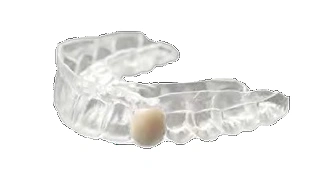
Occlusal splints and nightguards must fit comfortably to work effectively. Digital fabrication ensures a precise fit based on exact scan data. Patients are more likely to wear a device that fits well — and compliance drives results.
Removables and TattooTH
Our removables and our proprietary TattooTH service also benefit from digital accuracy. TattooTH is our advanced solution for personalized dental identification. Like all our services, it is backed by the precision of our digital workflow.
Frequently Asked Questions About CAD/CAM Dentistry
What makes CAD/CAM restorations more accurate than traditional ones?
CAD/CAM restorations are designed using precise 3D scan data and fabricated by milling machines. This removes many of the manual steps where error can enter the traditional workflow. The result is a more consistent, predictable fit.
Do dentists need special equipment to work with a digital lab like Dentek Digital?
An intraoral scanner is the key piece of equipment needed to start a digital workflow. Many modern dental practices already have one or are in the process of acquiring one. Our team is happy to help practices in Phoenix and across the metro area navigate the transition.
How does digital scanning compare to traditional impressions for accuracy?
Digital scans eliminate many variables that affect traditional impressions, such as material distortion and shipping damage. They provide a consistent, reviewable 3D record of the clinical situation. However, clinical technique still matters — a well-taken scan produces the best results.
Can CAD/CAM technology be used for all types of dental restorations?
CAD/CAM technology is suitable for a wide range of restorations, including crowns, bridges, veneers, implant components, splints, and nightguards. Some complex full-arch cases may still incorporate additional steps. Our team will guide you through the best workflow for each case.
How do I get started working with Dentek Digital?
Getting started is straightforward. You can send us a case directly through our online portal. Our team will review your scan data and design a restoration that meets your clinical requirements. We serve dental practices throughout the Greater Phoenix area and beyond.
Partner With Dentek Digital for Precision You Can Count On
Accuracy is not a bonus feature — it is the foundation of every great restoration. CAD/CAM dentistry gives dental labs and dental practices the tools to achieve that accuracy consistently. At Dentek Digital, we have been at the forefront of this technology since the beginning.
We are proud to serve dentists and dental practices across Phoenix, Scottsdale, Mesa, Chandler, Tempe, Gilbert, and the entire Greater Phoenix metro area. Our team combines cutting-edge technology with skilled craftsmanship to deliver results you and your patients can trust.
Ready to elevate your restorations? Explore your options and send us a case today. Our team is here to help you achieve the best possible outcomes for every patient you serve.