
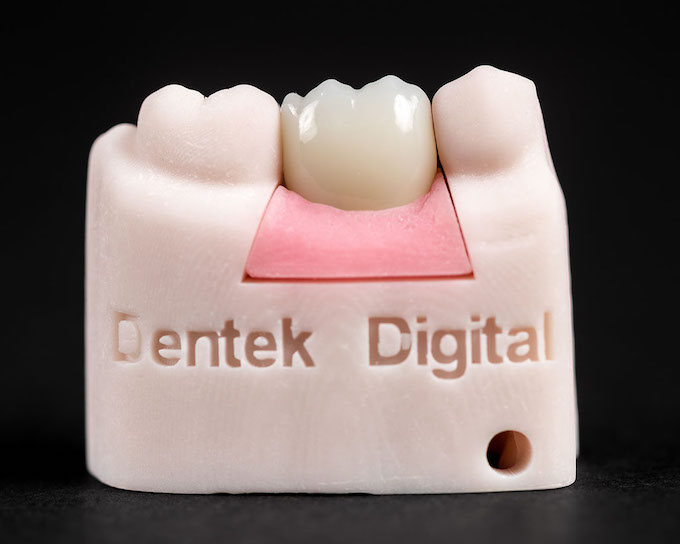
The dental industry is changing fast. Future dental printing is no longer a distant concept — it is actively reshaping how dental labs and practices deliver care. From same-day restorations to highly personalized implant solutions, 3D printing is opening doors that were once firmly closed.
At Dentek Digital, we stay ahead of these shifts. Our Phoenix-based lab has been a national leader in digital dentistry since the earliest days of CAD/CAM workflows. We see firsthand how rapidly this technology is evolving.
Therefore, understanding where 3D printing is headed matters — for your practice and for your patients. This post breaks down the most exciting future applications on the horizon.
What Is Driving the Next Wave of Dental 3D Printing?
3D printing in dentistry has already proven its value. However, the next generation of applications will go much further. New materials, faster machines, and smarter software are all converging at once.
Additionally, patient expectations are rising. People want faster turnaround, better fit, and more natural-looking results. 3D printing is uniquely positioned to meet all three demands.
Because of this, dental labs and clinicians across the Greater Phoenix area — from Scottsdale to Chandler — are investing in digital workflows now. Getting ahead of the curve gives practices a real competitive advantage.
Advances in Printable Dental Materials
Material science is one of the most exciting frontiers. Early 3D-printed restorations were limited in strength and aesthetics. Moreover, today’s resins and ceramics have already improved significantly.
In the near future, we expect printable materials to rival — and possibly surpass — traditional milled options. For example, high-strength zirconia printing is already emerging as a game changer for fixed restorations.
Meanwhile, flexible and biocompatible materials are opening new possibilities for removables and soft-tissue applications. This means more options for patients with complex needs.
Faster Printing Speeds and Greater Precision
Speed has historically been a limitation of 3D printing. Next-generation printers are closing that gap quickly. As a result, same-day restorations are becoming more realistic for a wider range of cases.
Furthermore, improved resolution means finer margins and better fits right out of the printer. This directly reduces remakes and chairside adjustments. In short, it means better outcomes with less friction.
Key Future Applications to Watch
Several specific applications are emerging that will transform dental lab services. These are not hypothetical — they are actively in development and early adoption phases across leading labs and universities.
Full-Arch and Full-Mouth Restorations
Full-arch 3D printing is one of the most promising areas. Traditionally, fabricating full-arch cases required significant time and multiple materials. However, advances in large-format printing are changing that equation.
For example, complete dentures, implant-supported arches, and full-mouth rehabilitations can increasingly be fabricated using digital workflows from start to finish. This also improves consistency across complex cases.
Practices in Mesa and Tempe are already seeing the benefits of faster full-arch turnaround through digital lab partnerships. The future will only accelerate this trend.
Bioprinting and Living Tissue Applications
Bioprinting is perhaps the most futuristic — and most exciting — application on the horizon. Researchers are actively exploring the possibility of printing living tissue structures for dental use.
Additionally, this could eventually include printed bone graft scaffolds, periodontal tissue, and even early-stage tooth structures. These applications remain largely in research phases today.
On the other hand, scaffold-based regenerative printing is already showing promise in clinical research settings. Furthermore, as regulatory pathways develop, we expect real-world clinical adoption to follow.
Customized Implant Components and Surgical Guides
Dental implant planning is another area where 3D printing is expanding rapidly. Printed surgical guides already improve implant placement accuracy. Next, fully customized implant components — including abutments and temporary crowns — will be printed chairside or in-lab in a single streamlined process.
At Dentek Digital, we already offer advanced digital implant planning services. Therefore, we are well-positioned to integrate emerging printed implant technologies as they mature.
Practices across Gilbert and Scottsdale can benefit from this kind of precision-driven approach to implant care. The result is better outcomes and more predictable cases.
Nightguards, Splints, and Occlusal Devices
Printed occlusal appliances are already a practical reality. However, future improvements will make them even more precise and durable. New flexible resins will allow printed nightguards to better mimic traditional thermoformed devices — or outperform them.
Additionally, digital design tools will allow for more personalized occlusal schemes. This is especially valuable for complex bruxism cases or TMJ-related appliances.
Because of this, the time from prescription to delivery will continue to shrink. Patients benefit from faster access to protective devices that fit more accurately from day one.
How Digital Workflows Power These Advances
CAD/CAM dentistry is the engine behind modern dental 3D printing. Without precise digital design files, even the best printer cannot produce reliable results. Therefore, the digital workflow — from scan to design to print — is just as important as the hardware itself.
At Dentek Digital, we combine advanced CAD/CAM design with high-quality printing and milling to deliver restorations that meet exacting standards. Our team reviews every case with skilled technicians before fabrication begins.
Moreover, our early adoption of digital workflows means we have built deep expertise over many years. That experience matters when new technologies arrive — we know how to evaluate and integrate them responsibly.
The Role of AI and Automation
Artificial intelligence is increasingly entering the dental design process. AI-assisted design tools can analyze occlusion, suggest restoration shapes, and flag potential fit issues before printing even begins.
Furthermore, automated nesting and support generation reduce manual labor and material waste. As a result, labs can produce more cases with greater consistency.
First, AI helps streamline case setup. Then, automation handles repetitive steps. Finally, skilled technicians apply their expertise to review and refine. This combination is where the real power lies.
What This Means for Dental Practices in Phoenix and Beyond
For dentists across the Greater Phoenix area — from central Phoenix to communities like Chandler and Mesa — these advances have practical implications. Faster lab turnaround means shorter patient wait times. Better materials mean restorations that look and feel more natural.
Additionally, digital records make reorders and modifications easier. If a patient loses or damages a restoration, reprinting from the original file is straightforward.
Because of this, forward-thinking practices are already transitioning toward fully digital workflows. Partnering with a lab like Dentek Digital positions your practice to take full advantage of these trends.
Want to explore how digital lab services can work for your practice? Contact Dentek Digital to discuss your next case and find the right solution for your patients.
Frequently Asked Questions About Future Dental 3D Printing
Is 3D printing strong enough for permanent dental restorations?
Yes, in many applications. Material strength has improved significantly. However, the right material depends on the case type. Your lab can help match the right option to each clinical need.
How soon will bioprinting be available in clinical practice?
Bioprinting for dental tissue is still largely in research phases. However, some scaffold-based regenerative applications are closer to clinical use. We expect gradual adoption over the coming years as regulatory frameworks develop.
Can 3D-printed restorations match milled restorations in quality?
In many cases, yes — and in some applications, they already do. Additionally, hybrid approaches that combine printing and milling can offer the best of both. The right choice depends on the specific restoration type.
Will 3D printing replace traditional dental lab technicians?
No. Skilled technicians remain essential for design review, quality control, and complex case management. Moreover, technology amplifies what a skilled technician can do — it does not replace their expertise.
How does Dentek Digital stay current with 3D printing advances?
We continuously evaluate new materials, equipment, and workflows. Furthermore, as a recognized national leader in digital dentistry, we have the infrastructure and expertise to adopt new technologies responsibly and efficiently.
Partner With a Lab That Leads in Digital Dentistry
The future of dental 3D printing is bright — and it is arriving faster than most people expect. For dental practices in Phoenix, Scottsdale, Tempe, and across the Greater Phoenix area, the time to embrace these advances is now.
At Dentek Digital, we combine evolving technology with skilled craftsmanship to deliver precise, reliable restorations. Our team is ready to support your practice at every step — from simple single-unit cases to complex full-arch rehabilitations.
Send us a case today and experience the Dentek Digital difference for yourself. Your patients deserve the best — and so does your practice.