
When it comes to replacing missing teeth, the choice between implants vs dentures is one of the most important decisions a patient can make. Both options restore function and appearance. However, they work very differently and serve different needs.
This guide breaks down both solutions in plain language. We cover how each option works, what to expect, and how modern digital dentistry is changing the restoration process. Whether your dentist is in Spanish Springs, NV or partners with a lab like Dentek Digital in Phoenix, AZ, this information will help you make a more informed choice.
Additionally, understanding what goes into each restoration helps you have a better conversation with your dental provider. Let’s start with the basics.
What Are Dental Implants?
A dental implant is a small titanium post that a surgeon places into the jawbone. It acts as an artificial tooth root. Over time, the bone fuses around it in a process called osseointegration.
Once the implant integrates with the bone, a dental crown is placed on top. This crown is often fabricated using CAD/CAM technology — computer-aided design and manufacturing. As a result, the fit and aesthetics are extremely precise.
Implants look, feel, and function like natural teeth. Therefore, many patients consider them the gold standard for tooth replacement. They also help preserve jawbone density over time.
Types of Implant Restorations
Implants are not one-size-fits-all. There are several types of implant-supported restorations, depending on how many teeth need replacing.
- Single-tooth implants: One implant topped with one crown.
- Implant-supported bridges: Two or more implants supporting a multi-unit bridge.
- Implant-supported dentures: A full arch of teeth anchored by multiple implants.
- All-on-4 or full-arch restorations: A complete arch supported by as few as four implants.
Modern digital labs use advanced scanning and milling technology to fabricate these restorations with exceptional accuracy. Furthermore, digital workflows reduce turnaround time for dental practices and their patients.
What Are Dentures?
Dentures are removable prosthetic devices that replace missing teeth. They rest on the gum tissue and, in some cases, the remaining natural teeth. Traditional dentures have been used in dentistry for generations.
There are two primary types of dentures: full dentures and partial dentures. Full dentures replace an entire arch of teeth. Partial dentures fill gaps when some natural teeth remain.
However, dentures do not prevent bone loss in the jaw the way implants do. Because of this, the fit of a denture can change over time as the bone and gum tissue shift. Periodic adjustments or relining may be needed.
Modern Digital Dentures
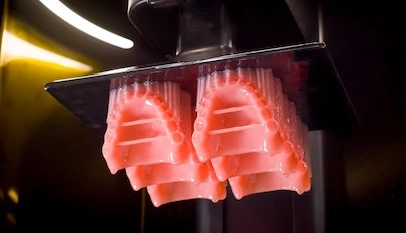
The denture process has evolved significantly with digital technology. Digital dentures are designed using CAD/CAM software and milled or printed with precision equipment. As a result, they offer a more consistent fit compared to traditional fabrication methods.
Digital records also make it easier to reproduce a denture if it is lost or damaged. Additionally, the digital workflow allows dental labs to work closely with dental practices to ensure the final product meets each patient’s needs.
Labs like Dentek Digital in Phoenix, AZ use these advanced digital workflows for all removable prosthetics. This means dentists across the region — and beyond — can offer their patients a higher level of precision and quality.
Implants vs Dentures: Key Differences
Now that we have covered both options, let’s compare them side by side. This comparison helps patients and dental providers think through the right choice for each unique case.
Stability and Comfort
Implants are fixed in place. They do not slip, shift, or require adhesive. On the other hand, traditional dentures can move during eating or speaking, which some patients find uncomfortable.
Implant-supported dentures offer a middle ground. They snap onto implants for greater stability. However, they may still be removable for cleaning.
Bone Health
One of the most important differences involves the jawbone. Implants stimulate the bone just like natural tooth roots. Therefore, they help maintain bone density over time.
Dentures do not provide this stimulation. As a result, the jawbone may gradually resorb — or shrink — over the years. This can change facial structure and affect the fit of the denture.
Maintenance and Care
Implants are cared for just like natural teeth. Brushing, flossing, and regular dental visits are all that is needed. Moreover, implant crowns and bridges are durable and long-lasting with proper care.
Dentures require daily removal and cleaning. They should be soaked overnight in most cases. Additionally, they may need periodic adjustment as the mouth changes shape over time.
Treatment Timeline
Implants require a longer treatment process. The osseointegration phase alone can take several months. Furthermore, multiple appointments are typically needed before the final restoration is placed.
Dentures, by contrast, can often be delivered more quickly. In some cases, immediate or same-day dentures are possible right after extractions. However, a final, well-fitting denture usually still requires follow-up appointments and adjustments.
Candidacy Considerations
Not every patient is an ideal candidate for implants. Adequate bone volume, good overall health, and non-smoking status are typically favorable factors. Your dentist or oral surgeon will evaluate these factors before recommending implants.
Dentures, on the other hand, are suitable for a broader range of patients. They can be made for patients with limited bone volume or health conditions that may rule out surgery. Therefore, dentures remain an important and widely used solution.
How Digital Dentistry Is Changing Both Options
Digital dentistry has transformed how both implants and dentures are designed and fabricated. CAD/CAM technology allows dental labs to create restorations with a level of precision that traditional methods cannot match.
At Dentek Digital in Phoenix, AZ, we were among the earliest adopters of the full digital CAD/CAM workflow in the country. We partner with dental practices in Scottsdale, Mesa, Tempe, Chandler, Gilbert, and beyond to deliver precise, high-quality restorations.
Furthermore, our digital implant planning services allow dental teams to map out implant placement with accuracy before surgery even begins. This improves outcomes and simplifies the process for both the dentist and the patient.
The Role of the Dental Lab
The dental lab plays a critical role in the quality of any restoration. A well-fabricated crown, bridge, or denture fits better, looks more natural, and lasts longer. Because of this, choosing the right lab partner matters enormously.
Dentek Digital combines advanced technology with skilled craftsmanship. Our team fabricates fixed restorations, removable prosthetics, implant restorations, splints, nightguards, and more. Additionally, our TattooTH service and digital implant planning set us apart from traditional labs.
We serve dental practices throughout the Greater Phoenix area — including communities in Maricopa County and beyond. Our goal is to support better patient outcomes through precision, reliability, and innovation.
What Dentists in Spanish Springs NV Should Know
While Dentek Digital is based in Phoenix, AZ, our reach extends to dental professionals across the country. Dentists in Spanish Springs, NV can benefit from partnering with a nationally recognized digital dental lab.
We make the process simple and efficient. Dentists can submit digital scans and cases remotely. As a result, geographic distance is not a barrier to accessing world-class lab services.
Moreover, our digital workflow means faster turnarounds and fewer remakes. This supports a smoother experience for your patients and your practice. Whether you are placing a single implant crown or fabricating a full-arch case, we are equipped to deliver.
Frequently Asked Questions: Implants vs Dentures
Are dental implants better than dentures?
Implants offer significant advantages in terms of stability, bone preservation, and long-term comfort. However, “better” depends on each patient’s health, bone density, and personal goals. Your dentist can help determine the right option for your specific situation.
How long do implants and dentures last?
With proper care, implants can last many years — often a lifetime for the implant post itself. The crown on top may eventually need replacement. Dentures typically require relining or replacement over time as the mouth changes. Your dental provider can give you a more specific estimate.
Can I switch from dentures to implants later?
In many cases, yes. However, bone loss from long-term denture wear may require a bone grafting procedure first. A dental professional and oral surgeon can evaluate your bone volume and discuss your options.
What is an implant-supported denture?
An implant-supported denture combines both technologies. Implants are placed in the jaw to anchor the denture. This provides much greater stability than a traditional removable denture. It is a popular option for patients who want more security without full fixed implants.
How does a dental lab fit into the implant or denture process?
The dental lab fabricates the restoration — the crown, bridge, or denture — that the dentist places. A high-quality digital lab uses CAD/CAM technology to ensure a precise fit and natural appearance. The lab works closely with the dental team throughout the process.
Ready to Explore Your Options?
Choosing between implants vs dentures is a decision that deserves careful thought and expert guidance. The good news is that modern digital dentistry makes both options better than ever before.
At Dentek Digital, we are proud to support dental professionals across the Greater Phoenix area and nationwide with precision-crafted restorations. From single implant crowns to full-arch cases to digital dentures, we bring advanced technology and skilled craftsmanship to every case.
If you are a dental professional looking for a trusted lab partner, contact Dentek Digital today to send us a case or discuss how we can support your practice and your patients.