
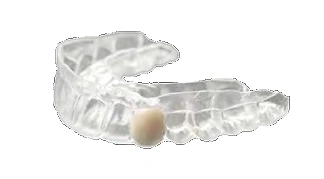
When your patients need a reliable implant restoration, cement retained implant crowns are one of the most trusted solutions available. They offer a natural appearance, a smooth profile, and a straightforward placement process for dentists. Because of this, many dental professionals prefer them for specific clinical situations.
At Dentek Digital, we fabricate cement retained implant crowns using advanced CAD/CAM technology. Our digital workflow allows us to produce precise, high-quality restorations every time. We serve dentists and dental practices across the Greater Phoenix, Arizona area, including communities like Mesa, Scottsdale, Chandler, and Tempe.
In this post, we break down everything you need to know about cement retained implant crowns. Furthermore, we explain how our digital lab process helps your practice deliver better outcomes for your patients.
What Are Cement-Retained Implant Crowns?
A cement-retained implant crown attaches to an implant abutment using dental cement. This is different from a screw-retained crown, which fastens directly with a screw. Therefore, the choice between the two depends on the clinical situation and patient anatomy.
Cement-retained designs work especially well when the implant angle makes screw access difficult. Additionally, they tend to offer a cleaner occlusal surface because there is no access hole to fill. This can improve both the look and function of the final restoration.
Key Components of a Cement-Retained Crown
Every cement-retained implant crown includes three main components. First, there is the implant fixture that integrates with the bone. Next, a custom or stock abutment supports the crown. Then, the crown itself is cemented onto the abutment for a secure, stable fit.
At Dentek Digital, we use digital scanning data and CAD/CAM design to ensure each component fits with exceptional accuracy. Moreover, our skilled technicians refine every restoration before it leaves our Phoenix lab.
Why Dentists Choose Cement-Retained Restorations
Dentists across the Greater Phoenix area choose cement-retained implant crowns for several clinical reasons. They are often easier to place and offer excellent esthetics. Additionally, they integrate well into existing workflows for many dental practices.
However, patient selection matters. Cement-retained crowns work best when the abutment margin is accessible for cement cleanup. Therefore, careful case planning is essential before choosing this restoration type.
Esthetic Advantages
One of the biggest benefits of cement-retained crowns is their natural look. Because there is no screw access hole on the biting surface, the occlusal anatomy remains clean and lifelike. As a result, patients enjoy a restoration that blends seamlessly with their surrounding teeth.
Our CAD/CAM design process at Dentek Digital allows us to match shade, contour, and bite with precision. Furthermore, we use premium materials that reflect light the way natural tooth enamel does.
Simplified Placement for Dentists
Placement of cement-retained crowns is straightforward for most experienced dentists. The cementation process is familiar and requires no specialized torque drivers for the crown itself. On the other hand, the abutment still needs proper torquing before cementation.
Because of this simplicity, many dental practices in Scottsdale, Mesa, and Tempe find cement-retained restorations easy to incorporate into their daily workflows. Additionally, our digital lab provides clear documentation and shade information with every case.
The Dentek Digital CAD/CAM Workflow
Dentek Digital was one of the earliest digital dental labs in the country to adopt CAD/CAM technology. Our workflow is fully digital from start to finish. Therefore, every cement-retained implant crown we produce meets a consistently high standard of quality.
We accept digital scans from all major intraoral scanners. Additionally, we can work with traditional impressions that we scan in-house. This flexibility makes it easy for practices of all sizes to work with our lab.
Step-by-Step: How We Fabricate Your Crown
- Step 1 – Case Submission: Your practice sends us a digital scan or impression along with your prescription and shade information.
- Step 2 – Digital Design: Our technicians use advanced CAD software to design the crown to your specifications.
- Step 3 – Milling or Printing: We mill or print the restoration using high-quality dental materials selected for the case.
- Step 4 – Finishing: Our skilled craftspeople hand-finish and characterize each crown for optimal esthetics and fit.
- Step 5 – Quality Check: Every restoration goes through a thorough quality review before shipping.
This process ensures your cement-retained implant crowns arrive ready to seat. Moreover, our turnaround times are designed to keep your schedule moving efficiently.
Materials We Use for Cement-Retained Implant Crowns
Material selection plays a major role in the long-term success of any implant crown. At Dentek Digital, we offer several high-quality material options. Therefore, you can choose the best fit for each patient’s clinical and esthetic needs.
Zirconia
Zirconia is one of the most popular materials for implant crowns today. It is extremely strong and offers excellent biocompatibility. Additionally, high-translucency zirconia provides natural-looking esthetics that rival porcelain-fused-to-metal restorations.
We use layered and monolithic zirconia options depending on the case requirements. Furthermore, our digital design process optimizes wall thickness to maximize both strength and appearance.
Porcelain-Fused-to-Metal (PFM)
PFM crowns remain a reliable option for many implant cases. They offer a strong metal substructure with a tooth-colored porcelain surface. However, they may show a metal margin over time, especially in patients with gum recession.
For this reason, we work with your practice to determine whether PFM or an all-ceramic option is better suited for each individual patient. Additionally, our technicians have extensive experience crafting PFM restorations with natural-looking layered porcelain.
Full-Contour Options
Full-contour restorations are milled from a single block of material. As a result, they are very strong and require minimal finishing. They work especially well for posterior implant cases where function is the top priority.
Moreover, full-contour crowns are often more cost-effective without sacrificing quality. Our Chandler- and Gilbert-area partner practices frequently request these for high-bite-force posterior cases.
Tips for Successful Cement-Retained Implant Cases
Clinical success with cement-retained implant crowns depends on careful planning and execution. Here are some practical tips to help your cases go smoothly.
- Choose the right abutment height: A well-chosen abutment height provides enough retention for the crown while keeping the cement margin accessible.
- Use the right cement: Select a cement with appropriate retention strength and a retrievable option when possible, especially in esthetic zones.
- Control excess cement carefully: Excess subgingival cement is a leading cause of peri-implant complications. Therefore, use a technique that minimizes this risk.
- Verify the fit before cementation: Always confirm the crown seats fully on the abutment before applying cement.
- Communicate with your lab: Share clear photos, shade information, and bite records. Additionally, let us know about any unique anatomy or occlusal concerns.
At Dentek Digital, we encourage open communication throughout the fabrication process. Because of this, we can address any concerns before the crown is finalized and shipped.
Serving Dentists Across the Greater Phoenix Area
Our lab is based in Phoenix, Arizona, and we are proud to serve dental practices throughout the region. We work with practices in Mesa, Scottsdale, Tempe, Chandler, and many surrounding communities. Furthermore, we support dentists with both straightforward and complex implant cases.
Our team understands the demands of a busy dental practice. Therefore, we focus on fast turnaround times, clear communication, and restorations that seat without surprises. Additionally, we offer support for digital implant planning if your practice is expanding into guided implant surgery.
Whether you are placing your first implant crown or managing a complex full-arch case, Dentek Digital is ready to support your work. Moreover, our team is always available to consult on case selection, material choices, and workflow questions.
Frequently Asked Questions About Cement-Retained Implant Crowns
How are cement-retained crowns different from screw-retained crowns?
Cement-retained crowns attach to an abutment using dental cement. Screw-retained crowns fasten with a screw that goes through the crown into the implant. Therefore, each type has specific advantages depending on implant angulation and clinical access.
When is a cement-retained crown the better choice?
Cement-retained crowns are often preferred when the implant angle makes screw access difficult. Additionally, they are a good option when a clean occlusal surface is a priority for esthetics. However, margin accessibility for cement cleanup is an important factor in that decision.
What materials work best for cement-retained implant crowns?
Zirconia is the most popular choice today because of its strength and esthetics. PFM and full-contour options are also available depending on the clinical situation. Furthermore, our team can help you select the best material for each case.
How do I submit a cement-retained implant case to Dentek Digital?
You can send us a digital scan or traditional impression along with your prescription. We accept all major digital scan formats. Additionally, our team is available to walk you through our case submission process if you are new to working with our lab.
How long does fabrication take?
Turnaround times vary depending on the material and case complexity. However, our digital workflow allows us to work efficiently without compromising quality. Contact our team for current turnaround estimates for your specific case type.
Partner With Dentek Digital for Your Implant Crown Cases
Dentek Digital combines cutting-edge CAD/CAM technology with experienced craftsmanship. As a result, you receive cement-retained implant crowns that fit accurately and look exceptional. We are committed to supporting dental practices across Phoenix, Mesa, Scottsdale, Tempe, and Chandler with restorations they can trust.
Our team is here to make your implant cases easier and more predictable. Therefore, we focus on clear communication, reliable quality, and fast turnaround from our Phoenix, Arizona lab. Moreover, we are always ready to consult on new cases and help you find the right solution for your patients.
Ready to elevate your implant restoration workflow? Contact Dentek Digital today to send us a case or request a consultation with our team.