
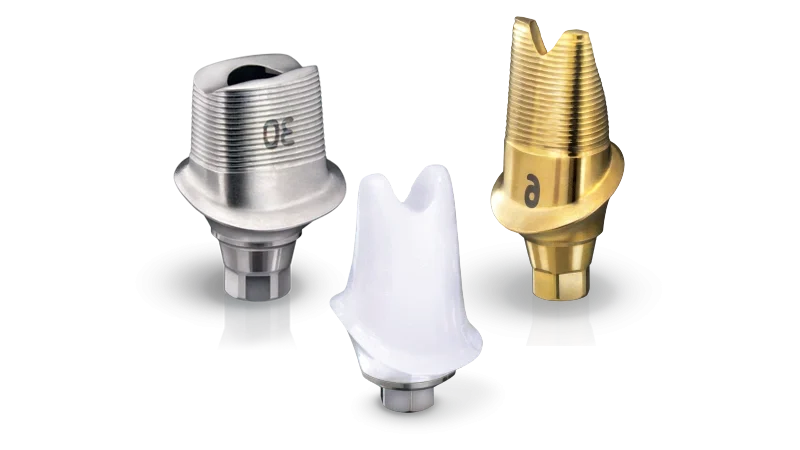
Restoring implants with precision and confidence starts with choosing the right retention method. Cement retained implant crowns remain one of the most widely used solutions in implant restorative dentistry. They offer a clean aesthetic, a natural emergence profile, and a straightforward cementation process that many dentists prefer.
At Dentek Digital, we fabricate cement retained implant crowns using advanced CAD/CAM technology. Our digital workflow delivers consistent fit, natural aesthetics, and dependable results. We work with dentists and dental practices across the Greater Phoenix area and beyond.
Whether you are new to implant restorations or refining your protocol, this guide covers what you need to know. We walk through how cement retained crowns work, when to choose them, and how a digital lab makes a difference.
What Are Cement-Retained Implant Crowns?
Cement retained implant crowns attach to an implant abutment using dental cement. Unlike screw-retained options, they do not have an access hole through the occlusal surface. This makes them a popular choice when aesthetics are a priority.
The crown sits on a custom or stock abutment. The dentist cements it in place at the time of delivery. This approach is familiar to most clinicians because it closely mirrors traditional crown cementation.
How They Differ From Screw-Retained Crowns
Screw-retained crowns attach directly to the implant through a screw access channel. They are retrievable but require careful angulation. Cement retained crowns, on the other hand, allow more flexibility in abutment positioning.
Additionally, cement retained restorations tend to offer better emergence profiles in certain cases. However, cement management is critical. Excess cement left subgingivally can cause peri-implant complications. Therefore, proper technique and abutment design matter greatly.
Common Materials Used
At Dentek Digital, we mill cement retained implant crowns from high-quality materials. These include zirconia, lithium disilicate, and layered porcelain options. Furthermore, we match the material to the clinical case and patient needs.
Zirconia is especially popular for posterior implant crowns. It offers excellent strength and durability. Meanwhile, lithium disilicate works well in the anterior zone where translucency matters most.
When Dentists Choose Cement Retention
Choosing between cement and screw retention depends on several clinical factors. Most importantly, implant angulation plays a major role. When an implant is placed in a less-than-ideal angle, cement retention often provides a better esthetic outcome.
For example, a labially angled implant in the anterior arch would show a screw access hole on the facial surface. In contrast, a cement retained crown avoids that problem entirely. This is one reason many dentists prefer cement retention for front teeth restorations.
Ideal Clinical Scenarios
Cement retained implant crowns work well in a variety of situations. Here are some common scenarios where dentists prefer this approach:
- Non-ideal implant angulation — avoids compromised screw access location
- High esthetic demand cases — no visible access hole on the crown surface
- Short clinical crowns — cement can help when screw access is difficult
- Patients with limited interocclusal space — cement retained designs can be lower profile
- Multi-unit restorations — in some cases, cement retention simplifies the workflow
Therefore, cement retention is not a one-size-fits-all solution. However, it remains a reliable and versatile option for many implant cases.
Cases Where Screw Retention May Be Preferred
On the other hand, some cases call for screw retention. Retrievability is a key advantage of screw retained crowns. If the provider anticipates needing future access to the implant, screw retention makes that process easier.
Additionally, when implant placement is ideal and angulation is favorable, screw retention is often the preferred approach. Ultimately, your clinical judgment guides the decision. Our team at Dentek Digital can help you evaluate the best restoration design for each case.
The CAD/CAM Advantage in Cement-Retained Restorations
Digital fabrication has transformed implant crown production. At Dentek Digital, we were among the earliest adopters of the CAD/CAM workflow in the country. As a result, we have refined our digital process over many years of real-world clinical application.
CAD/CAM technology allows us to design and mill restorations with a level of precision that traditional methods simply cannot match. Furthermore, digital workflows reduce human error and improve consistency from case to case.
How Our Digital Workflow Works
Our process begins when you send us your case digitally. We accept digital impressions from all major intraoral scanners. Next, our skilled technicians design the crown using advanced CAD software.
Then, we mill the restoration from a high-quality puck of the selected material. After milling, our team hand-finishes and characterizes the crown for natural aesthetics. Finally, we ship the finished restoration back to you, ready for delivery.
This streamlined workflow benefits dentists in Phoenix, Scottsdale, Mesa, Chandler, Gilbert, and practices across the country.
Precision Fit and Marginal Integrity
A well-fitting crown is essential in implant dentistry. Poor marginal fit can lead to cement leakage, microleakage, and long-term complications. Because of this, we prioritize marginal accuracy in every case we fabricate.
Our CAD/CAM milling delivers tight margins and excellent internal fit. Moreover, we verify each restoration digitally before it leaves our lab. This quality control step helps ensure you receive a reliable, seat-ready restoration every time.
Working With a Digital Lab: What Dentists Should Expect
Partnering with a digital dental lab is different from working with a traditional lab. The communication is faster, the turnaround is often shorter, and the data is more precise. Additionally, digital records allow us to reference previous cases and maintain consistency for your patients.
At Dentek Digital, we support dentists and dental practices across the Greater Phoenix area, including communities like Tempe, Scottsdale, and Chandler. We also work with practices nationwide, including those in the Houston metro area.
What to Send Us
Sending us a cement retained implant crown case is straightforward. Here is what we typically need:
- Digital scan file of the implant scan body in place
- Opposing arch scan
- Bite registration scan
- Implant system and component information
- Shade selection
- Any special notes on emergence profile or occlusal design preferences
Furthermore, if you are working with a non-digital workflow, we can accommodate analog impressions as well. We want to make the process easy for your practice.
Turnaround and Communication
We understand that your patients are waiting. Therefore, we work efficiently to deliver restorations on time. Our team communicates proactively if we have questions about your case.
Moreover, we welcome clinical collaboration. If you want to discuss abutment design options, material selection, or emergence profile, our technicians are happy to consult with you before we begin fabrication.
Tips for Successful Cement-Retained Implant Crown Delivery
Even the best restoration requires careful delivery technique. Here are some clinical tips to help you achieve excellent outcomes with cement retained implant crowns:
- Choose the right cement — consider retrievability, strength, and radiopacity when selecting your cement type
- Manage excess cement carefully — use a well-designed abutment with a supragingivally placed margin when possible
- Verify fit before cementing — check the seating of the crown on the abutment before introducing any cement
- Use a custom abutment when indicated — custom abutments allow better control over margin placement and emergence profile
- Confirm radiographically — always take a post-delivery radiograph to check for residual cement
Additionally, patient education plays a role in long-term implant success. Remind patients that implant crowns require the same diligent hygiene as natural teeth.
Why Dentek Digital Is a Trusted Lab Partner
Dentek Digital is recognized as a national leader in digital dentistry. We have invested deeply in CAD/CAM technology, skilled technicians, and quality systems. As a result, dentists across Phoenix, Mesa, Gilbert, Scottsdale, and beyond trust us with their most complex cases.
Our solutions go beyond implant crowns. We also fabricate fixed restorations, removables, splints and nightguards, and advanced solutions like TattooTH and digital implant planning. In short, we are a full-service digital dental lab.
Furthermore, we are passionate about supporting the success of dental professionals. When you succeed, your patients benefit. That is the partnership we are committed to building.
Frequently Asked Questions About Cement-Retained Implant Crowns
Are cement retained implant crowns retrievable?
They can be retrieved, but it is more difficult than with screw retained crowns. The crown must be cut off in most cases. Therefore, retrievability is an important factor to consider before choosing cement retention.
What is the risk of cement retention?
The primary risk is residual cement left below the gumline. Excess cement can cause peri-implant inflammation and bone loss. However, careful technique, supragingivally placed margins, and post-delivery radiographs greatly reduce this risk.
Can Dentek Digital work with my implant system?
Yes. We work with a wide range of implant systems and component libraries. Send us your case details and we will confirm compatibility before we begin. Additionally, we can help you identify the best abutment option for your case.
What materials do you recommend for posterior cement retained crowns?
We generally recommend full-contour or layered zirconia for posterior implant crowns. Zirconia offers excellent strength and wear resistance. Moreover, it performs reliably in high-load areas like the molar and premolar regions.
How do I get started with Dentek Digital?
Getting started is simple. You can contact Dentek Digital through our website to send us a case or request a consultation. Our team will walk you through the process and answer any questions you have.
Partner With Dentek Digital for Your Implant Crown Cases
Cement retained implant crowns are a proven, versatile restoration option. When fabricated with precision and delivered with good technique, they deliver excellent long-term outcomes for patients. Moreover, a trusted digital lab partner makes the entire process smoother and more predictable.
At Dentek Digital, we combine cutting-edge CAD/CAM technology with skilled craftsmanship. We are proud to support dentists across the Greater Phoenix area and nationwide. Whether you are in Scottsdale, Chandler, Tempe, or anywhere in between, we are ready to be your lab partner.
Explore your options and take the next step toward better implant restorations. Reach out to the Dentek Digital team today and let us support your next case.