
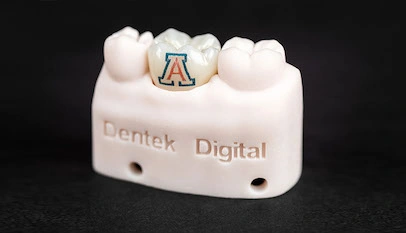
Dental implant restorations have advanced significantly over the last decade. Among the most widely used options today, cement retained implant crowns remain a trusted solution for dentists who prioritize a natural appearance and a streamlined workflow. Whether you are refining your implant protocol or exploring new lab partnerships, understanding this restoration type is essential.
At Dentek Digital, we fabricate high-quality implant restorations using advanced CAD/CAM technology. Our team works closely with dental practices to deliver precise, reliable results. We serve dentists across the Greater Phoenix, Arizona area, including communities like Mesa, Tempe, Chandler, and Scottsdale.
In this post, we break down everything dental professionals should know about cement retained implant crowns. We cover the clinical advantages, workflow considerations, and how a digital dental lab can elevate your restorative outcomes.
What Are Cement-Retained Implant Crowns?
A cement-retained implant crown is a crown that attaches to an implant abutment using dental cement. This is one of two primary retention methods used in implant dentistry. The other common method is screw retention.
With cement retention, the lab fabricates the crown to fit over a custom or stock abutment. The dentist then cements the crown in place chairside. This approach closely mirrors the workflow of a traditional crown, which many clinicians find intuitive and efficient.
How the Restoration Is Fabricated
The process begins when the dental practice sends impression data or a digital scan to the lab. At Dentek Digital, we use CAD/CAM technology to design the crown with precision. We then mill or 3D print the restoration from high-quality materials before completing any necessary finishing and glazing steps.
Additionally, we fabricate custom abutments when needed to optimize crown emergence profile and tissue support. This extra step helps create a more natural-looking and hygienic result. The final restoration is then shipped ready for chairside cementation.
Common Materials Used
Cement retained implant crowns are available in several high-performance materials. The most common options include:
- Zirconia – Highly durable and tooth-colored; ideal for posterior and anterior cases
- Lithium disilicate (e.max) – Excellent aesthetics with strong translucency for anterior restorations
- PFM (Porcelain-fused-to-metal) – A proven option with strong underlying metal support
- Full-contour zirconia – Especially suited for high-occlusal-load posterior cases
Material selection depends on the location of the implant, aesthetic demands, and occlusal forces. Your lab partner should help guide this decision based on clinical goals.
Clinical Advantages of Cement-Retained Crowns
Many dentists prefer cement retained implant crowns for specific case types. There are clear clinical and aesthetic benefits that make this retention method a strong choice in the right situation.
Superior Aesthetics
One of the biggest advantages is aesthetics. Because there is no access hole on the occlusal surface, the crown has an uninterrupted, natural appearance. This makes cement-retained restorations especially appealing for anterior implants where appearance is a priority.
Furthermore, cement retention allows for greater flexibility in abutment angulation. This is helpful when the implant is not ideally positioned. As a result, clinicians can achieve better emergence profiles even in challenging cases.
Familiar Placement Workflow
Another advantage is workflow simplicity. The cementation process mirrors traditional crown delivery, which most dentists already perform routinely. Therefore, there is little learning curve for clinicians experienced in restorative dentistry.
In addition, cement-retained crowns can be easier to work with in cases where the implant angulation makes screw access difficult. This flexibility supports a more efficient chairside appointment for both dentist and patient.
Passive Fit and Marginal Accuracy
CAD/CAM fabrication produces highly accurate margins and consistent fits. When the crown is designed and milled digitally, the fit over the abutment is precise and reproducible. This reduces the chance of marginal gaps that could compromise long-term tissue health.
At Dentek Digital, our digital workflow allows us to design each crown to exact specifications. We were among the earliest adopters of the CAD/CAM workflow in the country. Because of this, our team has refined a process that delivers consistent, high-quality restorations case after case.
Important Considerations for Cement-Retained Cases
While cement retained implant crowns offer many benefits, they also require careful clinical attention. Understanding the potential challenges helps you plan each case more effectively.
Cement Management
Excess cement around the implant is one of the most discussed concerns with cement-retained restorations. If cement is not fully removed, it can cause peri-implant inflammation. However, with careful technique and proper margin placement, this risk is manageable.
Using a custom abutment with the margin placed at or slightly above the gingival crest is a widely recommended approach. This improves visibility during cementation and makes cleanup more straightforward. Your lab should design the abutment with this in mind.
Retrievability
Screw-retained crowns are generally easier to retrieve than cement-retained ones. However, retrievability is not always a top priority depending on the case. For many patients and clinicians, the aesthetic and workflow benefits of cement retention outweigh this consideration.
Meanwhile, if retrievability is a concern, some clinicians use temporary or provisional cement to allow future removal if needed. Discussing this option with your lab helps ensure the restoration is designed with the right tolerances for that approach.
Abutment Design Matters
Custom abutments generally outperform stock abutments in cement-retained cases. A custom abutment can be designed to match the patient’s specific anatomy, tissue contour, and implant position. This leads to a more natural emergence profile and better long-term tissue stability.
At Dentek Digital, we design and fabricate custom titanium and zirconia abutments in-house. Practices across the Phoenix area, from Gilbert to Scottsdale, rely on our abutment solutions for implant cases of varying complexity.
How Dentek Digital Supports Your Implant Workflow
Partnering with an experienced digital dental lab simplifies the entire implant restoration process. At Dentek Digital, we support dental practices with a fully digital workflow from scan to delivery.
Digital Impressions and CAD/CAM Design
We accept digital scans from all major intraoral scanners. Once we receive the scan, our technicians design the crown and abutment using advanced CAD software. This eliminates variability introduced by traditional PVS impressions and plaster models.
Additionally, our digital design process allows us to preview the restoration virtually before fabrication. This means we catch potential fit or occlusion issues before milling. As a result, fewer remakes and adjustments are needed at the chairside appointment.
Consistent Quality Across Case Types
We fabricate cement retained implant crowns across a wide range of implant systems and case types. Whether you are restoring a single anterior tooth in Tempe or a full arch in Chandler, our team delivers the same level of precision and care.
Furthermore, we offer fast turnaround times without compromising quality. We understand that timely delivery matters for your patients and your schedule. Our streamlined production process keeps your cases moving efficiently.
Send Us a Case
Getting started with Dentek Digital is straightforward. Simply contact Dentek Digital and our team will guide you through submitting your first case. We work with practices across Mesa, Scottsdale, Gilbert, and beyond to support outstanding implant outcomes.
Frequently Asked Questions About Cement-Retained Implant Crowns
What is the main difference between cement-retained and screw-retained implant crowns?
Cement-retained crowns are secured using dental cement over an abutment. Screw-retained crowns are fastened directly with a screw through an access hole in the crown. Each method has advantages depending on implant position, aesthetics, and case requirements.
Are cement-retained crowns good for anterior implants?
Yes. Cement retention is often preferred for anterior cases because there is no access hole on the visible surface. This creates a more natural-looking restoration. Additionally, the flexibility in abutment angulation helps in cases where the implant is not perfectly positioned.
Can I submit digital scans for cement-retained implant cases?
Absolutely. Dentek Digital accepts digital scans from all major intraoral scanners. Our CAD/CAM workflow is built around digital inputs, which means faster turnaround and more precise restorations. We make the transition from analog to digital simple for your practice.
What materials does Dentek Digital use for implant crowns?
We fabricate implant crowns in zirconia, full-contour zirconia, lithium disilicate, and PFM. Material selection is based on clinical requirements, aesthetics, and occlusal demands. Our team is happy to recommend the best material for your specific case.
How do I get started with Dentek Digital for implant restorations?
Getting started is easy. Reach out to our team, share your case details, and we will walk you through the submission process. We partner with practices across the Greater Phoenix area to deliver reliable, high-quality implant restorations.
Elevate Your Implant Restorations With Dentek Digital
Cement retained implant crowns are a proven, versatile solution for many implant cases. When designed and fabricated with precision, they deliver exceptional aesthetics and long-term clinical performance. Choosing the right lab partner is one of the most important decisions you can make for your implant workflow.
At Dentek Digital, we combine the latest CAD/CAM technology with skilled craftsmanship to deliver restorations that meet the highest standards. We serve dental practices throughout the Greater Phoenix area, including Scottsdale, Mesa, Chandler, Tempe, and Gilbert.
If you are ready to explore your options or submit your next implant case, our team is here to help. Contact us today to discover how Dentek Digital can support your practice and your patients.