
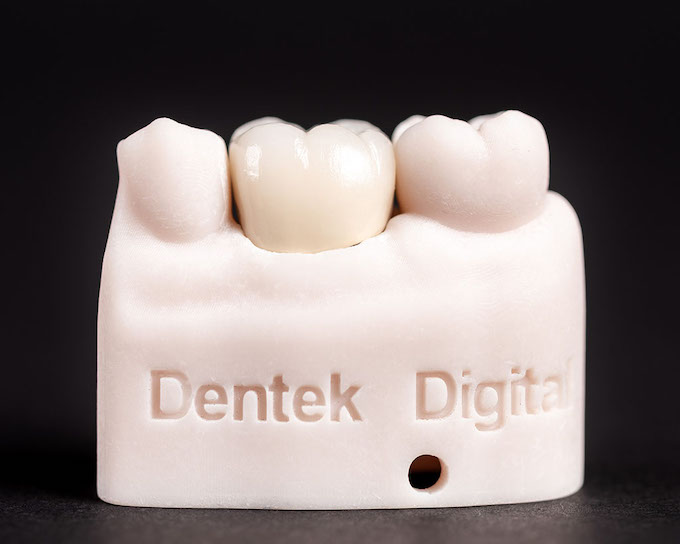
Choosing the right dental implant options is one of the most important decisions a dental practice can make for their patients. Implants have transformed restorative dentistry, offering long-lasting, natural-looking results. Understanding what is available today helps dental professionals deliver the best possible care.
At Dentek Digital, we fabricate high-quality implant restorations for dentists across the Greater Phoenix, Arizona area. Our digital CAD/CAM workflow allows us to produce precise, reliable crowns, bridges, and implant-supported prosthetics. We work closely with dental practices in communities like Mesa, Scottsdale, Chandler, and Gilbert to support exceptional patient outcomes.
In this guide, we walk through the most common dental implant options available today. We also explain how a modern digital dental lab can support your implant cases from start to finish.
What Are Dental Implants and Why Do They Matter?
A dental implant is a titanium post placed into the jawbone to replace a missing tooth root. After healing, a crown or prosthetic is attached to restore function and appearance. Implants are widely considered the gold standard for replacing missing teeth.
They preserve bone structure and support facial integrity over time. Additionally, they feel and function much like natural teeth. For patients, this means improved comfort, confidence, and quality of life.
For dental practices, implants represent a high-value service. Therefore, partnering with an experienced dental lab is essential to delivering consistent, accurate restorations every time.
How CAD/CAM Technology Improves Implant Restorations
CAD/CAM stands for computer-aided design and computer-aided manufacturing. It is a digital workflow that allows dental labs to design and mill restorations with exceptional precision. At Dentek Digital, we were one of the earliest adopters of this technology in the country.
Because of this, we can produce implant crowns and prosthetics that fit accurately and look natural. Digital scans replace traditional impressions in many cases. As a result, turnaround times are faster and adjustments are minimized.
Common Dental Implant Options for Dental Practices
There are several implant restoration types available today. Each serves a different clinical situation. Understanding these options helps dentists choose the right solution for each patient.
Single-Tooth Implant Crowns
A single implant crown replaces one missing tooth. It consists of a custom crown attached to an implant abutment. This is the most common implant restoration we fabricate at our lab.
We design these crowns digitally using advanced software and mill them from high-quality materials. Furthermore, we can match the shade and contour to surrounding natural teeth. The result is a seamless, lifelike restoration.
Implant-Supported Bridges
When a patient is missing multiple adjacent teeth, an implant-supported bridge may be the ideal solution. Two or more implants anchor a bridge that spans the gap. This option avoids the need to crown healthy neighboring teeth.
Our team fabricates these bridges with the same precision and care as single crowns. Additionally, digital design allows us to plan the ideal fit before milling begins. This reduces the chance of chairside adjustments for your practice.
Full-Arch Implant Restorations
Full-arch restorations, sometimes called implant-supported dentures or All-on-X restorations, replace an entire arch of teeth. A fixed prosthetic attaches to several strategically placed implants. This option provides patients with a stable, permanent alternative to traditional dentures.
These cases require careful planning and precise fabrication. Therefore, working with an experienced digital dental lab is critical. At Dentek Digital, we support full-arch cases with advanced digital tools and skilled craftsmanship.
Implant Overdentures
An implant overdenture is a removable prosthetic that snaps onto implant attachments. It offers more stability than a conventional denture. However, it is still removable for cleaning and maintenance.
This option is often a more affordable path to implant support for patients. Moreover, it can significantly improve comfort and confidence compared to traditional dentures. We fabricate both the implant components and the prosthetic at our lab.
Materials Used in Implant Restorations
The material used for an implant crown or prosthetic affects its durability, appearance, and performance. Today, dental labs have access to a range of high-quality restorative materials. Choosing the right one depends on the clinical situation.
Zirconia
Zirconia is one of the most popular materials for implant crowns today. It is extremely strong, biocompatible, and highly aesthetic. Additionally, zirconia can be milled with great accuracy using CAD/CAM technology.
We use zirconia for many of our implant restorations at Dentek Digital. It performs well in both anterior and posterior positions. Furthermore, it resists chipping and wear over time.
PFM and Other Options
Porcelain-fused-to-metal, or PFM, has been a trusted material in dentistry for decades. It offers good aesthetics and reliable strength. However, zirconia has largely replaced it in many implant applications.
On the other hand, some cases still call for PFM or other material combinations. We work with each dental practice to determine the best material for each specific case. Our goal is always to deliver the most precise, durable restoration possible.
Digital Implant Planning: A Smarter Approach
One of the most advanced services we offer at Dentek Digital is digital implant planning. This process uses 3D imaging and digital design software to plan implant placement before surgery. It gives dentists a clear roadmap for each case.
Digital planning reduces guesswork and improves surgical accuracy. Additionally, it allows for the creation of surgical guides that direct implant placement precisely. As a result, patient outcomes are more predictable.
We serve dental practices throughout the Greater Phoenix area with this service. Whether your practice is in Scottsdale, Mesa, Chandler, or Gilbert, we can support your implant cases digitally from the planning stage through final restoration.
Surgical Guides and Their Role
A surgical guide is a custom appliance that fits over the patient’s teeth or gums. It directs the drill to the exact planned implant position. This improves precision and reduces surgical time.
We fabricate surgical guides as part of our digital implant planning service. First, we work from a CBCT scan and digital impressions. Then, we design and print a precise guide tailored to the patient’s anatomy.
How Dentek Digital Supports Implant Cases
We are proud to be a trusted partner for dental practices across the Greater Phoenix, Arizona area. Our team brings together advanced technology and experienced craftsmanship. Together, these two strengths produce restorations that meet the highest standards.
Our solutions include fixed restorations, removables, splints and nightguards, and a full range of dental implant options. We also offer TattooTH, our advanced digital service for highly detailed, lifelike restorations. In addition, our digital CAD/CAM workflow ensures consistency across every case we produce.
We make it easy for dental practices to work with us. Simply contact Dentek Digital to get started, and our team will guide you through the process from case submission to final delivery.
Frequently Asked Questions About Dental Implant Options
What types of dental implant restorations can a dental lab fabricate?
A dental lab can fabricate single crowns, implant-supported bridges, full-arch prosthetics, and overdentures. The right option depends on the number of missing teeth and the patient’s overall oral health. Additionally, material choice plays a role in the final recommendation.
How does digital CAD/CAM technology improve implant restorations?
CAD/CAM technology allows labs to design and mill restorations digitally with high precision. This reduces human error and improves fit accuracy. As a result, chairside adjustments are less frequent and patient appointments are more efficient.
What is digital implant planning and who benefits from it?
Digital implant planning uses 3D imaging to map out implant placement before surgery. Dentists benefit from a clearer surgical roadmap and more predictable results. Furthermore, patients benefit from a safer, more accurate procedure.
What materials are best for implant crowns?
Zirconia is currently one of the most widely used materials for implant crowns. It offers strength, biocompatibility, and excellent aesthetics. However, the best material always depends on the specific clinical case and patient needs.
How do I partner with Dentek Digital for implant cases?
Partnering with us is straightforward. You can send us a case digitally using our streamlined submission process. Our team works with dental practices across the Greater Phoenix area, including communities like Mesa, Scottsdale, Chandler, and Gilbert.
Partner With a Digital Dental Lab That Delivers Results
Offering the best dental implant options to your patients starts with choosing the right lab partner. At Dentek Digital, we combine cutting-edge CAD/CAM technology with skilled craftsmanship. Together, these strengths help your practice deliver outstanding implant restorations consistently.
We are proud to support dental professionals across Phoenix, Mesa, Scottsdale, Chandler, and beyond. Our team is ready to help with single implant crowns, full-arch cases, surgical guides, and everything in between.
Explore your options and take the next step toward better implant outcomes for your patients. Reach out to the Dentek Digital team today to discuss your next implant case and discover how our digital workflow can support your practice.