
Finding the right dental implant options can feel overwhelming. There are many types, materials, and approaches to consider. Understanding the basics helps patients and their dentists make better decisions together.
Spring Creek, NV residents deserve access to the same high-quality restorations used by top dental practices nationwide. Additionally, knowing what goes into a quality implant restoration can help you set realistic expectations before treatment begins.
At Dentek Digital, we fabricate precision implant restorations for dentists across the Greater Phoenix, Arizona area and beyond. Therefore, we understand what makes a great implant restoration — and how the right lab partnership elevates patient outcomes.
What Are Dental Implants and How Do They Work?
Dental implants are titanium posts placed directly into the jawbone. They replace the root of a missing tooth. Over time, the bone fuses around the post in a process called osseointegration.
Once the implant is stable, a dental restoration is attached on top. This restoration is what patients actually see and use every day. Furthermore, the quality of that restoration matters just as much as the implant itself.
The restoration — often a crown, bridge, or full arch — is fabricated by a dental lab. Because of this, the lab’s technology and craftsmanship play a critical role in the final result.
The Role of the Dental Lab in Implant Success
Many patients focus only on the surgical side of implants. However, the lab-fabricated restoration is equally important. It must fit precisely, function correctly, and look natural.
Advanced digital labs use CAD/CAM technology to design and mill restorations with exceptional accuracy. As a result, fit issues are reduced and adjustments at the chair are minimized. This saves time for both the dentist and the patient.
Common Dental Implant Options to Know
There is no single implant solution that works for everyone. Moreover, each patient’s anatomy, bone density, and aesthetic goals are unique. Here are the most common options dentists and patients consider.
Single-Tooth Implants
A single-tooth implant replaces one missing tooth. It consists of a titanium post, an abutment, and a crown. This is the most common implant restoration type.
The crown is custom-fabricated to match surrounding teeth. Additionally, modern CAD/CAM milling ensures the crown fits the abutment with precision. The final result looks and feels like a natural tooth.
Implant-Supported Bridges
When multiple adjacent teeth are missing, an implant-supported bridge may be recommended. Two or more implants support a series of connected crowns. This eliminates the need to anchor the bridge to natural teeth.
For example, a patient missing three teeth in a row may receive a bridge supported by two implants. As a result, surrounding healthy teeth are preserved. The bridge is custom-designed using digital scanning and CAD/CAM fabrication.
Full-Arch Implant Restorations
Full-arch restorations replace an entire upper or lower arch of teeth. Common options include implant-supported dentures and fixed full-arch bridges. These restorations rest on multiple strategically placed implants.
Furthermore, full-arch solutions offer a significant improvement over traditional removable dentures. They are more stable, more comfortable, and more natural in appearance. Digital planning technology makes these complex cases far more predictable.
Implant Overdentures
Overdentures snap onto implants using special attachments. They can be removed by the patient for cleaning. However, they offer far more stability than conventional removable dentures.
This option works well for patients who want affordability alongside improved function. Additionally, overdentures are easier to repair and adjust over time. They remain a popular choice for full-arch tooth replacement.
Digital Planning: A Game-Changer for Implant Cases
Digital implant planning has transformed how complex cases are managed. Using 3D imaging and digital design software, the entire treatment can be mapped before surgery begins. This level of precision was not possible with traditional methods.
At Dentek Digital, we offer advanced digital implant planning services for dental practices in Phoenix, Scottsdale, Mesa, and Chandler. Therefore, dentists can review and approve the treatment plan digitally before any clinical work begins.
Digital planning reduces surprises during surgery. Moreover, it helps ensure the final restoration aligns perfectly with the implant position. The result is a smoother process for the dentist and a better experience for the patient.
How CAD/CAM Technology Improves Implant Restorations
CAD/CAM stands for computer-aided design and computer-aided manufacturing. In dental labs, it means restorations are designed digitally and milled from high-quality material blocks. This process delivers consistent, precise results.
Traditional methods relied heavily on manual craftsmanship alone. Meanwhile, digital fabrication adds a layer of measurable accuracy that manual work cannot always achieve. At Dentek Digital, we combine both — technology and skilled craftsmanship work together.
Furthermore, CAD/CAM allows us to work with a wide range of premium materials. These include zirconia, lithium disilicate, and hybrid ceramics. Each material offers different benefits depending on the case.
Choosing the Right Materials for Implant Restorations
Material selection is one of the most important decisions in implant restoration. The right material depends on the location of the tooth, bite forces, and aesthetic requirements. Additionally, patient lifestyle and budget considerations play a role.
Zirconia
Zirconia is an extremely strong ceramic material. It is highly resistant to chipping and fracture. Because of this, it is often used for posterior (back) implant crowns and full-arch restorations.
Zirconia also offers excellent aesthetics, especially in newer formulations. Moreover, it is biocompatible, meaning the body accepts it well. It is one of the most popular materials used in modern digital dental labs.
Lithium Disilicate
Lithium disilicate is prized for its lifelike translucency. It mimics the natural appearance of tooth enamel very closely. Therefore, it is often chosen for front teeth where aesthetics are a top priority.
It is slightly less strong than zirconia. However, for single-tooth restorations in low-stress areas, it performs beautifully. Skilled lab technicians can layer and characterize it for a truly natural result.
Hybrid and Layered Options
Some restorations combine materials for optimal performance. For example, a zirconia core may be layered with porcelain for superior aesthetics. Additionally, milled hybrid ceramics offer a balance of strength and natural appearance.
The right choice depends on each individual case. In Gilbert and Tempe dental practices, our team regularly works with dentists to select the ideal material for each patient’s unique needs.
What Dentists Should Look for in a Dental Lab Partner
The lab relationship is one of the most important in a dental practice. A great lab partner delivers accurate, reliable restorations consistently. Furthermore, they communicate clearly and support the dentist through complex cases.
Dentek Digital was one of the earliest adopters of digital CAD/CAM workflows in the country. As a result, we have deep experience across a wide range of implant restoration types. We partner with dentists in Phoenix, Scottsdale, Mesa, Chandler, Gilbert, and Tempe to deliver restorations that fit right the first time.
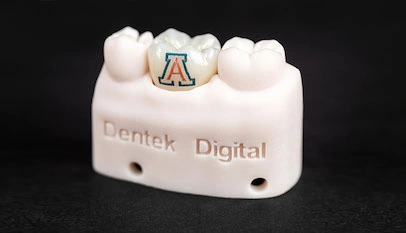
Additionally, our team offers advanced services like TattooTH custom implant shading and digital implant planning. These tools give dental practices a competitive edge and help improve patient satisfaction.
Frequently Asked Questions About Dental Implant Options
What is the most durable material for implant crowns?
Zirconia is generally considered the most durable option. It handles high bite forces well and resists chipping. However, the best material always depends on the individual case and tooth location.
How does digital planning improve implant outcomes?
Digital planning allows the entire case to be mapped in 3D before surgery. Therefore, implant positions are optimized for the final restoration. This reduces complications and improves the accuracy of the finished result.
Can a dental lab help with full-arch implant cases?
Yes, absolutely. A skilled digital dental lab is essential for full-arch cases. Furthermore, advanced labs like Dentek Digital offer digital implant planning and a full range of full-arch restoration options.
How do I know if my patient is a good candidate for implants?
Candidacy depends on bone density, overall health, and oral hygiene. Additionally, factors like smoking and uncontrolled diabetes can affect outcomes. A thorough clinical evaluation is always the first step.
What is TattooTH and how does it apply to implant restorations?
TattooTH is an advanced custom shading service offered by Dentek Digital. It allows for highly precise color characterization of implant crowns. As a result, restorations blend seamlessly with surrounding natural teeth.
Partner with Dentek Digital for Implant Restorations
At Dentek Digital, we are proud to be a trusted lab partner for dental practices across the Greater Phoenix area. From single-tooth crowns to complex full-arch cases, we deliver precision restorations built with advanced CAD/CAM technology and skilled craftsmanship.
Whether your practice is in Scottsdale, Mesa, Chandler, or anywhere in between, we are ready to support your implant cases. Moreover, our digital implant planning service helps you deliver more predictable outcomes for your patients.
Ready to take your implant restorations to the next level? Contact Dentek Digital today to send us a case or discuss how we can support your practice. We look forward to partnering with you.