
Digital dentistry is changing how dental practices work with their labs. One of the most powerful shifts has been the move toward fully digital case submissions. STL file submission is at the center of that change, and more dentists across the Greater Phoenix area are making the switch every year.
An STL file is a digital scan file that captures a precise three-dimensional model of a patient’s dentition. Instead of sending physical impressions through the mail, practices simply upload a digital file directly to their lab. The process is faster, cleaner, and far more accurate.
At Dentek Digital, we were among the earliest adopters of the digital CAD/CAM workflow in the country. We have seen firsthand how STL file submission transforms the relationship between dentists and their dental lab. This post covers the core benefits and explains why more Phoenix-area practices are going fully digital.
What Is an STL File and Why Does It Matter?
STL stands for Standard Tessellation Language. It is the most widely used file format in digital dentistry for sharing intraoral scan data. Most modern intraoral scanners export cases in this format.
When a dentist scans a patient’s mouth, the scanner creates a highly detailed digital model. That model is saved as an STL file. The file is then sent to a dental lab like Dentek Digital, where our technicians use it to design and fabricate dental restorations using advanced CAD/CAM technology.
How STL Files Fit Into the CAD/CAM Workflow
The CAD/CAM workflow begins the moment a scan is taken chairside. After the scan, the STL file travels digitally to the lab. Our team imports it into design software, creates the restoration, and mills or prints it using precision equipment.
This end-to-end digital process eliminates many of the variables that affect traditional workflows. Therefore, the result is a restoration that fits with exceptional accuracy from the very first appointment.
Top Benefits of STL File Submission for Dental Practices
Switching to digital submissions offers real, measurable advantages for both the practice and the patient. Below are the most important benefits dentists across Scottsdale, Mesa, Chandler, and Tempe are experiencing today.
1. Faster Turnaround Times
Physical impressions must be packed, shipped, and received before a lab can even begin work. STL files arrive instantly. As a result, Dentek Digital can begin designing your case the same day we receive the submission.
Faster starts mean faster completions. Additionally, there is no risk of a case being delayed due to shipping issues or a damaged impression in transit.
2. Superior Accuracy and Fit
Traditional PVS or alginate impressions can distort slightly during pouring or shipping. STL files capture the dentition with micron-level precision. Because of this, restorations fabricated from digital scans consistently achieve outstanding fit accuracy.
Fewer remakes and adjustments save everyone time. Moreover, patients experience greater comfort and shorter chair time at delivery appointments.
3. No More Lost or Damaged Impressions
Physical impressions can crack, tear, or simply get lost in the mail. STL files are digital assets. They can be stored, backed up, and resent instantly if needed.
This alone eliminates a major source of frustration for busy dental practices. Furthermore, digital files can be archived for future reference if a patient needs additional work later.
4. Cleaner, More Hygienic Workflow
Handling physical impressions requires careful disinfection protocols. STL file submission removes the need for any physical exchange of materials between the practice and the lab.
For practices in Gilbert, Chandler, and across the Phoenix metro area, this creates a cleaner and more streamlined infection-control process. In addition, it reduces overhead costs associated with impression materials, packaging, and shipping.
5. Better Communication Between Dentist and Lab
Digital files open the door to clearer, faster communication. When something needs to be reviewed, both the practice and the lab are looking at the same digital model simultaneously.
This improves case planning and reduces misunderstandings. Therefore, the final restoration is more likely to meet the dentist’s expectations on the first attempt.
How Dentek Digital Handles STL File Submissions
At Dentek Digital, we have built our entire workflow around digital submissions. Our Phoenix lab is equipped with state-of-the-art design software and precision milling and printing equipment. We accept STL files from all major intraoral scanner brands.
When your case arrives, our experienced technicians review the scan for quality and completeness. Next, they move it into design, where every detail is crafted with care and precision. Finally, the restoration is fabricated and shipped back to your practice, ready for delivery.
What We Fabricate From STL Files
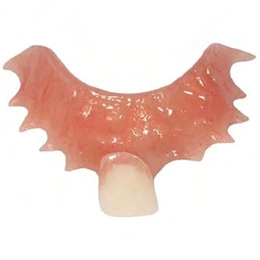
Our lab uses digital scan data to produce a full range of restorations. These include crowns, bridges, veneers, inlays and onlays, full-arch restorations, removable prosthetics, splints, nightguards, and implant restorations. We also offer advanced services such as TattooTH custom-shaded restorations and digital implant planning.
Whether you are restoring a single tooth or planning a complex full-mouth case, our team is equipped to deliver high-quality results. Contact Dentek Digital today to discuss your next case and get started with digital submissions.
Tips for Submitting High-Quality STL Files
Getting the most from digital submissions starts with the quality of the scan itself. Here are some practical tips to help ensure every case you send is ready to go straight into design.
- Capture adequate tissue retraction: Make sure the margin is fully visible in the scan. Tissue management is just as important in digital scanning as it is in traditional impressions.
- Scan the opposing arch and bite registration: Always include both arches and an accurate bite scan. This allows our technicians to design proper occlusion from the start.
- Check scan quality before submitting: Most intraoral scanners have built-in quality indicators. Review the scan in your software before uploading to ensure there are no gaps or distortions.
- Include clear case notes: Even with a perfect scan, detailed notes about shade, material preference, and design goals help us deliver exactly what you need.
- Use a reliable submission portal: Dentek Digital makes it easy to upload your files and case information through a simple, secure digital submission process.
Practices in Mesa, Tempe, Scottsdale, and throughout the Greater Phoenix area can take advantage of our streamlined digital submission process. If you have questions about getting started, our team is always happy to help.
Why Phoenix-Area Dentists Are Going Fully Digital
The Greater Phoenix dental market is competitive. Patients expect modern, comfortable experiences, and they notice when practices invest in advanced technology. Going fully digital with STL file submission signals to patients that your practice is forward-thinking and committed to quality.
However, the benefits are not just cosmetic. Fully digital workflows make practices more efficient, reduce overhead, and improve clinical outcomes. Moreover, partnering with a digitally advanced lab like Dentek Digital gives your practice access to precision fabrication that traditional workflows simply cannot match.
We work with practices from Chandler and Gilbert to Scottsdale and beyond. Our goal is to make the digital transition as smooth as possible for every dentist we serve.
Frequently Asked Questions About STL File Submission
What intraoral scanners are compatible with Dentek Digital’s submission process?
We accept STL files from all major intraoral scanner brands. If you are unsure whether your scanner is compatible, simply reach out and our team will confirm right away.
Do I need special software to send an STL file to Dentek Digital?
No special software is required on your end. Most intraoral scanners allow you to export STL files directly. We will walk you through our simple submission process when you get started.
Is STL file submission more accurate than traditional impressions?
Generally, yes. High-quality digital scans eliminate the distortion risks associated with physical impression materials. Because of this, many dentists find that restorations fabricated from digital scans require fewer adjustments at delivery.
Can I still send physical impressions if I am not ready to go fully digital?
Yes, Dentek Digital continues to accept physical impressions. However, we strongly encourage practices to explore digital submissions. Our team can help you take the first step at whatever pace works best for you.
How do I get started with digital submissions at Dentek Digital?
Getting started is straightforward. Simply reach out to our team, and we will guide you through the setup process. We make it easy for practices across the Greater Phoenix area to begin submitting cases digitally right away.
Take the Next Step With Dentek Digital
STL file submission is not just a trend. It is the future of how dental practices and dental labs work together. The benefits are clear: faster turnarounds, better fit accuracy, cleaner workflows, and stronger communication between your practice and your lab.
Dentek Digital has been a leader in digital dentistry since the earliest days of CAD/CAM technology. We bring that experience to every case we fabricate for dentists across Phoenix, Mesa, Scottsdale, Tempe, Chandler, Gilbert, and the surrounding communities.
If you are ready to experience the difference a truly digital lab can make, we would love to partner with you. Explore your options and contact Dentek Digital to send us your first digital case today.