
Permanent dental implants have transformed the way dental professionals restore smiles for patients with missing teeth. They offer stability, function, and aesthetics that traditional dentures simply cannot match. As a result, more dental practices across the country are turning to digital dental labs to deliver implant restorations with greater precision.
At Dentek Digital, we fabricate high-quality implant restorations using advanced CAD/CAM technology. We serve dentists and dental practices throughout the Greater Phoenix, Arizona area, including Mesa, Tempe, Chandler, and Scottsdale. Our team combines cutting-edge digital workflows with skilled craftsmanship to support outstanding patient outcomes.
Whether you are a dentist planning your first implant case or expanding your implant services, understanding how permanent implants are made matters. In this post, we break down the process, the technology, and how a trusted digital dental lab partner makes all the difference.
What Are Permanent Dental Implants?
Permanent dental implants are titanium posts surgically placed into the jawbone. They serve as artificial tooth roots. Once the implant integrates with the bone, a dental restoration is placed on top to restore function and appearance.
The restoration placed over the implant is called a crown, bridge, or full-arch prosthesis. This is where the dental lab plays a critical role. Furthermore, the precision of that restoration directly impacts the patient’s comfort, bite, and long-term success.
Types of Implant Restorations
There are several types of restorations used with permanent implants. Each serves a different clinical need. Here are the most common options:
- Single implant crowns — Used to replace one missing tooth
- Implant-supported bridges — Used to replace multiple adjacent teeth
- Full-arch restorations — Used for patients missing all teeth on one or both arches
- Hybrid prostheses — Fixed full-arch restorations combining acrylic or zirconia with a metal framework
Additionally, screw-retained versus cement-retained options give clinicians flexibility. Each has advantages depending on the case design and patient needs.
How CAD/CAM Technology Elevates Implant Restorations
CAD/CAM stands for Computer-Aided Design and Computer-Aided Manufacturing. It is the foundation of modern digital dentistry. Moreover, it has completely changed how dental labs design and mill restorations.
Traditional implant restorations relied heavily on manual lab work. That process introduced more variability. However, digital workflows using CAD/CAM significantly reduce that variability and improve fit accuracy.
The Digital Workflow at Dentek Digital
At Dentek Digital, our digital implant workflow begins when we receive your case. We were one of the earliest adopters of the digital CAD/CAM workflow in the country. Therefore, our team brings deep experience to every case we handle.
Here is a simplified view of our process:
- Step 1: We receive digital scans or traditional impressions from the dental practice
- Step 2: Our technicians design the restoration digitally using advanced CAD software
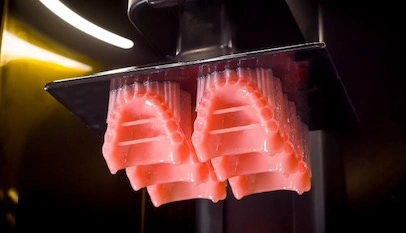
- Step 3: The design is milled or printed using precision CAM equipment
- Step 4: The restoration is finished, quality-checked, and shipped back to the dentist
As a result, dentists in Phoenix, Chandler, and beyond receive restorations that fit predictably and perform reliably. This benefits both the clinician and the patient.
Why Fit and Precision Matter So Much
A poorly fitting implant crown can cause serious problems. It may create bite issues, tissue inflammation, or implant complications over time. On the other hand, a precisely designed restoration supports long-term implant health.
Digital design allows our lab technicians to analyze occlusion, contacts, and emergence profiles with great accuracy. Furthermore, we can make adjustments virtually before any material is milled. This reduces remakes and saves valuable chair time for dentists.
Materials Used in Permanent Implant Restorations
Material selection is an important part of every implant case. The right material depends on the location of the tooth, the patient’s bite, and aesthetic goals. Here are the most commonly used materials:
- Zirconia — Extremely strong and tooth-colored; ideal for posterior and anterior implant crowns
- Lithium disilicate — Excellent aesthetics; often used for anterior single units
- PFM (Porcelain-Fused-to-Metal) — A traditional option still used in select cases
- Titanium frameworks — Commonly used in full-arch hybrid restorations
Moreover, zirconia has become the dominant material for implant crowns in recent years. Its strength, biocompatibility, and aesthetics make it a well-rounded choice for most cases.
Digital Implant Planning: A Game-Changer for Dentists
Beyond fabrication, Dentek Digital also offers digital implant planning services. This is a powerful tool for dental practices that want to improve case predictability before surgery even begins.
Digital implant planning uses cone beam CT (CBCT) imaging and digital scans to virtually plan implant placement. As a result, the surgeon can see exactly where to place the implant for optimal prosthetic outcomes. This is often called a prosthetically driven approach.
Benefits of Digital Implant Planning
There are many reasons dental practices in Scottsdale, Mesa, Tempe, and the broader Phoenix metro are adopting digital implant planning. Consider these key advantages:
- Improved implant positioning for better crown emergence and aesthetics
- Reduced surgical complications through precise pre-operative planning
- Better communication between the surgeon, restorative dentist, and lab
- Shorter overall treatment timelines in many cases
Furthermore, guided surgery using surgical stents based on digital plans can significantly improve placement accuracy. This technology is available through Dentek Digital as part of our advanced digital services.
Supporting Dental Practices Across Greater Phoenix
Dentek Digital is proud to serve dental professionals throughout the Greater Phoenix area. We work with general dentists, prosthodontists, oral surgeons, and periodontists. Additionally, we support multi-location dental groups and solo practices alike.
Our clients in communities like Gilbert, Chandler, Scottsdale, and Tempe trust us to deliver consistent, high-quality results. Because of this trust, we hold ourselves to exceptional quality standards on every case that comes through our lab.
How We Partner With Dental Practices
We believe a great lab relationship is built on communication and consistency. Our team is always available to discuss case details, material options, and design choices. Moreover, we provide fast turnaround times without sacrificing quality.
Sending a case to Dentek Digital is straightforward. We accept digital scans, traditional impressions, and models. Then, our team handles the rest with precision and care.
Frequently Asked Questions About Permanent Dental Implants
What makes a permanent dental implant restoration different from a removable option?
A permanent implant restoration is fixed in place and does not come out. It functions much like a natural tooth. In contrast, removable options like dentures can shift and require adhesives. Permanent restorations generally provide better chewing function and patient confidence.
How long does it take to fabricate an implant crown at a digital lab?
Turnaround times vary depending on the case complexity and restoration type. However, digital workflows typically allow for faster production than traditional methods. A single implant crown can often be completed within a few business days after the lab receives the case.
What information does a dental lab need to fabricate an implant restoration?
The lab needs accurate records to design a proper restoration. These typically include digital scans or impressions, implant details such as the brand and size, bite records, and shade information. Furthermore, clear communication about the patient’s functional and aesthetic goals helps the technician deliver the best result.
Can Dentek Digital handle full-arch implant cases?
Yes. We fabricate a full range of implant restorations, including complex full-arch cases. We work with hybrid prostheses, implant-supported fixed bridges, and other full-arch solutions. Additionally, our digital implant planning service can support full-arch cases from the planning stage through final delivery.
What materials do you recommend for implant crowns?
Material selection depends on the clinical situation. For most posterior implant crowns, zirconia is an excellent choice due to its strength and aesthetics. For anterior cases with high aesthetic demands, layered zirconia or lithium disilicate may be preferred. We are happy to discuss options with the treating dentist on a case-by-case basis.
Partner With a Trusted Digital Dental Lab for Implant Restorations
Permanent dental implants represent one of the most significant advancements in restorative dentistry. However, the implant itself is only part of the equation. The quality of the restoration placed on that implant determines how well it functions and looks for years to come.
At Dentek Digital, we bring national-level expertise and advanced CAD/CAM technology to every implant case. We are recognized as a leader in digital dentistry and have been at the forefront of this technology since the early days of digital workflows. Therefore, dental practices across Greater Phoenix, from Mesa to Scottsdale, rely on us for results they can count on.
If you are ready to elevate your implant cases with a lab that combines technology, craftsmanship, and service, we want to hear from you. Contact Dentek Digital today to send us a case or explore how we can support your practice and your patients.