
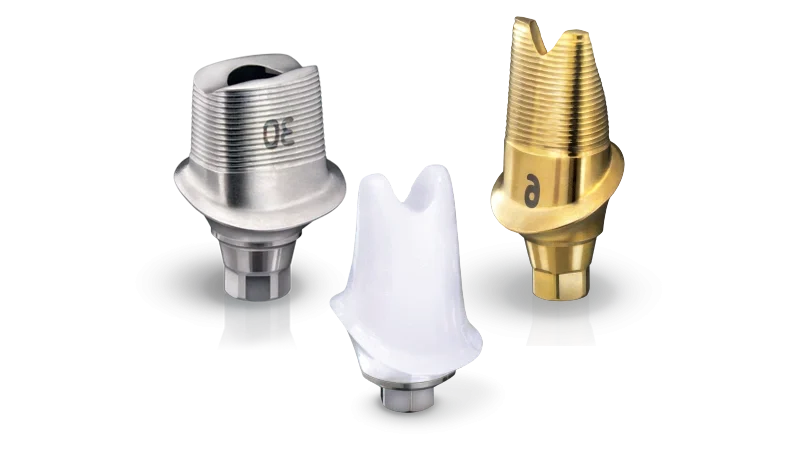
Full mouth dental implants represent one of the most complex and rewarding treatments in modern dentistry. For patients who have lost most or all of their teeth, this solution can restore function, confidence, and quality of life. As a result, more dental practices across the country are offering this treatment to their patients.
Behind every successful full mouth implant case is a reliable dental lab. At Dentek Digital, we support dentists and dental practices throughout the Greater Phoenix, Arizona area — including Mesa, Tempe, Chandler, and Scottsdale — with precision-crafted, CAD/CAM-designed implant restorations. Our advanced digital workflow helps clinicians deliver outstanding patient outcomes.
In this post, we explore how full mouth dental implants work, what the restoration process involves, and how a digital dental lab plays a critical role in every case. Whether you are a general dentist or a specialist, this guide is designed to help you understand the lab side of these complex cases.
What Are Full Mouth Dental Implants?
Full mouth dental implants are a comprehensive tooth replacement solution. They involve placing multiple implant fixtures into the jaw to support a full arch of prosthetic teeth. This approach is far more stable than traditional dentures. Moreover, it preserves bone structure and delivers a natural-looking result.
There are several ways to approach a full mouth implant case. The treatment plan depends on the patient’s bone density, existing oral health, and the clinician’s preferred protocol. Each case is unique, so flexible lab support is essential.
Common Full Arch Implant Approaches
- All-on-4 or All-on-X: A fixed arch supported by four or more implants. This is a popular choice because it minimizes the number of implants needed.
- Individual implants with a full-arch bridge: Multiple implants placed throughout the arch to support a segmented or continuous bridge restoration.
- Implant-supported overdentures: A removable prosthesis that snaps onto implant attachments for added retention and stability.
Each approach requires precise fabrication at the lab level. Therefore, choosing the right dental lab partner is one of the most important decisions a practice can make.
The Role of CAD/CAM Technology in Implant Restorations
CAD/CAM technology has transformed how dental labs design and fabricate implant restorations. CAD stands for computer-aided design, and CAM stands for computer-aided manufacturing. Together, these tools allow labs to create restorations with exceptional precision and consistency.
At Dentek Digital, we were among the earliest adopters of the digital CAD/CAM workflow in the country. Additionally, our team continuously evolves with the latest technology. This commitment allows us to deliver restorations that fit accurately and perform reliably from day one.
How the Digital Workflow Supports Full Mouth Cases
Digital workflows begin with a scan — either an intraoral scan or a scan of the physical model. Next, our technicians import the data into our design software. From there, we design the restoration digitally with precise occlusal and marginal accuracy.
After the design is approved, our milling and printing systems fabricate the restoration from high-quality materials. Finally, our skilled technicians finish and characterize each piece by hand. This combination of technology and craftsmanship is what sets Dentek Digital apart.
For full mouth implant cases, this process is especially valuable. Because these restorations span an entire arch, even minor inaccuracies can cause significant fitting or occlusal issues. Our digital process minimizes these risks significantly.
Materials Used in Full Arch Implant Restorations
Choosing the right material is critical for full mouth implant restorations. The material must be durable, biocompatible, and aesthetically pleasing. Furthermore, it must withstand the functional forces of daily chewing over many years.
Zirconia
Zirconia is one of the most popular materials for full arch implant bridges. It offers excellent strength and a natural-looking appearance. Moreover, it is highly resistant to chipping and fracture under normal occlusal loads.
Hybrid and Composite Materials
Some cases call for hybrid acrylic or composite-based restorations. These materials are lighter than zirconia and can be easier to modify chairside. However, they may require more frequent maintenance over time.
Titanium Frameworks
In some full mouth cases, a milled titanium framework supports the overlying prosthetic material. This approach provides exceptional structural support. Additionally, titanium is well-tolerated by the body, making it a safe long-term choice.
At Dentek Digital, we work with dentists to select the best material for each individual case. Our team considers function, aesthetics, and long-term durability in every recommendation.
Implant Planning: A Critical Step in Complex Cases
Proper implant planning is essential before any surgical procedure begins. Digital implant planning allows the clinician and the lab to collaborate on the ideal implant position, angulation, and prosthetic design before the patient enters the chair.
Dentek Digital offers advanced digital implant planning services. This service helps dentists in Phoenix, Scottsdale, Gilbert, and the surrounding Greater Phoenix area visualize the final restoration before placing a single implant. As a result, surgical accuracy improves significantly.
How Digital Implant Planning Works
First, the clinician captures a CBCT scan of the patient’s jaw. Next, intraoral scan data is overlaid with the CBCT data in our planning software. Then, our team designs the ideal implant positions based on the prosthetic outcome.
This prosthetically driven approach ensures the implants are placed where the restoration needs them. Therefore, the final prosthesis fits more predictably. The plan can also be used to generate a surgical guide, further improving accuracy during placement.
What Dentists Should Expect from a Digital Lab Partner
Not all dental labs are created equal. For full mouth implant cases, your lab partner must offer more than basic fabrication. They need to be a true clinical collaborator. Here is what to look for when evaluating a lab for implant cases.
- Digital workflow capability: The lab should accept digital scans and operate a modern CAD/CAM system.
- Implant system compatibility: Your lab should be familiar with the major implant systems and their corresponding components.
- Communication and turnaround: Clear communication and reliable turnaround times are essential for complex cases.
- Material expertise: The lab should offer guidance on material selection based on clinical needs.
- Implant planning support: Advanced labs can assist with pre-surgical planning to optimize outcomes.
Dentek Digital checks every one of these boxes. We proudly support dental practices across Mesa, Tempe, Chandler, Scottsdale, and the broader Greater Phoenix region with a full range of digital lab services.
TattooTH: An Advanced Service for Unique Cases
One of our most distinctive services at Dentek Digital is TattooTH. This innovative offering allows for custom characterization and personalization of dental restorations. For full mouth implant cases, TattooTH can help create a result that truly reflects the patient’s individual aesthetic preferences.
Additionally, this service demonstrates our commitment to going beyond standard lab output. We combine cutting-edge technology with artistic craftsmanship to create restorations that patients will be proud to wear for years to come.
Frequently Asked Questions About Full Mouth Dental Implants
What is the difference between All-on-4 and traditional full mouth implants?
All-on-4 uses four strategically placed implants to support a full arch prosthesis. Traditional full mouth implants may use more fixtures placed throughout the arch. Both approaches can deliver excellent results depending on the patient’s anatomy and clinical needs.
How does a dental lab support a full mouth implant case?
The lab designs and fabricates the final prosthesis based on data provided by the clinician. This includes scan data, bite records, and shade information. The lab also helps with implant planning, material selection, and provisional restorations in many cases.
What materials are most commonly used for full arch implant bridges?
Zirconia is the most common choice due to its strength and aesthetics. However, hybrid acrylic or composite materials are also used in certain clinical situations. The best material depends on the patient’s bite forces, aesthetics expectations, and the clinician’s preference.
How long does it take to fabricate a full arch implant restoration?
Turnaround times vary based on case complexity and material selection. However, digital workflows generally speed up fabrication compared to traditional lab methods. Your lab partner should give you a clear timeline at the start of each case.
Can a dental lab in Phoenix support implant cases outside the immediate area?
Yes. Many dental labs, including Dentek Digital, support practices across a wide geographic area. Digital case submission makes it easy for dentists to send cases and receive restorations with minimal delays, regardless of location.
Partner with Dentek Digital for Your Full Mouth Implant Cases
Full mouth dental implants are among the most rewarding cases a dental practice can offer. They change lives. However, they also require the right lab partner to execute at the highest level. That is exactly what Dentek Digital provides.
We are proud to serve dental professionals throughout the Greater Phoenix area — including practices in Mesa, Tempe, Chandler, Gilbert, Scottsdale, and beyond. Our team brings deep CAD/CAM expertise, advanced digital planning capabilities, and skilled craftsmanship to every case we handle.
If you are ready to elevate your implant program, we invite you to contact Dentek Digital and tell us about your next case. Our team is here to support you every step of the way — from planning through final delivery.