
When patients ask about teeth implants, they want clear answers. They want to know whether implants will look natural, feel comfortable, and last for years. As a dental professional, your ability to deliver those outcomes depends heavily on the quality of your lab partner.
Dentek Digital is a digital dental lab based in Phoenix, Arizona. We serve dentists and dental practices across the Greater Phoenix area, including communities like Mesa, Scottsdale, Chandler, and Gilbert. We specialize in CAD/CAM-fabricated restorations that meet the highest standards in digital dentistry.
In this post, we explore what makes teeth implants successful — from planning and design to final restoration. Whether you are new to implant dentistry or refining your workflow, this guide offers practical insights you can use right away.
What Are Teeth Implants and Why Do They Matter?
Teeth implants are titanium posts surgically placed into the jawbone. They act as artificial tooth roots. After healing, a crown or other restoration is attached on top to replace the missing tooth.
Implants are widely considered the gold standard for tooth replacement. They preserve bone, restore function, and deliver natural-looking aesthetics. Additionally, they support long-term oral health in ways that bridges and dentures often cannot.
For dental practices, offering implant restorations is a significant value-add. However, the quality of the final restoration plays a major role in patient satisfaction and long-term success.
The Role of the Dental Lab in Implant Success
Many dentists focus on the surgical phase of implant treatment. That is understandable. However, the restorative phase is equally important. A poorly fabricated crown or abutment can compromise the entire case.
A skilled digital dental lab ensures that every component fits precisely. This includes the implant crown, custom abutment, and any supporting structures. Because of this, choosing the right lab partner is one of the most important decisions a dental practice can make.
At Dentek Digital, we use advanced CAD/CAM technology to design and mill implant restorations with exceptional accuracy. Our digital workflow minimizes human error and maximizes consistency across every case.
How CAD/CAM Technology Improves Implant Restorations
CAD/CAM stands for Computer-Aided Design and Computer-Aided Manufacturing. This technology allows dental lab technicians to design restorations digitally and mill them from high-quality materials with machine precision.
Traditional lab methods rely heavily on manual sculpting and wax-ups. While skilled technicians can produce excellent results manually, digital workflows offer greater repeatability. Furthermore, digital files can be reviewed, adjusted, and archived more efficiently than physical models.
Dentek Digital was among the earliest adopters of digital CAD/CAM workflows in the country. We bring that experience to every implant case we handle for practices across Phoenix, Mesa, Gilbert, and beyond.
Digital Implant Planning: A Game Changer
One of the most valuable services we offer is digital implant planning. This process uses 3D imaging and software to map out the ideal implant position before surgery. As a result, the surgeon has a clear, data-driven guide for placement.
Proper implant positioning directly affects the restoration outcome. When the implant is placed in the optimal location, the crown fits better and functions more naturally. Therefore, digital planning reduces guesswork and supports more predictable results.
We work closely with dental professionals to review cases and provide planning support. This collaborative approach helps practices in Scottsdale, Chandler, and across the Greater Phoenix area deliver better patient outcomes.
Materials Used in Implant Restorations
The material used for the implant crown matters greatly. Today, zirconia is one of the most popular choices. It is strong, biocompatible, and highly aesthetic. Additionally, it resists staining and wear over time.
Other options include PFM (porcelain-fused-to-metal) and full-cast metal crowns. Each material has its own indications. For example, full-cast metal may be preferred for posterior implants with limited occlusal space. Zirconia, on the other hand, is often ideal for anterior cases where aesthetics are a priority.
At Dentek Digital, we help dentists select the right material for each unique case. Our team provides guidance based on clinical factors, patient preferences, and long-term performance goals.
What Dentists Should Look for in an Implant Lab Partner
Not all dental labs are created equal. When selecting a lab for implant restorations, dental practices should evaluate several key factors. These factors can significantly impact both the clinical outcome and the patient experience.
- Digital workflow capabilities: Does the lab use modern CAD/CAM technology? A fully digital workflow improves precision and turnaround time.
- Implant system compatibility: Can the lab work with the implant systems you use? Compatibility is essential for accurate abutment and crown fabrication.
- Communication and case support: Is the lab team accessible and responsive? Good communication prevents errors and delays.
- Turnaround time: Does the lab offer reliable, consistent turnaround times? Predictable timelines help you manage patient expectations.
- Quality assurance processes: Does the lab have systems in place to verify fit, occlusion, and aesthetics before shipping?
Dentek Digital checks every one of these boxes. We are a trusted partner for dental practices throughout the Greater Phoenix area. Moreover, our team brings deep expertise in implant restorations across a wide range of clinical scenarios.
The Importance of Accurate Impressions and Scans
The quality of the lab work starts with the quality of the impression or digital scan. Inaccurate records lead to restorations that do not fit properly. Therefore, dental practices should invest in reliable intraoral scanners and scanning protocols.
Digital impressions offer several advantages over traditional PVS impressions. They are faster, more comfortable for patients, and eliminate distortion from impression materials. Additionally, digital files can be sent to the lab instantly, reducing the overall case timeline.
If your practice is transitioning to digital scanning, our team at Dentek Digital can help guide the process. We work with a wide range of intraoral scanner systems and can advise on best practices for implant case submissions.
Implant Restorations We Offer at Dentek Digital
Our implant restoration services cover a full range of clinical needs. We fabricate both single-unit and multi-unit implant restorations. Furthermore, we support full-arch implant cases, including implant-supported dentures and hybrid prosthetics.
Single-Unit Implant Crowns
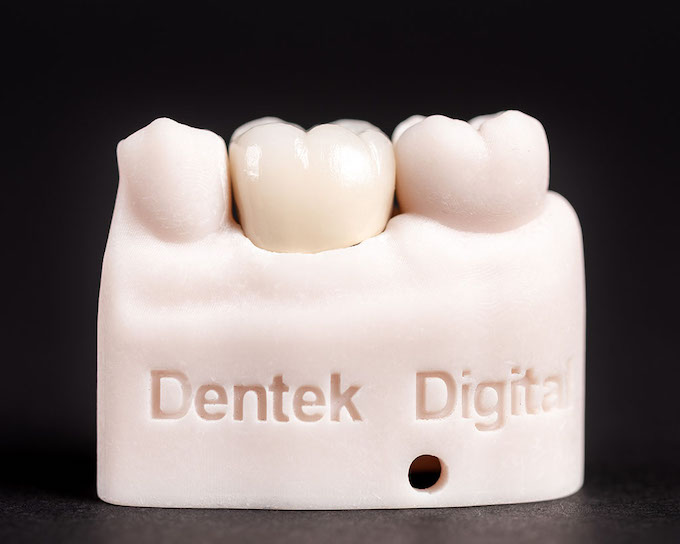
Single-unit implant crowns are the most common implant restoration. We design and mill these crowns using high-quality zirconia or other approved materials. Each crown is fabricated to match the patient’s natural dentition in shape, size, and shade.
Our digital workflow ensures precise fit at the implant interface. This reduces the need for chairside adjustments and speeds up the delivery appointment. As a result, both the dentist and the patient benefit from a smoother experience.
Custom Abutments
Custom abutments allow for greater control over emergence profile and gingival contour. They are especially valuable in aesthetic zones. Additionally, custom abutments can be designed to optimize the crown’s fit and long-term stability.
At Dentek Digital, we design custom abutments using CAD software and mill them from titanium or zirconia. Our technicians review each case carefully to ensure the abutment geometry supports the final restoration effectively.
Full-Arch Implant Solutions
Full-arch implant restorations — sometimes called All-on-4 or All-on-X prosthetics — require precise planning and execution. These cases involve replacing an entire arch of teeth with an implant-supported prosthesis. Therefore, accuracy at every stage is critical.
We support full-arch cases from the planning phase through final delivery. Our digital tools allow us to design prosthetics with accurate occlusion, aesthetics, and fit. Dental practices in Mesa, Gilbert, Scottsdale, and Chandler rely on us for complex full-arch cases.
Tips for a Smoother Implant Restoration Workflow
Improving your implant workflow does not require a complete overhaul. Often, small adjustments make a big difference. Here are some practical tips for dental practices looking to streamline their implant restoration process.
- Use a consistent scan body protocol: Always use the correct scan body for your implant system. This ensures the lab can accurately capture implant position.
- Capture the full arch: Scan both arches and the bite registration to give the lab complete occlusal information.
- Communicate shade preferences clearly: Include shade tabs in photos and note any special aesthetic considerations in your case notes.
- Plan restorations before surgery when possible: Restorative-driven implant planning improves alignment between the surgical and restorative phases.
- Partner with your lab early: Involve your lab partner in complex cases from the start. Early collaboration prevents costly revisions later.
These steps help practices across Greater Phoenix deliver faster, more predictable implant restorations. Additionally, they reduce chair time and improve patient satisfaction.
Frequently Asked Questions About Teeth Implants
What is the difference between an implant and a crown?
The implant is the titanium post placed in the jawbone. The crown is the visible tooth-shaped restoration attached on top. Both components work together to replace a missing tooth fully.
How long does it take to receive an implant restoration from the lab?
Turnaround time varies depending on case complexity. Single-unit crowns are typically faster than full-arch cases. At Dentek Digital, we prioritize efficient turnaround without sacrificing quality.
Can Dentek Digital work with my implant system?
We work with a wide range of implant systems. When you submit a case, include the implant brand and system details. Our team will confirm compatibility and advise on the best restoration approach.
What materials do you recommend for implant crowns?
Zirconia is our most commonly recommended material for implant crowns. It offers excellent strength, aesthetics, and biocompatibility. However, material selection depends on clinical factors such as occlusal load and location in the arch.
Does Dentek Digital offer digital implant planning services?
Yes. We offer digital implant planning as an advanced service. This involves 3D case analysis to support optimal implant placement. Contact our team to learn more about how this service can benefit your practice.
Partner With Dentek Digital for Precision Implant Restorations
Delivering exceptional teeth implants starts with the right lab partnership. At Dentek Digital, we combine cutting-edge CAD/CAM technology with experienced craftsmanship to produce implant restorations that fit precisely and look beautiful.
We proudly serve dental practices throughout the Greater Phoenix area, including Mesa, Scottsdale, Chandler, and Gilbert. Our team is committed to supporting your practice with reliable turnaround times, responsive communication, and the highest quality restorations available.
Whether you handle single-unit cases or complex full-arch rehabilitations, we are ready to be your trusted lab partner. Contact Dentek Digital today to send us a case or request a consultation about your implant restoration needs.