
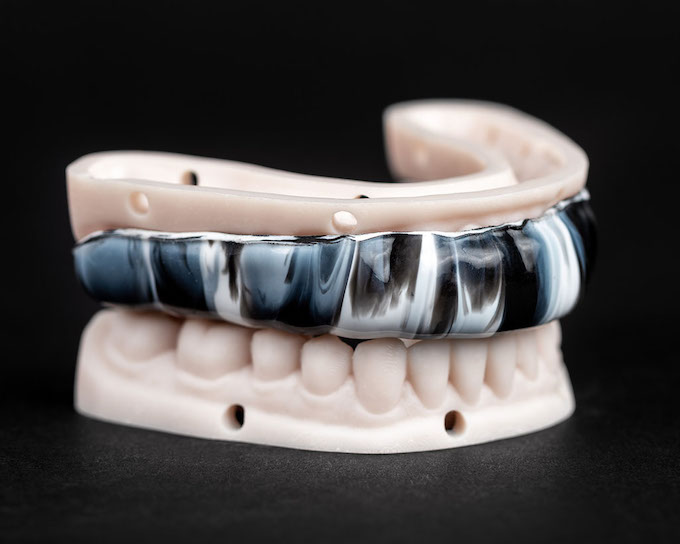
The science of dental biomaterials is advancing faster than ever before. New materials are changing the way dental restorations are designed, fabricated, and placed. For dentists and dental practices across Phoenix and the surrounding communities, this progress opens exciting new possibilities.
Additionally, today’s materials work hand in hand with digital workflows and CAD/CAM technology. The result is restorations that fit better, last longer, and look more natural. Understanding these advances helps dental professionals make smarter choices for their patients.
At Dentek Digital, we stay at the forefront of these developments. We combine cutting-edge digital fabrication with the latest high-performance materials to deliver results dentists can count on. Here is a closer look at what is changing and why it matters.
What Are Dental Biomaterials?
Dental biomaterials are substances used to restore, replace, or support natural tooth structure and oral function. They include ceramics, polymers, metals, and composites. Each material type has unique properties that make it suited for specific clinical situations.
Choosing the right material matters enormously. It affects strength, esthetics, biocompatibility, and long-term durability. Therefore, dental labs and clinicians must understand the strengths and limitations of every option available.
Over the past decade, innovation in this field has accelerated significantly. New formulations and manufacturing methods have expanded what is clinically possible. As a result, patients benefit from restorations that are stronger, thinner, and more lifelike than ever before.
Why Biomaterial Innovation Matters for Dentists
Better materials translate directly into better patient outcomes. For example, high-strength ceramics allow for more conservative tooth preparations. This means preserving more natural tooth structure, which is always the preferred approach.
Furthermore, new materials are often easier to work with in a digital workflow. They mill cleanly, bond predictably, and deliver consistent results. For dental practices in Mesa, Chandler, Scottsdale, and Gilbert, this consistency is a major advantage.
Key Advances in Ceramic Dental Biomaterials
Ceramics are among the most widely used dental restoration materials today. They offer excellent esthetics and strong biocompatibility. However, earlier ceramic formulations had limitations in strength and versatility.
Modern ceramics have addressed many of those shortcomings. Today’s options include a broad range of materials engineered for specific clinical demands. Each generation of ceramic has brought meaningful improvements in performance.
Zirconia: From Opaque to Lifelike
Zirconia has been a game-changer in dental lab fabrication. Early zirconia was highly strong but appeared opaque and flat. However, newer multilayered and high-translucency zirconia formulations have transformed its esthetic potential.
Today, full-contour zirconia restorations can mimic the depth and translucency of natural enamel. Moreover, they remain extremely durable under heavy occlusal forces. This makes them an excellent choice for posterior and full-arch cases alike.
At Dentek Digital, we mill zirconia restorations with precision CAD/CAM technology. We select from multiple zirconia grades depending on the case requirements. This ensures every restoration delivers the right balance of strength and esthetics.
Lithium Disilicate: The Esthetic Benchmark
Lithium disilicate remains one of the most popular ceramic materials for esthetic restorations. It offers a beautiful, natural appearance with excellent light transmission. Additionally, it bonds strongly to tooth structure, providing a reliable long-term result.
This material is commonly used for anterior crowns, veneers, and inlays. It mills beautifully in a CAD/CAM workflow, producing smooth margins and consistent fit. For dentists in Scottsdale and Tempe seeking premium esthetic outcomes, it continues to be a top choice.
Hybrid Ceramics and Polymer-Infiltrated Networks
Hybrid ceramic materials represent a newer category of dental biomaterials. They combine ceramic particles with a resin polymer network. Because of this, they offer a unique combination of strength, flexibility, and esthetics.
These materials are gentler on opposing dentition and absorb occlusal stress differently than traditional ceramics. They also mill efficiently, making them well suited for same-day or rapid-turnaround restorations. Furthermore, they are lightweight, which is beneficial in certain clinical scenarios.
Advances in Polymers and Resins
Polymer-based dental biomaterials have also seen significant improvements. Modern resins and composites offer better wear resistance, color stability, and mechanical strength. As a result, they are now used in a broader range of applications than ever before.
High-performance polymers like PEEK (polyether ether ketone) have entered mainstream dental use. PEEK is strong, lightweight, and highly biocompatible. In addition, it is metal-free, making it appealing for patients with sensitivities or specific preferences.
Milled PMMA for Temporaries and Beyond
Polymethyl methacrylate, or PMMA, is a familiar material in dental labs. However, milled PMMA blocks have brought new levels of consistency and quality to temporary restorations. They provide excellent fit and esthetics during treatment planning phases.
For implant cases in Phoenix and Gilbert, high-quality PMMA temporaries play an important role. They allow dentists to evaluate function and esthetics before finalizing the permanent restoration. Therefore, milled PMMA bridges the gap between planning and final delivery.
Resin Composites and Digital Fabrication
Resin composites have improved dramatically in terms of filler particle technology. Modern composites resist wear and staining far better than earlier generations. Moreover, they are now engineered specifically for CAD/CAM milling, offering predictable results at the lab level.
Explore your options by partnering with a digital lab that understands the full range of composite materials available today. Selecting the right resin for each case requires experience and technical knowledge. This is where a skilled dental lab team makes a real difference.
Digital Fabrication and Material Performance
The relationship between digital fabrication and dental biomaterials is deeply intertwined. CAD/CAM milling and 3D printing require materials specifically engineered for those processes. Not every material performs equally across different fabrication methods.
At Dentek Digital, we were among the earliest adopters of digital CAD/CAM workflows in the country. This experience gives us a deep understanding of how different materials behave during fabrication. As a result, we select materials that consistently deliver the best clinical outcomes.
Material Selection in CAD/CAM Workflows
Milling requires materials with specific hardness, density, and homogeneity. A material that performs well in one application may not perform equally in another. Therefore, experienced labs evaluate material suitability on a case-by-case basis.
For example, full-arch implant cases in Chandler or Mesa may require a different zirconia grade than a single anterior crown. Understanding these nuances is part of what separates a high-quality digital lab from a conventional one. At Dentek Digital, this expertise is built into every case we handle.
3D Printing and Emerging Material Categories
3D printing is expanding the range of materials available for dental use. Printed surgical guides, models, and temporaries are already well established. Furthermore, printed permanent restorations are becoming an increasingly viable option as resin technology improves.
Meanwhile, bio-compatible printed materials are being developed for a broader range of applications. This includes printable materials for implant components and occlusal devices. The pace of innovation in this area continues to accelerate.
Biocompatibility and Patient Safety
All dental biomaterials must meet rigorous biocompatibility standards. This means they must be safe for long-term contact with oral tissues and the body. Additionally, they must not cause allergic or inflammatory reactions in patients.
Modern testing and regulatory oversight have raised the bar for material safety significantly. Dentists and labs should always select certified, well-documented materials from reputable sources. Furthermore, patient medical history should always inform material selection when appropriate.
Metal-Free Restorations and Patient Preferences
Many patients today prefer metal-free dental restorations. Because of this, ceramic and polymer-based materials have become even more important. They provide strong, durable solutions without the esthetic or sensitivity concerns associated with metal alloys.
For practices across Phoenix, Scottsdale, and the greater Arizona region, offering metal-free options is increasingly important. Patients are more informed and have higher expectations than ever before. Therefore, having access to the right materials through a trusted lab partner is essential.
Frequently Asked Questions About Dental Biomaterials
What makes a dental material “biocompatible”?
A biocompatible material is one that does not cause harm to living tissue over time. It must be safe, stable, and non-toxic when used in the mouth. Regulatory agencies and independent testing verify these properties before materials are approved for clinical use.
How do I know which material is best for a given restoration?
Material selection depends on several factors, including the location of the tooth, occlusal forces, esthetic requirements, and patient health history. An experienced dental lab partner can help guide appropriate material selection based on the clinical situation.
Is zirconia always the strongest option?
Zirconia is among the strongest dental ceramics available. However, strength is not the only factor to consider. Esthetics, bond strength, and occlusal dynamics all influence the best choice for a given case. A skilled lab team evaluates all of these factors together.
Can new materials work with existing CAD/CAM systems?
Most modern dental biomaterials are designed to be compatible with leading CAD/CAM platforms. However, not every lab has experience milling every material type. Therefore, it is important to work with a digital lab that has broad material expertise and up-to-date equipment.
How often do dental biomaterials change or improve?
Material science in dentistry evolves continuously. New formulations, improved processing techniques, and clinical research regularly bring new options to market. Staying current requires ongoing education and investment in technology, which is a core commitment at Dentek Digital.
Partner with Dentek Digital for Advanced Material Solutions
The rapid evolution of dental biomaterials represents an incredible opportunity for dental professionals and their patients. From high-translucency zirconia to hybrid ceramics and advanced polymers, today’s options are more capable than ever. Moreover, when paired with precision digital fabrication, these materials deliver outstanding clinical results.
At Dentek Digital, we bring together the best available materials, state-of-the-art CAD/CAM technology, and deep technical expertise. We serve dentists and dental practices across Phoenix, Mesa, Chandler, Scottsdale, Gilbert, and the entire Greater Arizona region. Our team is ready to help you find the right material solution for every case.
Send us a case and experience the Dentek Digital difference firsthand. We make it easy to get started and work closely with your practice every step of the way. Contact Dentek Digital today to discuss your next case and explore how the latest dental biomaterials can elevate your patient outcomes.