
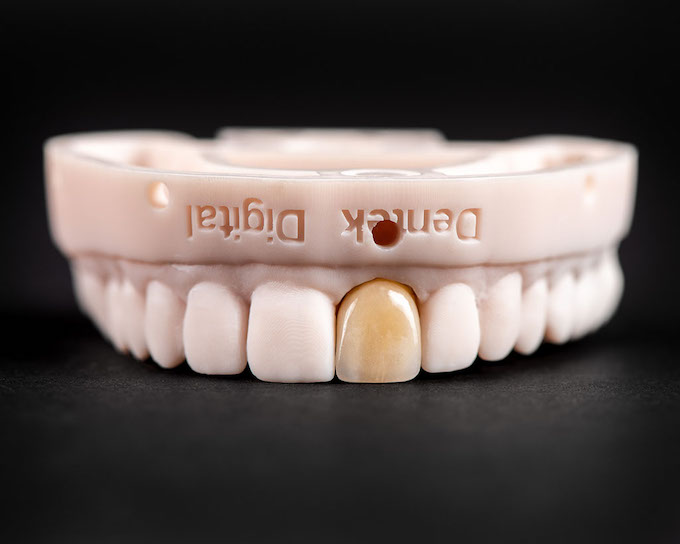
The way dental labs fabricate custom trays and appliances has changed dramatically in recent years. Digital workflows now make it possible to produce precise, well-fitting trays faster than ever before. For dentists across the Greater Phoenix area, this shift is creating real advantages in patient care and practice efficiency.
Custom trays are a foundational element of restorative and prosthetic dentistry. They help capture accurate impressions and support a wide range of clinical procedures. However, traditional tray fabrication has often been time-consuming and inconsistent. Digital 3D printing is changing that in meaningful ways.
At Dentek Digital, we have embraced this technology from the ground up. Our lab in Phoenix uses advanced CAD/CAM workflows to design and print custom trays and appliances with exceptional precision. Therefore, dental practices in Mesa, Scottsdale, Chandler, and Gilbert can rely on a consistent, high-quality result every time.
What Are Custom Trays and Why Do They Matter?
A custom tray is a patient-specific impression tray fabricated to match the unique contours of an individual’s mouth. Unlike stock trays, custom trays provide a more uniform thickness of impression material. As a result, they produce more accurate impressions and better-fitting restorations.
Custom trays are used across a wide variety of procedures. These include full-arch impressions for dentures, implant-supported prosthetics, bleaching trays, and more. Furthermore, they play an important role in ensuring that the final restoration fits the patient correctly the first time.
The Limitations of Traditional Tray Fabrication
Traditionally, custom trays were made by hand using acrylic materials. A technician would pour a study model, then vacuum-form or paint acrylic over it layer by layer. This process worked, but it introduced variability at every step.
Manual fabrication also took more time. Additionally, small inconsistencies in tray thickness or border extension could affect the quality of the final impression. For busy dental practices in areas like Tempe or Chandler, turnaround time and reliability matter greatly.
How Digital Fabrication Addresses These Challenges
Digital fabrication starts with a digital scan or a scanned physical model. Next, a technician designs the tray in CAD software, controlling thickness, spacing, and borders with precision. Finally, the design is sent directly to a 3D printer for fabrication.
This process eliminates many of the variables found in manual workflows. Moreover, it produces consistent results across multiple cases. Because of this, dental practices can count on predictable outcomes when working with a digital lab like Dentek Digital.
3D Printing Technology Behind Custom Trays
Not all 3D printing technologies are the same. In the dental industry, several printing methods are used to fabricate trays and appliances. Understanding the differences helps dentists appreciate the quality they are receiving.
The most common technologies used in dental 3D printing include CAD/CAM dentistry-integrated systems based on stereolithography (SLA) and digital light processing (DLP). Both methods use light to cure liquid resin layer by layer. As a result, they produce highly accurate and smooth-surfaced parts.
Materials Used in 3D-Printed Trays
The resins used in dental 3D printing are specifically engineered for clinical use. They must be biocompatible and safe for intraoral contact. Additionally, they need to be strong enough to withstand the forces involved in impression-taking.
Modern dental resins come in a range of formulations. Some are rigid, while others offer slight flexibility. Therefore, the right material can be selected based on the clinical application. For example, a bleaching tray requires a different material profile than a full-arch impression tray.
Design Precision Through CAD Software
The design phase is where digital fabrication truly shines. CAD software allows the technician to set exact spacing between the tray and the tissue surface. This spacing controls how much impression material will be used.
In addition, border extensions can be carefully defined to capture the correct anatomical landmarks. Furthermore, handles and stops can be designed with precision. This level of control is difficult to achieve consistently through manual methods alone.
Types of Appliances Made With 3D Printing
Custom trays are just one category of appliances that digital labs can now produce using 3D printing. The technology is highly versatile and supports a broad range of dental devices. Here are some of the most common appliances fabricated digitally:
- Custom impression trays — for full-arch and quadrant impressions
- Bleaching trays — precisely fitted for at-home whitening treatments
- Occlusal splints and nightguards — for bruxism management and TMD therapy
- Surgical guides — for implant placement accuracy
- Orthodontic appliances — including retainers and positioning trays
- Denture bases and try-ins — for removable prosthetic workflows
Each of these appliances benefits from the dimensional accuracy that digital fabrication provides. Moreover, the ability to store digital files means that replacements or duplicates can be fabricated quickly. This is especially valuable for patients in areas like Gilbert or Mesa who may need a replacement appliance without delay.
Benefits for Dental Practices in Greater Phoenix
Dental practices across Phoenix, Scottsdale, Chandler, and the surrounding communities stand to gain significantly from digital tray and appliance fabrication. The benefits extend beyond just the appliance itself.
Faster Turnaround Times
Digital workflows are inherently faster than manual ones. Once a scan or model is received, the design and print process can begin immediately. Therefore, practices can receive their trays and appliances more quickly than with traditional lab methods.
Faster turnaround means fewer delays in treatment. Additionally, it reduces the need for patients to make extra visits. For a busy practice in Tempe or Scottsdale, this kind of efficiency makes a real difference.
Improved Fit and Accuracy
Digital design and printing minimize human error in tray fabrication. The result is a tray that fits more accurately and captures impressions more reliably. As a result, fewer remakes and adjustments are needed.
Better-fitting trays also improve the patient experience. Trays that are too tight or improperly extended can be uncomfortable. Furthermore, a poorly fitting tray can compromise the quality of the impression. Digital fabrication reduces both of these risks significantly.
Streamlined Lab Communication
Digital workflows make communication between the dental practice and the lab more efficient. Dentists can submit digital scans directly, reducing the need for physical model shipment. Meanwhile, the lab can send digital previews for approval before fabrication begins.
This kind of collaboration supports better outcomes. Dentek Digital works closely with dental practices across the Greater Phoenix area to ensure every case meets clinical expectations. Contact Dentek Digital today to explore how our digital workflow can support your practice.
Practical Tips for Getting the Most From Printed Trays
To maximize the benefits of 3D-printed custom trays, dental practices should keep a few best practices in mind. These tips help ensure that every case runs smoothly from start to finish.
- Submit high-quality scans. The accuracy of the printed tray depends on the quality of the digital input. Clean, complete scans produce better results.
- Communicate clinical goals clearly. Let your lab know the purpose of the tray and any specific requirements. This helps the designer make the right decisions.
- Specify the impression material you plan to use. Different materials require different tray spacings. Providing this information upfront improves accuracy.
- Review digital previews when available. If the lab offers a digital proof before printing, take the time to review it carefully.
- Store digital files for future use. Ask your lab to retain the design file so that duplicates can be printed quickly if needed.
Following these steps helps dental practices in Phoenix and surrounding areas get the most from their digital lab partnerships. Additionally, it reduces the likelihood of remakes and delays.
Frequently Asked Questions About 3D-Printed Custom Trays
Are 3D-printed custom trays as strong as traditionally made trays?
Yes. Modern dental-grade resins are engineered specifically for clinical use. They are strong, dimensionally stable, and safe for intraoral contact. In many cases, printed trays offer more consistent wall thickness than hand-fabricated alternatives.
How long does it take to receive a printed custom tray?
Turnaround times vary depending on the lab and the case complexity. However, digital fabrication is generally faster than traditional methods. Many digital labs can produce and ship a tray within a short number of business days once the digital file is received.
Can I submit a physical model instead of a digital scan?
Yes. Many digital labs, including Dentek Digital, can scan a physical model and convert it into a digital file. Therefore, practices that do not yet have intraoral scanners can still benefit from digital tray fabrication.
What appliances can be produced alongside custom trays?
A wide range of appliances can be 3D printed, including bleaching trays, nightguards, occlusal splints, surgical guides, and denture bases. Furthermore, many of these items can be designed and printed in the same workflow, saving time for both the lab and the practice.
Is digital tray fabrication suitable for implant cases?
Absolutely. Custom trays are often used in implant prosthetic workflows to capture accurate open-tray or closed-tray impressions. Digital design allows for precise cutouts and modifications specific to the implant system being used. As a result, digital trays are well-suited for complex implant cases.
Why Dentek Digital Is a Trusted Partner for Phoenix-Area Practices
Dentek Digital has been at the forefront of digital dentistry since the early days of CAD/CAM workflows in the United States. Our Phoenix lab combines advanced technology with skilled craftsmanship to deliver restorations and appliances of the highest quality.
We serve dental practices throughout the Greater Phoenix area, including communities in Mesa, Scottsdale, Tempe, Chandler, and Gilbert. Our team understands the demands of modern dental practices and works hard to support efficient, high-quality care for every patient.
From custom trays and nightguards to complex implant restorations, we offer a full range of digital lab services. Moreover, we stay current with evolving technology so that our partners always have access to the best solutions available. Explore your options and see what Dentek Digital can do for your practice.
Take the Next Step With Dentek Digital
3D-printed custom trays and appliances represent a meaningful advancement in dental lab services. They offer greater accuracy, faster turnaround, and more consistent results than traditional fabrication methods. For practices across Phoenix and the surrounding Arizona communities, partnering with a digital lab is a smart move.
Dentek Digital is ready to support your practice with precision-fabricated trays, appliances, and restorations. Our team is experienced, responsive, and committed to quality on every case we receive. Send us a case and experience the difference that a truly digital workflow can make for your patients and your practice.