
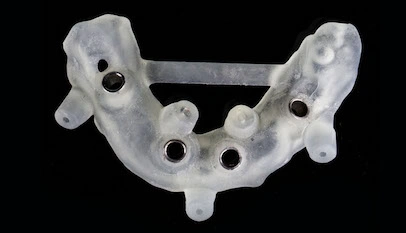
When it comes to implant restorations, few cases are as demanding as full arch prosthetics. These restorations replace an entire arch of teeth and must perform beautifully for years. Therefore, the design principles behind them matter enormously.
Digital dentistry has changed how dental labs approach full-arch cases. Advanced CAD/CAM tools allow for greater precision, better fit, and more predictable outcomes. As a result, dentists across Phoenix and the surrounding communities can deliver higher-quality results to their patients.
At Dentek Digital, we work closely with dental practices throughout the Greater Phoenix area — including Mesa, Chandler, Scottsdale, and Gilbert — to fabricate full-arch restorations that meet the highest standards. This guide covers the core design principles every dentist should understand.
Why Full-Arch Prosthetic Design Is So Complex
Full-arch cases involve replacing all teeth in one or both arches. This creates unique functional and esthetic challenges. Moreover, every patient presents a different anatomy, bite relationship, and implant configuration.
Unlike single-tooth restorations, full-arch prosthetics must balance occlusion across the entire arch. They also need to manage load distribution across multiple implants. Because of this, design decisions at the planning stage have a major impact on long-term success.
The Role of Occlusion in Full-Arch Design
Occlusion refers to how the upper and lower teeth come together. In full-arch cases, achieving proper occlusion is critical. Poor occlusal design can lead to stress on implants and premature wear on the prosthesis.
Digital workflows allow technicians to simulate occlusion before fabrication begins. This helps catch problems early. Furthermore, it gives the dentist a chance to review and adjust the design before anything is milled or printed.
Implant Position and Framework Design
The position of implants directly affects the prosthetic design. For example, implants placed too far apart or at steep angles can complicate the framework geometry. Therefore, good implant planning and prosthetic design must work together from the start.
At Dentek Digital, we also offer digital implant planning services to support dentists before surgery. This collaborative approach helps ensure that implant placement supports the best possible restoration outcome.
Key Design Principles for Full-Arch Prosthetics
Understanding the foundational design principles helps dentists communicate better with their lab. It also leads to fewer remakes and better patient outcomes. Here are the core principles our team applies to every full-arch case.
1. Proper Vertical Dimension of Occlusion
Vertical dimension of occlusion (VDO) defines the height of the face when the teeth are together. Establishing the correct VDO is one of the most important steps in full-arch design. Additionally, restoring VDO incorrectly can cause discomfort, muscle fatigue, and joint stress for the patient.
Digital tools allow for precise VDO evaluation and virtual articulation. This reduces guesswork and supports more accurate outcomes. As a result, patients experience greater comfort and better function.
2. Tooth Position and Esthetic Alignment
Tooth position affects both function and appearance. In full-arch prosthetics, each tooth must be placed to support lip support, phonetics, and smile esthetics. Moreover, the position must align with the patient’s facial midline and natural landmarks.
CAD/CAM software gives technicians precise control over tooth positioning. This level of detail is difficult to achieve with traditional methods. Furthermore, digital design files can be shared with the dentist for review before fabrication begins.
3. Framework Strength and Material Selection
The framework is the structural foundation of a full-arch prosthesis. It must be strong enough to withstand the forces of biting and chewing. Therefore, material selection is a critical design decision.
Common framework materials include zirconia, titanium, and PMMA. Each material has different properties in terms of strength, esthetics, and cost. For instance, zirconia offers excellent esthetics and durability. Titanium provides superior strength for high-load cases.
Our team at Dentek Digital helps dentists choose the right material for each patient’s needs. We fabricate restorations using advanced CAD/CAM dentistry technology to ensure consistent quality across every case.
4. Connector Design and Pontic Hygiene
Connectors join individual tooth units across the arch. Their size and shape affect both strength and cleanability. Additionally, pontic design — the area where a tooth replaces a missing one — must allow for proper tissue contour and easy hygiene access.
Good connector and pontic design helps patients maintain oral hygiene around the prosthesis. This is especially important for fixed full-arch restorations. Because of this, design details that seem minor can have a big impact on long-term outcomes.
The Digital Workflow Advantage in Phoenix
Dental practices across Phoenix, Scottsdale, Mesa, and Chandler are increasingly moving toward fully digital workflows. This shift brings real advantages for full-arch prosthetic cases. Specifically, digital impressions, virtual design, and CAD/CAM fabrication work together to improve accuracy and efficiency.
Traditional full-arch cases relied heavily on physical impressions and manual wax-ups. These steps introduced opportunities for error. In contrast, digital workflows reduce those variables and provide more consistent results.
Digital Impressions and Scanning
Intraoral scanners capture highly accurate digital impressions. These scans eliminate many of the distortions that can occur with traditional impression materials. Moreover, digital scans can be sent to the lab instantly, which speeds up turnaround time.
At Dentek Digital, we accept digital scans from a wide range of intraoral scanners. Our team is experienced in processing scan data for even the most complex full-arch cases. Therefore, dentists in the Greater Phoenix area can count on smooth case submission and communication.
Virtual Design Review and Approval
One of the biggest advantages of digital workflows is the ability to review designs before fabrication. Dentists can view a 3D model of the proposed restoration on screen. Then, they can request adjustments before a single piece of material is milled.
This step saves time and reduces costly remakes. Additionally, it keeps dentists involved in the design process. As a result, the final restoration better reflects the dentist’s clinical vision and the patient’s expectations.
Practical Tips for Successful Full-Arch Cases
Even with the best technology, full-arch cases require careful preparation. Here are some practical tips to help your cases go smoothly from start to finish.
- Document the existing bite carefully. Record the patient’s current VDO and centric relation before any teeth are removed.
- Capture comprehensive records. Include photos, scans, facebow records, and bite registrations for complex cases.
- Communicate implant positions clearly. Send scan bodies or analog data so the lab can account for implant angulation.
- Plan for provisionals. Provisional restorations allow for esthetic and functional testing before the final prosthesis is made.
- Review the design digitally. Use your lab’s design review process to catch issues before fabrication.
- Confirm hygiene access. Make sure the prosthetic design allows the patient to clean effectively beneath the bridge.
Following these steps helps reduce the chance of complications. Moreover, it improves the experience for both the dental team and the patient. Contact Dentek Digital to discuss your next full-arch case and find out how our team can support your workflow.
Frequently Asked Questions About Full-Arch Prosthetics
What materials are commonly used for full-arch prosthetics?
Full-arch restorations are commonly fabricated from zirconia, titanium, PMMA, or a combination of materials. The choice depends on the patient’s anatomy, bite forces, esthetic goals, and the number of implants involved. Your dental lab can help you select the right material for each case.
How does digital design improve full-arch outcomes?
Digital design allows for virtual articulation, precise tooth positioning, and framework optimization before fabrication. This reduces errors and supports more accurate fit at delivery. Additionally, digital workflows allow dentists to review and approve designs remotely.
What records does the lab need for a full-arch case?
Most full-arch cases require digital scans or impressions, bite records, photos, and implant position data. Some cases also benefit from facebow records and a face scan for esthetic planning. The more complete the records, the better the lab can design the restoration.
How long does it take to fabricate a full-arch prosthesis?
Turnaround time varies depending on the design complexity and material. Digital workflows generally speed up the process compared to traditional methods. However, cases requiring design approval or multiple stages may take additional time. Your lab can give you a realistic timeline based on your specific case.
Can full-arch prosthetics be adjusted after delivery?
Minor occlusal adjustments are common after delivery. However, major changes may require the restoration to be remade. Because of this, thorough design review and try-in steps are strongly recommended before finalizing the prosthesis.
Partner With Dentek Digital for Full-Arch Excellence
Full-arch prosthetics represent some of the most complex and rewarding cases in implant dentistry. Getting the design right requires experience, the right technology, and a lab that understands the clinical demands involved.
Dentek Digital has been one of the earliest and most experienced digital dental labs in the country. We serve dental practices across Phoenix, Scottsdale, Gilbert, Mesa, Chandler, and the entire Greater Phoenix area. Our team combines advanced CAD/CAM technology with skilled craftsmanship to deliver restorations that meet the highest standards.
Whether you are planning your first full-arch implant case or looking for a more reliable lab partner, we are here to help. Explore your options and send us a case today to get started.