
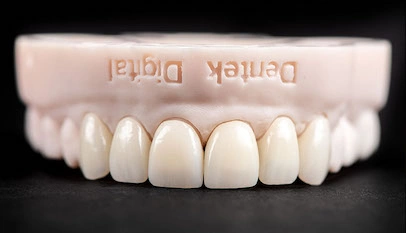
When patients need implant-supported restorations across multiple teeth, the quality of the components truly matters. Multi unit abutment restorations offer a reliable, precise solution for complex implant cases. They help dentists deliver stable, long-lasting results for patients who need full-arch or multi-tooth implant support.
At Dentek Digital, we fabricate these restorations using advanced CAD/CAM technology. Our digital workflow produces components with exceptional accuracy and consistency. As a result, dentists across the Greater Phoenix area trust us to deliver restorations that fit right the first time.
In this post, we explore what multi-unit abutment restorations are, how the digital workflow enhances them, and why precision fabrication makes all the difference in implant outcomes.
What Are Multi-Unit Abutment Restorations?
Multi-unit abutments connect implant fixtures to a prosthetic framework. They allow dentists to restore multiple missing teeth using a fixed, implant-supported prosthesis. Therefore, they are a core component in full-arch implant cases and implant-supported bridges.
These abutments are designed to work with angled or straight implant placements. Because of this, they offer flexibility in cases where implant positioning is not perfectly parallel. The restoration can still be fabricated to sit level and function correctly.
Why the Abutment Design Matters
The abutment connects everything above the implant. If it is not fabricated correctly, the prosthesis above it will not fit well. Furthermore, a poor fit can lead to complications such as screw loosening or tissue irritation.
High-quality fabrication starts with accurate digital data. At Dentek Digital, we use precise digital impressions and CAD software to design each abutment to specification. This means fewer remakes and better outcomes for patients.
The CAD/CAM Advantage in Implant Restoration Fabrication
CAD/CAM stands for computer-aided design and computer-aided manufacturing. This technology allows labs to design restorations digitally and mill them from high-quality materials. As a result, every component meets tight tolerances that manual fabrication simply cannot match.
Dentek Digital was one of the earliest adopters of the CAD/CAM digital workflow in the country. We apply this experience to every case we receive, including complex multi-unit implant cases. Our team combines technology with skilled craftsmanship to deliver reliable results every time.
Digital Scanning and Impression Accuracy
The digital workflow begins with an accurate scan. Dentists in Mesa, Tempe, Chandler, and Scottsdale send us digital files captured with intraoral scanners. These files give us a precise picture of the implant positions and surrounding tissue.
Additionally, digital impressions eliminate many of the errors associated with traditional impression materials. There is no distortion, no setting time, and no need to re-pour models. The result is a cleaner, more reliable starting point for fabrication.
Milling and Material Selection
Once the design is complete, our milling machines cut the restoration from solid blocks of material. We work with high-quality materials suited to implant-supported restorations. Moreover, each milled component goes through a quality check before it leaves our lab.
Material selection depends on the clinical requirements of the case. For multi-unit abutment restorations, strength and durability are top priorities. We help dentists select the right material for each patient’s needs.
Who Benefits from Multi-Unit Abutment Restorations?
Patients who have lost several teeth or a full arch are excellent candidates. Additionally, patients who struggle with removable dentures often prefer a fixed implant solution. Multi-unit abutment restorations give them stability and confidence in daily function.
Dentists also benefit from a well-fabricated restoration. A precise abutment simplifies the clinical seating process. Therefore, chair time is reduced, and patient satisfaction improves significantly.
Common Clinical Scenarios
Multi-unit abutments are commonly used in the following cases:
- Full-arch fixed implant bridges — replacing an entire arch of missing teeth with a fixed prosthesis
- Implant-supported partial bridges — replacing multiple adjacent missing teeth with fewer implants
- All-on-4 or All-on-6 style cases — where angled implants require specialized abutment angulation
- Screw-retained prostheses — where the restoration is secured directly to the abutment with a screw
Each of these scenarios requires careful planning and precise fabrication. Furthermore, the lab and the dentist must communicate clearly throughout the process. Dentek Digital supports that communication at every stage.
How Dentek Digital Supports Dentists Across Greater Phoenix
We serve dental practices throughout the Greater Phoenix area, including Gilbert, Chandler, Mesa, Tempe, and Scottsdale. Our team understands the demands of a busy dental practice. Because of this, we work efficiently without compromising on quality.
Our digital lab accepts cases electronically. Dentists can send digital files directly, streamlining the entire process. This means faster turnaround times and more predictable scheduling for both the practice and the patient.
A Collaborative Approach to Complex Cases
We treat every case as a partnership. When a dentist submits a multi-unit implant case, our technicians review the files carefully. We communicate any questions or concerns before fabrication begins. This proactive approach prevents delays and reduces remakes.
In addition, our team offers digital implant planning services. This allows dentists to plan implant placement with the final restoration in mind. As a result, the prosthetic outcome is guided from the very beginning of treatment.
Quality Checks at Every Stage
Quality control is built into our workflow, not added at the end. Each restoration passes through multiple checkpoints before delivery. Therefore, dentists can trust that what arrives at their practice is ready to deliver to their patient.
We also offer TattooTH, our advanced surface finishing service, for select restorations. This service adds lifelike characterization to the final product. Meanwhile, our standard restorations already meet the highest benchmarks in the industry.
Tips for Dentists Working with Multi-Unit Abutment Cases
Here are a few practical tips for getting the best results from multi-unit implant cases:
- Use verified scan bodies — Always confirm that the scan bodies you use are compatible with the implant system and properly seated before scanning.
- Capture the soft tissue accurately — Soft tissue contours around implants matter for aesthetics and cleansability. Make sure your scan captures this detail clearly.
- Communicate the occlusal scheme — Let your lab know the desired bite scheme. This is especially important in full-arch cases with limited vertical space.
- Plan for retrievability — Screw-retained restorations allow for future access if adjustments are needed. Discuss this option early in treatment planning.
- Confirm implant positions before finalizing the design — A CBCT combined with your digital scan provides the most complete picture of the implant environment.
Following these steps helps ensure that the final restoration fits accurately and functions as intended. Moreover, it reduces the likelihood of complications during delivery.
Frequently Asked Questions About Multi-Unit Abutment Restorations
What is a multi-unit abutment?
A multi-unit abutment is a connector placed on top of a dental implant. It supports a prosthesis that spans multiple missing teeth. These abutments come in various angulations to accommodate different implant positions.
How are multi-unit abutment restorations fabricated digitally?
The dentist sends a digital scan to the lab. The lab then designs the abutment and prosthetic framework using CAD software. Finally, the components are milled from solid material blocks for precise fit and durability.
What materials are used in multi-unit abutment restorations?
Common materials include zirconia and titanium, depending on the clinical needs of the case. Additionally, the type of prosthesis — whether screw-retained or cemented — can influence material selection. Your lab team can help guide this decision.
How long does it take to fabricate a multi-unit abutment restoration?
Turnaround time depends on the complexity of the case. However, digital workflows generally allow for faster fabrication compared to traditional methods. Our team works to meet your clinical timeline without sacrificing quality.
Can Dentek Digital work with any implant system?
We work with a wide range of implant systems and platforms. Therefore, most dentists can submit cases regardless of which implant brand they use. Contact our team to confirm compatibility before submitting your first case.
Partner with Dentek Digital for Your Next Implant Case
Choosing the right lab partner makes a significant difference in the success of complex implant cases. At Dentek Digital, we bring national-level expertise and a fully digital workflow to every restoration we fabricate. Furthermore, our team is committed to supporting your practice with clear communication and consistent quality.
Whether you are in Scottsdale, Chandler, Mesa, or anywhere across the Greater Phoenix area, we are ready to support your next multi-unit abutment case. Our goal is to make the process as smooth as possible for you and your patients.
Ready to get started? Contact Dentek Digital today to discuss your case and explore how our digital lab services can support your implant practice.