
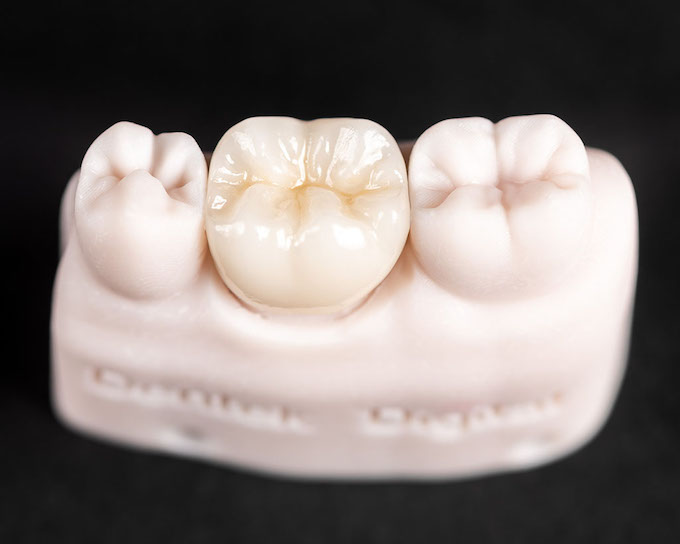
When a patient receives a dental implant, the restoration placed on top is just as important as the implant itself. Implant precision determines how well the final crown, bridge, or full-arch prosthetic fits, functions, and lasts. Even minor inaccuracies can lead to complications over time.
At Dentek Digital, we understand what is at stake. Our digital dental lab in Phoenix, Arizona, has built its reputation on delivering restorations that fit right the first time. We partner with dentists across the Greater Phoenix area to support exceptional patient outcomes.
In this post, we explore why precision is so critical in implant prosthetics — and how a digital workflow makes all the difference.
What Makes Implant Prosthetics Different
Implant-supported restorations are unique. Unlike traditional crowns placed on natural teeth, implant restorations connect directly to a titanium fixture in the bone. Therefore, the margin for error is much smaller.
Natural teeth have a small amount of flexibility in the periodontal ligament. Implants, however, are rigid and osseointegrated. Because of this, even a slight misfit can create stress on the implant, the bone, or the prosthetic component itself.
The Consequences of Poor Fit
A poorly fitting implant restoration can cause a range of problems. These issues often develop gradually, making them easy to overlook at first.
- Screw loosening or fracture from uneven force distribution
- Bone loss around the implant due to excess stress
- Soft tissue irritation from gaps or overcontoured margins
- Patient discomfort during biting and chewing
- Premature prosthetic failure requiring costly remakes
Moreover, these complications are largely preventable. With the right digital lab workflow, precision becomes the standard — not the exception.
How Digital Technology Elevates Implant Precision
Traditional dental lab workflows relied heavily on physical impressions and stone models. These methods introduced multiple steps where distortion could occur. Digital workflows eliminate many of those variables.
At Dentek Digital, we were among the earliest adopters of CAD/CAM dentistry in the country. This technology allows us to design and mill restorations with exceptional accuracy. As a result, the fit we achieve consistently exceeds what analog methods can reliably produce.
From Scan to Restoration
The digital implant workflow begins with an intraoral or desktop scan. Next, our technicians import that data into advanced design software. They then engineer the restoration to precise specifications before milling it from high-quality materials.
Each step is controlled and repeatable. Furthermore, digital files can be reviewed, adjusted, and archived — making case communication with the referring dentist faster and more accurate.
Scan Body and Analog Accuracy
One of the most critical elements in the implant workflow is capturing the exact position and angulation of the implant. Scan bodies and implant analogs allow us to replicate the implant’s location in our design software with high fidelity.
Additionally, we work with a wide range of implant systems and scan bodies. This flexibility helps us serve dentists in Mesa, Tempe, Chandler, and across the Greater Phoenix area — regardless of the implant platform they use.
The Role of Materials in Implant Precision
Precision is not just about fit geometry. Material selection also plays a major role in how a restoration performs over time. The wrong material can compromise an otherwise accurate design.
For implant restorations, we commonly work with zirconia, titanium, and combination frameworks. Each material has specific properties that affect strength, esthetics, and how the restoration responds to occlusal forces.
Zirconia for Implant Crowns and Bridges
Zirconia has become a leading choice for implant-supported restorations. It offers excellent strength and biocompatibility. However, it must be milled and sintered with precision to maintain dimensional accuracy.
Our CAD/CAM milling equipment compensates for sintering shrinkage during the design phase. Therefore, the final restoration maintains the intended dimensions. This level of control is difficult to achieve with traditional lab methods.
Titanium Frameworks and Custom Abutments
For full-arch implant cases and complex multi-unit bridges, titanium frameworks provide exceptional rigidity. Custom titanium abutments also allow us to optimize emergence profiles and margin placement. In addition, they reduce the mechanical complications associated with stock abutments.
Dentists in Gilbert and Scottsdale who send us complex implant cases often benefit from our ability to mill custom abutments and frameworks in-house. This keeps turnaround times shorter and quality control tighter.
Implant Planning as Part of the Precision Workflow
True implant precision begins before the surgery. Digital implant planning allows the surgical and prosthetic phases to be coordinated from the start. This is sometimes called a “prosthetically driven” approach.
At Dentek Digital, we offer digital implant planning as an advanced service. We work with cone beam CT data and intraoral scan files to help map out ideal implant placement. This collaboration supports better esthetic and functional outcomes for the patient.
Why Starting with the End in Mind Matters
When the implant is placed with the final restoration in mind, the prosthetic phase becomes far more predictable. Angulation, depth, and spacing can all be planned to match the intended design. Furthermore, this approach reduces the need for complex workarounds during the restoration phase.
We encourage dentists across Phoenix and the surrounding communities to explore implant planning as part of their workflow. Contact Dentek Digital to discuss how we can support your next implant case from planning through final delivery.
Supporting Dentists Across the Greater Phoenix Area
Dentek Digital serves dental practices throughout the region. Whether your office is in central Phoenix, Mesa, Tempe, Chandler, Gilbert, or Scottsdale, we make it easy to partner with our lab.
Our digital workflow means you can submit cases remotely using intraoral scan files. Additionally, our team is available to consult on material selection, design parameters, and implant system compatibility. We are not just a production lab — we are a clinical partner.
What to Expect When You Work With Us
When you send an implant case to Dentek Digital, our technicians review the scan data carefully. They assess occlusion, emergence profile, adjacent dentition, and implant angulation before beginning the design. Next, they communicate any concerns before fabrication begins.
This process helps reduce remakes and adjustments. Moreover, it ensures that the final restoration meets both functional and esthetic expectations. Our goal is to support your success in every case.
Frequently Asked Questions About Implant Precision
What is implant precision and why does it matter?
Implant precision refers to how accurately a prosthetic restoration fits the implant interface and surrounding anatomy. It matters because poor fit can lead to mechanical failure, bone loss, and patient discomfort over time.
How does a digital lab improve implant restoration accuracy?
Digital labs use CAD/CAM technology to design and mill restorations from highly accurate scan data. This removes several manual steps that can introduce distortion in traditional workflows. As a result, fit consistency improves significantly.
Can Dentek Digital work with my implant system?
We work with a wide range of implant platforms and scan body types. If you are unsure about compatibility, contact our team before submitting a case. We are happy to confirm what we need from your workflow.
What materials does Dentek Digital use for implant restorations?
We commonly use zirconia, titanium, and combination frameworks depending on the clinical indication. Our technicians can help recommend the best material for your specific case requirements.
Does Dentek Digital offer implant planning services?
Yes. We offer digital implant planning as an advanced service. We use CBCT and scan data to support a prosthetically driven approach to implant placement. This helps coordinate the surgical and restorative phases for better outcomes.
Partner With a Lab That Prioritizes Precision
Implant prosthetics leave little room for error. Every micron matters when a restoration connects directly to an osseointegrated fixture. Therefore, working with a digital lab that is built around precision is one of the most important decisions you can make for your patients.
Dentek Digital has been a national leader in digital dentistry since the early days of CAD/CAM workflows. We bring that experience, technology, and commitment to every case we fabricate. From single-unit implant crowns to full-arch restorations, we are ready to support your practice.
Ready to elevate your implant outcomes? Contact Dentek Digital today to send us a case or schedule a consultation with our team.