
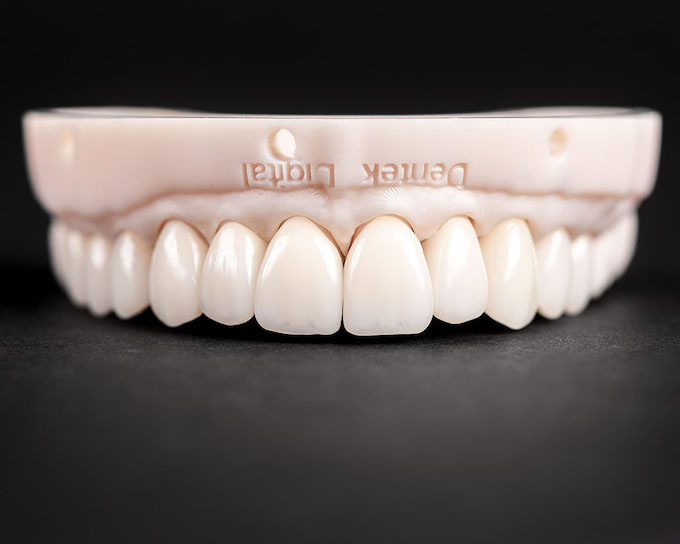
When it comes to implant restorations, passive implant fit is one of the most critical factors in long-term success. It refers to how precisely a restoration seats against the implant components without placing stress on the surrounding bone or hardware. Furthermore, achieving it consistently requires advanced technology, skilled craftsmanship, and a reliable lab partner.
At Dentek Digital, we work with dentists and dental practices across the Greater Phoenix area — including Scottsdale, Mesa, Chandler, and Gilbert — to deliver implant restorations that meet the highest standards of fit and accuracy. Therefore, understanding what passive fit means and how it is achieved can help you make better decisions for your patients.
In this post, we break down the concept of passive implant fit, why it matters, and how digital CAD/CAM workflows make a meaningful difference in achieving it reliably.
What Is Passive Implant Fit?
Passive implant fit describes a state where a restoration seats fully and evenly on its implant components. Additionally, it does so without generating internal stress on the fixture, abutment, or surrounding bone. In simple terms, it means everything lines up perfectly when the restoration is placed.
This concept is especially important for multi-unit implant cases, such as implant bridges or full-arch restorations. Moreover, even small inaccuracies in fit can create mechanical stress that accumulates over time. As a result, patients may experience complications that could have been avoided with a more precise restoration.
Active Fit vs. Passive Fit
It helps to understand the difference between active and passive fit. An active fit occurs when a restoration is forced into place, creating tension or stress on the implant system. On the other hand, a passive fit means the restoration seats naturally without any deformation or strain.
Active fit might seem acceptable at first glance. However, the internal stresses it creates can lead to bone loss, screw loosening, or even implant failure over time. Therefore, passive fit is always the clinical goal.
Why Passive Implant Fit Matters for Patient Outcomes
Achieving a passive fit is not just a technical milestone — it directly impacts patient health and satisfaction. Because of this, dental professionals across the Phoenix area prioritize working with labs that take fit accuracy seriously.
When a restoration fits passively, it distributes occlusal forces evenly across the implant system. Additionally, it reduces the risk of mechanical failures like screw fractures or abutment loosening. Patients experience greater comfort, and restorations tend to last longer as a result.
Consequences of a Poor Fit
A restoration that lacks passive fit can create a range of problems. First, it may lead to chronic inflammation around the implant site. Next, bone resorption can occur as the body responds to ongoing mechanical stress. Finally, hardware complications such as fractured screws or loosened components may follow.
In addition, a poor fit can be difficult to detect during routine evaluations. Therefore, it is essential to start with a precise fabrication process rather than trying to compensate at the chairside stage. Working with a trusted digital lab is one of the most effective ways to reduce this risk.
What Dentists in Chandler and Gilbert Should Know
Many dentists in Chandler, Gilbert, and throughout the East Valley are transitioning to digital implant workflows. Moreover, they are discovering that digital impressions and CAD/CAM fabrication dramatically improve their ability to achieve passive fit consistently. Because of this, partnering with a digitally equipped lab is becoming a standard of care rather than an optional upgrade.
If your practice is exploring implant restorations, contact Dentek Digital to discuss how our digital workflow can support your next case.
How CAD/CAM Technology Supports Passive Fit
CAD/CAM dentistry has transformed how dental labs approach implant restorations. Furthermore, it gives technicians precise control over the design and milling of each component. As a result, labs can achieve levels of accuracy that traditional analog methods simply cannot match.
At Dentek Digital, we were among the earliest adopters of the digital CAD/CAM workflow in the country. Therefore, our team has developed deep expertise in using this technology to optimize implant fit. We combine advanced software design tools with high-precision milling equipment to fabricate restorations that seat with minimal adjustment.
Digital Impressions vs. Traditional Impressions
One major advantage of digital workflows is the accuracy of the impression data. Traditional physical impressions can introduce distortion during the taking, pouring, and scanning process. However, digital intraoral scans capture a highly accurate three-dimensional model of the implant position.
This improved scan data gives our lab a stronger foundation to work from. Additionally, it reduces the margin for error at every stage of fabrication. For dentists in Scottsdale and Mesa, this means fewer remakes, fewer adjustments, and more confident seating appointments.
Milling and Material Precision
Modern milling machines work from precise digital files to carve restorations from high-quality materials. Furthermore, our technicians review each design carefully before milling begins. As a result, we can catch potential fit issues in the virtual environment before a single tool touches the material.
We fabricate implant restorations from materials that offer both strength and dimensional stability. Moreover, our quality control process includes verification steps designed to confirm that each restoration meets our exacting standards before it leaves our lab in Phoenix.
The Role of Implant Planning in Achieving Passive Fit
Passive fit does not begin at the lab — it begins with proper implant placement planning. Therefore, a well-planned implant position makes it significantly easier to fabricate a restoration that seats correctly. At Dentek Digital, we offer advanced digital implant planning services to support this process.
Our implant planning service gives referring dentists a detailed, digitally guided roadmap for placement. Additionally, it considers prosthetic goals from the very beginning. Because of this, the entire workflow — from placement to final restoration — is aligned toward the best possible outcome.
How Planning Impacts Lab Fabrication
When implant positions are planned digitally and placed accurately, our lab receives cleaner, more predictable data. Furthermore, this reduces the need for compromises during the design phase. As a result, the final restoration is more likely to achieve a truly passive fit without requiring extensive chairside modification.
Dentists in the Phoenix metro area who use our planning services consistently report more predictable prosthetic outcomes. Moreover, their patients benefit from a more streamlined experience from surgery through final delivery.
Practical Tips for Dentists Pursuing Better Implant Fit
Achieving passive implant fit is a team effort between the dentist and the lab. Therefore, here are some practical steps dental practices can take to support better outcomes.
- Use digital impressions whenever possible. High-quality intraoral scan data gives the lab the most accurate starting point.
- Capture scan body placement carefully. Accurate scan body positioning ensures the lab can replicate the exact implant location and angulation.
- Communicate case details clearly. Provide occlusal load information, material preferences, and any patient-specific factors that may affect design decisions.
- Consider implant planning before placement. A digitally guided placement aligned with prosthetic goals makes passive fit far more achievable.
- Partner with a lab that specializes in implants. Not all dental labs have the same level of expertise or technology. Choosing the right lab partner matters significantly.
Additionally, maintaining open communication with your lab throughout the case allows for early identification of any potential challenges. Furthermore, it creates a collaborative environment where both the dentist and technician are working toward the same goal.
Explore your options and send us a case through our easy online submission process. Our team is ready to support your implant cases from start to finish.
Frequently Asked Questions About Passive Implant Fit
What is the clinical standard for passive implant fit?
Clinically, passive fit is achieved when a restoration seats fully on its implant components with no rocking, gaps, or induced stress. Moreover, it should require no force beyond normal screw torque to seat. Most clinicians verify fit through a combination of tactile assessment, radiographic evaluation, and the Sheffield test in multi-unit cases.
Can a poor fit be corrected after the restoration is delivered?
Minor fit discrepancies can sometimes be addressed chairside, but significant passive fit issues generally require a remake. Therefore, investing in accurate digital workflows from the start is far more effective than attempting to correct problems after fabrication. Additionally, repeated adjustments can compromise the integrity of the restoration.
How does CAD/CAM fabrication improve passive fit compared to traditional methods?
CAD/CAM fabrication reduces cumulative errors by working from precise digital data throughout the design and milling process. Furthermore, it allows technicians to verify fit virtually before producing the physical restoration. As a result, digitally fabricated implant restorations consistently achieve tighter tolerances than many traditional analog techniques.
Does implant position affect the ability to achieve passive fit?
Yes, implant position has a direct impact on passive fit. Additionally, restorations designed to compensate for poorly positioned implants are more likely to introduce mechanical stress. Because of this, prosthetically driven implant planning is strongly recommended before placement, especially for complex or multi-unit cases.
What materials does Dentek Digital use for implant restorations?
We work with a range of high-quality, clinically proven materials appropriate for implant-supported restorations. Moreover, material selection depends on the case requirements, esthetic goals, and occlusal demands. Our team is happy to discuss material options with referring dentists to ensure the best fit for each individual case.
Partner With a Lab That Prioritizes Precision
Passive implant fit is not an optional refinement — it is a clinical necessity. Furthermore, it is one of the clearest indicators of restoration quality and long-term success. At Dentek Digital, we have built our entire workflow around achieving the kind of precision that passive fit demands.
We serve dental practices throughout the Greater Phoenix area, including Scottsdale, Mesa, Chandler, and Gilbert. Additionally, our team combines advanced CAD/CAM technology with deep clinical knowledge to support dentists at every stage of the implant restoration process. Whether you are placing your first implant case or managing a complex full-arch reconstruction, we are here to help.
Contact the Dentek Digital team today and let us show you what precision digital dentistry can do for your patients and your practice.