Dental implant restorations depend on precision at every level. One of the most important components in that process is the abutment. Titanium custom abutments give dental practices the ability to deliver implant restorations that fit naturally, look great, and perform reliably over time. For practices serving patients in DC Ranch, AZ, this level of precision can make a meaningful difference in case outcomes.
DC Ranch is a master-planned community in North Scottsdale, home to discerning patients who expect high-quality dental care. Therefore, the dental practices serving this area need lab partners who can deliver restorations that meet those expectations. Dentek Digital works closely with practices across the Greater Phoenix area — including communities like Scottsdale, Paradise Valley, Chandler, and Gilbert — to fabricate titanium custom abutments with exceptional accuracy.
In this post, we explore what titanium custom abutments are, why they matter for your implant cases, and how a digital dental lab can help you deliver better results for your patients.
What Are Titanium Custom Abutments?
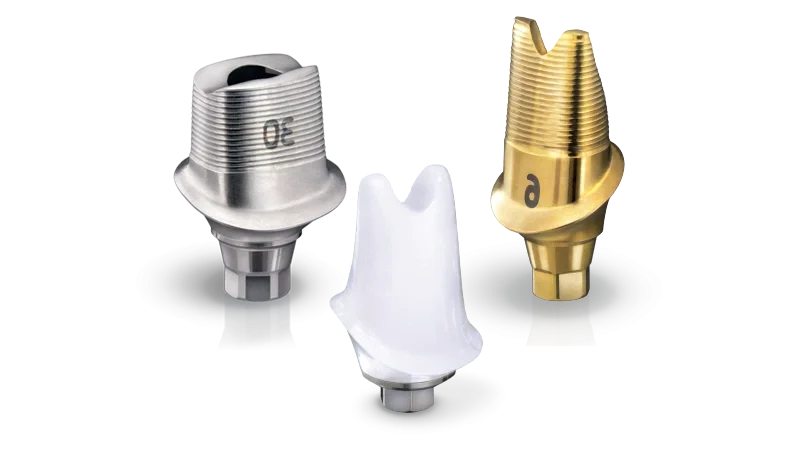
An abutment is the connector piece that sits between a dental implant fixture and the final crown. Stock abutments come in standard shapes and sizes. Custom abutments, on the other hand, are designed specifically for each patient’s unique anatomy and implant position.
Titanium is the material of choice for most custom abutments. It is biocompatible, strong, and highly resistant to corrosion. Because of this, titanium custom abutments integrate well with surrounding tissue and support long-term implant health.
How Custom Abutments Differ from Stock Abutments
Stock abutments are prefabricated and widely available. They work well in straightforward cases. However, they are not designed around the individual patient.
Custom abutments are milled from titanium using CAD/CAM technology. This means every contour, emergence profile, and margin placement is tailored to the case. As a result, the final restoration fits more naturally and looks more like a real tooth.
The Role of CAD/CAM Technology
CAD/CAM stands for computer-aided design and computer-aided manufacturing. Dentek Digital uses advanced CAD/CAM workflows to design and mill titanium custom abutments with precise tolerances. First, a digital scan is used to capture the implant position and surrounding anatomy. Next, a skilled technician designs the abutment virtually. Then, the design is sent to a milling unit that carves the abutment from a solid titanium block.
This digital process reduces human error and improves consistency. Moreover, it allows for faster turnaround times compared to traditional lab methods.
Why DC Ranch Dental Practices Should Consider Custom Abutments
Patients in DC Ranch often seek premium dental care. They value aesthetics, comfort, and longevity. Therefore, the restorations you place need to meet a high standard.
Titanium custom abutments support that standard in several important ways. They allow you to control the emergence profile of the crown. Additionally, they help support healthy gingival contours around the implant. For anterior cases especially, this can have a significant impact on the cosmetic result.
Better Fit for Complex Implant Positions
Not every implant is placed at an ideal angle. In some cases, the implant position may be slightly off-axis. Stock abutments may not compensate well for these variations. Custom abutments, however, can be designed to correct for angulation and create an ideal path of insertion for the final crown.
Furthermore, custom abutments allow the margin placement to be optimized. This is especially important in aesthetic zones where the gingival margin must look natural and healthy.
Supporting Long-Term Implant Health
A well-fitted abutment does more than look good. It also supports the health of surrounding soft tissue. Because titanium is biocompatible, it does not irritate the gingiva. Additionally, a custom emergence profile helps guide tissue into a natural shape during healing.
For dental practices in DC Ranch and nearby communities like Scottsdale and Paradise Valley, this attention to tissue health supports better long-term outcomes for patients.
The Dentek Digital Approach to Titanium Custom Abutments
Dentek Digital has been a leader in digital dentistry since the early days of CAD/CAM technology adoption in the United States. Our lab combines advanced digital workflows with skilled craftsmanship. This approach ensures that every titanium custom abutment we fabricate is accurate, consistent, and built to perform.
We work with dental practices across the Greater Phoenix area, including communities such as Chandler, Gilbert, Scottsdale, and beyond. Our team understands the clinical demands of modern implant dentistry. Moreover, we are committed to being a true partner in your workflow — not just a vendor.
Our Digital Workflow for Custom Abutments
Our process begins with your digital files. We accept scans from a wide range of intraoral scanners and implant scan bodies. Once we receive your case, our technicians design the abutment using specialized dental CAD software. The design is reviewed for accuracy before milling begins.
After milling, each abutment goes through quality checks to ensure it meets our standards. Finally, the finished abutment is carefully packaged and delivered to your practice. The result is a titanium custom abutment that is ready to seat accurately and support a beautiful final restoration.
Turnaround Times That Work for Your Schedule
We understand that your patients are counting on you. Therefore, we work hard to provide turnaround times that fit your clinical schedule. Our digital workflow eliminates many of the delays associated with traditional lab methods. Because of this, you can plan your cases with greater confidence.
If you have an urgent case or a specific scheduling need, our team is ready to work with you. We encourage you to contact Dentek Digital directly to discuss your timeline and case requirements.
Tips for Getting the Most Out of Custom Abutment Cases
Working with titanium custom abutments is a collaborative process. Here are some practical tips to help your cases go smoothly from start to finish.
- Use a compatible scan body: Make sure the scan body matches the implant system you are using. Accurate scan body placement leads to a more accurate abutment design.
- Capture the full emergence profile: Your digital scan should include the tissue contours around the implant. This gives the lab the information needed to design an ideal emergence profile.
- Communicate your margin preferences: Let your lab know where you want the margin placed. Clear communication leads to better outcomes and fewer remakes.
- Review the design before milling: If your lab offers a design approval step, take advantage of it. Reviewing the virtual design allows you to catch any issues before the abutment is milled.
- Plan the final crown alongside the abutment: Designing the abutment and crown together — rather than separately — often leads to a more harmonious result.
These steps may seem straightforward. However, following them consistently can have a meaningful impact on case quality and patient satisfaction.
Frequently Asked Questions About Titanium Custom Abutments
What implant systems do you support?
Dentek Digital works with a wide range of implant systems. We support most major implant brands commonly used by dental practices in Phoenix and surrounding areas. Contact our team to confirm compatibility with your specific system.
How do I send a case to Dentek Digital?
Sending a case is straightforward. You can submit your digital files and case details through our online case submission portal. Our team will review the information and follow up if we need any additional details before fabrication begins.
What file formats do you accept for custom abutment cases?
We accept standard STL files as well as files from most major intraoral scanner platforms. If you are unsure whether your scanner is compatible, reach out to our team and we will help you get started.
Can custom abutments be used for both anterior and posterior cases?
Yes. Titanium custom abutments are well-suited for both anterior and posterior implant restorations. In anterior cases, they are especially valuable for achieving natural-looking aesthetics and tissue contours. In posterior cases, they provide a reliable and precise foundation for the final crown.
How do custom abutments compare to prefabricated options in terms of fit?
Custom abutments are designed around the specific anatomy and implant position of each patient. This typically results in a more precise fit than a stock abutment can provide. Additionally, the ability to control the emergence profile and margin placement gives clinicians more flexibility in achieving the desired clinical outcome.
Partner with Dentek Digital for Your DC Ranch Implant Cases
Dental practices in DC Ranch and across North Scottsdale need a lab partner they can count on. Dentek Digital has built a reputation as a national leader in digital dentistry by consistently delivering high-quality restorations to practices throughout Greater Phoenix and beyond.
Our titanium custom abutments are fabricated using advanced CAD/CAM technology and reviewed by experienced technicians. Moreover, we are committed to responsive communication and reliable turnaround times that fit your practice’s needs.
Whether you are looking to refine your implant workflow or explore custom abutments for the first time, our team is here to help. Send us a case today and experience the Dentek Digital difference — precision, quality, and partnership at every step.