
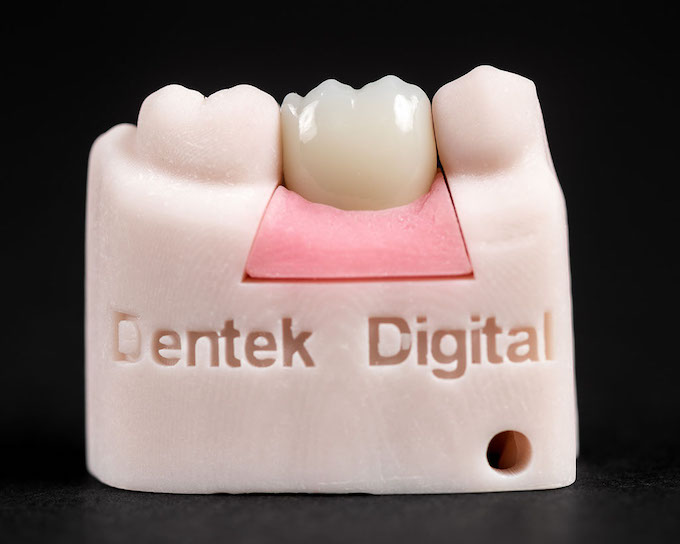
Dental implant restorations have advanced significantly over the past decade. Today, ti base implant restorations represent one of the most reliable and esthetic solutions available for implant cases. They combine the strength of titanium with the beauty of modern ceramic materials.
At Dentek Digital, we fabricate ti-base restorations using advanced CAD/CAM technology. Our digital workflow delivers precise, consistent results for dental practices across the Greater Phoenix area and beyond. Whether you are in Mesa, Tempe, Chandler, or Scottsdale, our lab is ready to support your implant cases.
In this post, we cover what ti-base restorations are, how they work, and why they are an excellent choice for implant-supported crowns. We also share practical guidance for dental professionals who want to get the most from this restoration type.
What Are Ti-Base Implant Restorations?
A ti-base, short for titanium base, is a small abutment component that connects to a dental implant fixture. It serves as the foundation for a screw-retained crown or bridge. The restoration bonds to the ti-base outside the mouth and is then delivered as a single unit.
This design offers several advantages. First, it eliminates the need for cement at the implant interface. Additionally, it allows the crown material — typically zirconia or lithium disilicate — to be milled with high precision using CAD/CAM systems.
How the Ti-Base System Works
The process begins with a digital scan of the implant site. Next, the lab designs the restoration digitally and mills the crown to fit the ti-base exactly. Then, the crown is bonded to the ti-base under controlled laboratory conditions.
Because of this controlled bonding process, the fit is highly accurate. Furthermore, the final restoration is delivered ready to place. This simplifies chairside delivery for the clinician and improves the patient experience.
Materials Used in Ti-Base Restorations
At Dentek Digital, we most commonly fabricate ti-base crowns using high-strength zirconia. However, we also work with lithium disilicate for cases where translucency is a priority. Both materials offer excellent durability and esthetics.
Moreover, the titanium base itself is biocompatible. It integrates well with the implant fixture and resists corrosion over time. This makes it a trustworthy long-term solution for patients and clinicians alike.
Why Dentists Choose Ti-Base Restorations
Dental professionals across Phoenix, Gilbert, and the surrounding communities increasingly prefer ti-base solutions. The reasons are practical and clinical. This restoration type addresses several common challenges in implant prosthetics.
No Cement at the Implant Level
Traditional cement-retained crowns carry a known risk of excess cement remaining below the gumline. As a result, peri-implant tissue can become irritated or inflamed. Ti-base restorations eliminate this risk entirely.
Because the crown bonds to the ti-base in the lab — not in the mouth — there is no cement near the implant. This leads to cleaner tissue margins and better long-term outcomes. Therefore, many clinicians view this as a significant clinical advantage.
Superior Fit Through Digital Fabrication
Dentek Digital uses a fully digital CAD/CAM workflow. This means every restoration is designed and milled with consistent precision. Additionally, digital scans eliminate the variability that can come with traditional impressions.
Our lab serves practices across the Greater Phoenix area, including communities like Chandler and Tempe. We work with a wide range of implant systems and can design ti-base restorations to match your specific implant platform.
Esthetic Excellence
Ti-base restorations allow the crown material to be selected purely for esthetics. For example, a high-translucency zirconia crown can be milled and stained to match adjacent natural teeth beautifully. The titanium base stays hidden below the crown margin.
Furthermore, our skilled technicians apply custom characterization where needed. This ensures the final restoration integrates naturally into the patient’s smile. The result is both functional and visually appealing.
The Dentek Digital CAD/CAM Advantage
Dentek Digital was one of the earliest adopters of digital CAD/CAM workflows in the country. We have built our entire lab around digital precision. This commitment sets us apart from traditional dental laboratories.
Our team combines cutting-edge technology with experienced craftsmanship. As a result, every ti-base restoration that leaves our Phoenix lab meets a high standard of quality. We do not cut corners on materials, design, or finishing.
Digital Scanning and Design
We accept digital scans from all major intraoral scanning systems. This makes it easy for practices in Scottsdale, Mesa, and beyond to send cases without needing to ship physical impressions. The process is faster, cleaner, and more accurate.
Our technicians review each scan carefully before beginning the design phase. Additionally, we flag any concerns before fabrication begins. This proactive approach reduces remakes and saves time for both the lab and the practice.
Milling and Finishing
We mill our restorations from premium zirconia and ceramic blanks. Our milling equipment is calibrated regularly to maintain tight tolerances. After milling, restorations go through careful sintering, staining, and glazing processes.
Moreover, each ti-base crown is checked for fit and margin quality before shipping. We take quality control seriously. Our goal is to deliver a restoration that seats correctly on the first try.
Practical Tips for Submitting Ti-Base Implant Cases
Sending a successful ti-base case starts with good digital records. Here are some practical guidelines to help your cases come back right the first time.
- Use a scan body: Always scan with the correct scan body for your implant system. This gives our lab the data needed to position the restoration correctly.
- Capture the full arch: Include both arches and a bite scan. This helps us design the occlusal surface accurately.
- Specify the implant system: Let us know the implant brand, platform, and connection type. Ti-base components are system-specific.
- Include shade information: Provide a shade prescription and any photos that can help us match adjacent teeth.
- Note any esthetic preferences: If the patient wants specific characterization or staining, include those details in your case notes.
Additionally, communicate any time constraints early. We do our best to accommodate urgent cases. However, giving us advance notice always helps us plan accordingly.
Ti-Base Restorations and Implant Planning
Ti-base cases work best when implant placement is planned with the final restoration in mind. At Dentek Digital, we offer digital implant planning services that help clinicians position implants for ideal prosthetic outcomes.
When the implant is placed correctly, the ti-base restoration fits more predictably. Furthermore, emergence profile, tissue margins, and screw access all benefit from thoughtful planning. Our team can collaborate with you before placement to support a better final result.
Working with Surgical Guides
Surgical guides help clinicians place implants in the exact position designed during planning. We can incorporate guide fabrication into our workflow when needed. This creates a seamless path from planning to placement to restoration.
Practices in the Greater Phoenix area, including Gilbert and Chandler, can benefit from this integrated approach. The more information we have upfront, the more effectively we can support your case from start to finish.
Frequently Asked Questions About Ti-Base Implant Restorations
What implant systems is the ti-base compatible with?
Ti-base components are available for most major implant systems. For example, Nobel Biocare, Straumann, Zimmer Biomet, and others all have compatible ti-base options. Always specify your implant system when submitting a case so we can select the correct component.
Is a ti-base restoration screw-retained or cement-retained?
Ti-base restorations are screw-retained at the implant level. However, the crown bonds to the ti-base using dental adhesive in the laboratory. This approach combines the retention benefits of screw access with a clean, cement-free implant interface.
How long does it take to fabricate a ti-base restoration?
Turnaround times vary based on complexity and current lab volume. However, our digital workflow allows us to work efficiently. Contact our team to discuss your timeline and we will do our best to meet your scheduling needs.
Can ti-base restorations be used for multi-unit cases?
Yes. Ti-base components can support single-unit crowns as well as multi-unit bridges in some configurations. Additionally, the design considerations for multi-unit cases are more complex, so we recommend early communication for these cases.
What makes Dentek Digital different from other dental labs?
We are recognized as a national leader in digital dentistry. We were among the first labs in the country to adopt a fully digital CAD/CAM workflow. Moreover, we combine advanced technology with skilled technicians who care about the quality of every restoration we produce.
Partner With Dentek Digital for Your Ti-Base Cases
Ti-base implant restorations are a reliable, esthetic, and clinician-friendly solution. They offer real clinical advantages over traditional cement-retained approaches. Furthermore, when fabricated with precision digital workflows, they deliver consistent, high-quality results.
Dentek Digital is proud to support dental practices across Phoenix, Mesa, Tempe, Scottsdale, Chandler, Gilbert, and beyond. We bring national-level expertise to every case we receive. Our team is ready to help you deliver outstanding implant restorations to your patients.
If you are ready to experience the Dentek Digital difference, contact Dentek Digital today to send us a case or request a consultation with our team. We look forward to partnering with your practice.