
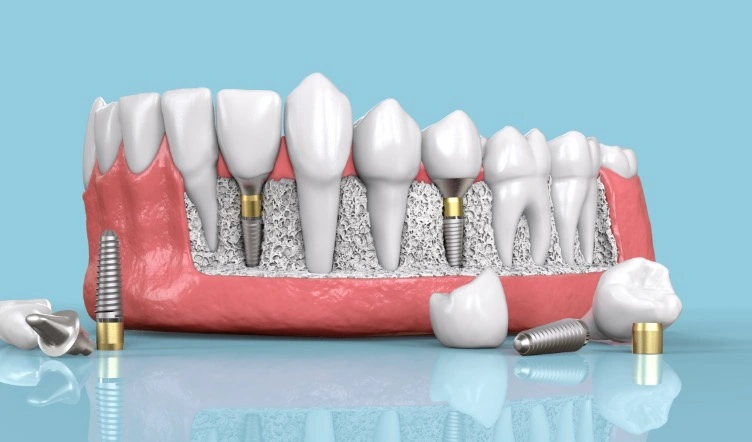
Implant dentistry continues to evolve at a remarkable pace. As a result, dental practices across the country are adopting more advanced workflows to deliver better patient outcomes. Ti base implant restorations represent one of the most significant advances in modern implant prosthetics — and more dental professionals are discovering their clinical value every day.
At Dentek Digital, we fabricate high-quality ti base implant restorations using a fully digital CAD/CAM workflow. Therefore, dentists partnering with our lab receive restorations that are precise, consistent, and built to perform. We proudly serve dental practices throughout the Greater Phoenix, Arizona area, including Mesa, Tempe, Chandler, and Scottsdale.
If you are a dental professional exploring implant restoration options, this guide is for you. Furthermore, even if you serve patients far from Arizona — like in Chappaqua, NY — the principles of digital implant prosthetics remain the same. Here is what every dentist should know about ti base restorations.
What Are Ti Base Implant Restorations?
A ti base (titanium base) is a small, prefabricated abutment component. It connects directly to a dental implant fixture. Then, a custom crown or restoration is bonded or milled onto the ti base to complete the prosthetic.
This two-part design offers a powerful combination of precision and flexibility. Additionally, ti bases are compatible with a wide range of implant systems. That makes them one of the most versatile components in implant dentistry today.
How Ti Bases Differ from Traditional Abutments
Traditional custom abutments are milled as a single unit. On the other hand, ti base restorations separate the metal-to-implant interface from the esthetic crown component. This approach allows labs to bond a zirconia or ceramic crown to the ti base outside the mouth first.
Because of this, the bonding process happens under controlled lab conditions. The result is a stronger, more reliable bond. Moreover, this method reduces the risk of cement contamination in the sulcus — a common concern with cement-retained restorations.
Common Materials Used with Ti Bases
At Dentek Digital, we most commonly pair ti bases with high-strength zirconia. Zirconia delivers excellent esthetics and durability. Furthermore, it is biocompatible, making it a preferred choice for many dental professionals.
Other materials, such as lithium disilicate, may also be used depending on the clinical situation. Therefore, your lab partner plays a critical role in material selection and case design.
Why Dental Practices Are Choosing Ti Base Restorations
Ti base implant restorations have gained significant momentum in modern dental practices. However, it is important to understand why — not just that they are popular. There are several clear clinical and workflow advantages worth noting.
Exceptional Fit and Precision
Because ti bases are manufactured to exact implant system specifications, the implant-to-abutment interface is highly precise. Additionally, when the restoration is designed digitally, the fit of the crown itself is equally accurate. This level of precision supports long-term stability and patient comfort.
At Dentek Digital, our CAD/CAM workflow ensures every restoration is designed and milled to tight tolerances. As a result, dentists in Mesa, Chandler, and across the Phoenix metro area consistently receive restorations that seat predictably and perform well over time.
A Cleaner, More Predictable Clinical Protocol
One of the biggest advantages of ti base restorations is the simplified seating protocol. First, the lab bonds the crown to the ti base and returns the completed restoration. Next, the dentist torques the ti base to the implant at the recommended specification. Then, the access hole is sealed and the case is complete.
This approach eliminates many of the variables associated with traditional cementation. Therefore, dentists can seat implant restorations with greater confidence and less chair time. In addition, patients appreciate the streamlined appointment experience.
Esthetic Outcomes Patients Notice
Today’s patients expect implant restorations to look natural. Fortunately, ti base restorations — especially those using zirconia — deliver outstanding esthetic results. The ability to customize shade, shape, and contour means every restoration can match the patient’s natural dentition beautifully.
Moreover, the absence of a visible metal margin at the gumline is a significant esthetic benefit. This is especially important for anterior cases where esthetics are the top priority. Dental practices in Scottsdale and Tempe know their patients expect nothing less than a seamless, natural-looking result.
The Digital Workflow Behind Ti Base Restorations at Dentek Digital
Dentek Digital was among the earliest adopters of the digital CAD/CAM workflow in the United States. Therefore, our process for fabricating ti base restorations is refined, efficient, and built on years of real-world experience.
Step 1: Digital Impressions and Scan Files
The process begins with a digital scan. Dentists send us intraoral scan files or digital models rather than traditional polyvinyl siloxane (PVS) impressions. This eliminates distortion, speeds up turnaround, and gives our design team highly accurate data to work with.
Additionally, scan body data captured at the time of impression helps us accurately position the implant analog in the digital environment. As a result, our restorations are designed with the implant position precisely accounted for.
Step 2: CAD Design
Our skilled technicians use advanced CAD software to design each restoration. They carefully consider emergence profile, occlusion, and interproximal contacts. Furthermore, shade matching and anatomical contour are refined digitally before anything is milled.
This design phase is where craftsmanship and technology meet. Our team brings years of expertise to every case. Therefore, the restorations we produce reflect both technical precision and artistic quality.
Step 3: Milling and Bonding
Once the design is approved, our CAM system mills the restoration from a high-quality blank. Next, we bond the finished crown to the ti base under controlled lab conditions. Finally, the completed restoration is inspected, polished, and shipped to the dental practice.
Because of this thorough process, dentists receive a restoration that is ready to seat with minimal adjustment. That saves chair time and keeps patient appointments running smoothly.
Practical Tips for Dentists Working with Ti Base Restorations
Partnering with a digital dental lab for ti base cases is straightforward. However, a few best practices can help ensure the smoothest possible experience for both you and your patients.
- Use a scan body at impression time. Accurate scan body data is essential for proper implant analog positioning in the lab.
- Document the implant system and platform. Always provide the implant manufacturer, model, and platform size with your case submission.
- Share esthetic goals clearly. Include shade tabs, photos, or notes about the patient’s desired outcome.
- Communicate occlusal considerations. Note any parafunction, bruxism history, or vertical dimension concerns upfront.
- Confirm torque specifications before seating. Always follow the implant manufacturer’s recommended torque values for ti base components.
These simple steps help your lab team design a restoration that fits your clinical vision. Furthermore, they reduce the likelihood of remakes and delays.
Why Dentek Digital Is a Trusted Partner for Implant Cases
Dental practices across the Greater Phoenix area — from Mesa to Scottsdale — rely on Dentek Digital for their most demanding implant cases. Moreover, our reputation as a national leader in digital dentistry has attracted partnerships with practices far beyond Arizona.
We combine cutting-edge CAD/CAM technology with the hands-on skill of experienced lab technicians. As a result, our restorations consistently meet the high standards today’s dental professionals demand. Additionally, our responsive communication and reliable turnaround times make us a dependable lab partner for busy practices.
Whether you are restoring a single implant in the anterior zone or managing a complex full-arch case, Dentek Digital has the experience and technology to support your success. Therefore, now is a great time to explore what a true digital lab partnership looks like.
Frequently Asked Questions About Ti Base Implant Restorations
What implant systems are ti bases compatible with?
Ti bases are available for most major implant systems, including Nobel Biocare, Straumann, Zimmer Biomet, and many others. Additionally, manufacturers produce ti bases in various platform sizes to match different implant diameters. Always confirm the specific system and platform with your lab before submitting a case.
Can ti base restorations be used for anterior cases?
Yes. Ti base restorations are an excellent choice for anterior implants. Furthermore, pairing them with high-esthetic zirconia or lithium disilicate allows for beautiful, natural-looking results in the smile zone.
How do ti base restorations compare to screw-retained crowns?
Both options have clinical merit. Ti base restorations offer a strong lab-bonded interface and simplified seating. On the other hand, screw-retained crowns offer retrievability without disassembling the ti base bond. Your choice depends on the clinical situation and your preferred workflow.
What file formats does Dentek Digital accept for digital submissions?
We accept most standard STL and open-format scan files from leading intraoral scanner brands. Therefore, integrating our lab into your existing digital workflow is typically seamless. Contact our team for specific compatibility details.
How long does it take to receive a ti base restoration from Dentek Digital?
Turnaround times vary based on case complexity and current lab volume. However, we prioritize efficient production without compromising quality. Reach out to our team to discuss turnaround expectations for your specific case type.
Partner with Dentek Digital for Your Ti Base Cases
Ti base implant restorations represent the future of implant prosthetics — and that future is already here. As a result, dental practices that embrace this technology are delivering better outcomes for their patients and streamlining their clinical workflows at the same time.
Dentek Digital is ready to be your trusted digital lab partner. We bring national-level expertise, advanced CAD/CAM technology, and genuine care for every case we produce. Furthermore, our team is here to answer questions, support complex cases, and help you grow your implant practice with confidence.
Ready to get started? Contact Dentek Digital today to send us a case or discuss your implant restoration needs with our experienced team.