
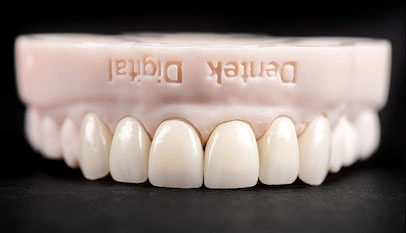
If you place implants, you already know that the restoration is just as important as the fixture. Screw retained implant crowns have become one of the most preferred restorative solutions for implant cases. They offer retrievability, a clean tissue margin, and a precise fit that patients and clinicians both appreciate. For dental practices in Westlake, TX, partnering with a trusted digital lab makes all the difference.
At Dentek Digital, we fabricate high-quality implant crowns using advanced CAD/CAM technology. Our digital workflow is built for precision. As a result, every restoration we deliver meets a consistently high standard. We work with dental practices across the country, including teams looking for a reliable lab partner they can count on case after case.
In this post, we break down everything you need to know about screw-retained implant crowns. We cover how they work, why they benefit your patients, and how our digital process makes your workflow easier.
What Are Screw-Retained Implant Crowns?
Screw-retained implant crowns attach directly to the implant or abutment with a small screw. There is no cement involved. This design differs from cement-retained crowns, which bond to a separate abutment using dental cement.
Because of this, screw-retained restorations are fully retrievable. You can remove the crown when needed without damaging the restoration or the surrounding tissue. Additionally, there is no risk of excess cement causing peri-implant complications.
Key Components of a Screw-Retained Crown
Understanding the parts helps you communicate clearly with your lab. Most screw-retained crowns include a titanium base, also called a Ti-base, bonded to a milled crown made from zirconia or other materials. The screw channel runs through the crown and allows direct attachment to the implant.
Furthermore, the access hole is sealed with composite after placement. This keeps the restoration looking natural while maintaining easy retrievability. The design is straightforward, but the execution requires precise digital fabrication.
Why Dental Practices Choose Screw-Retained Designs
Many implant-focused practices have shifted toward screw-retained restorations. The reasons are both clinical and practical. First, retrievability is a major advantage. If a patient needs a repair or if the implant requires evaluation, you can remove the crown without destroying it.
Second, eliminating cement reduces the risk of biological complications. Excess cement under the gumline is a known contributor to peri-implantitis. Therefore, a screw-retained design protects long-term implant health. This is especially important for patients with deeper implant positions or complex tissue profiles.
Patient and Practice Benefits
Patients benefit from a restoration that fits well and lasts. They also appreciate fewer follow-up visits for complications. On the other hand, practices benefit from simplified maintenance and a more predictable restorative outcome.
Moreover, screw-retained crowns often require fewer adjustments at delivery. When fabricated with a precise digital workflow, the fit is accurate from the start. This saves chair time and keeps your schedule moving.
The Digital CAD/CAM Advantage
Digital fabrication has changed how dental labs produce implant restorations. At Dentek Digital, we were one of the earliest adopters of the digital CAD/CAM workflow in the country. We have refined our process over many years. As a result, we consistently deliver restorations that meet the highest standards.
CAD/CAM stands for computer-aided design and computer-aided manufacturing. In simple terms, we use digital scans and specialized software to design your restoration. Then, a milling machine or 3D printing system fabricates it with exceptional accuracy.
How the Digital Workflow Works
The process begins with a digital scan file from your intraoral scanner. You capture the implant position using a scan body and send us the file. Next, our technicians design the crown in our CAD software, accounting for occlusion, emergence profile, and esthetics.
Then, we mill the crown from a high-quality material block, typically zirconia. We bond it to the Ti-base and finish the restoration by hand. Finally, we ship it back to your practice ready for delivery. The entire process is efficient and precise.
Materials We Use for Screw-Retained Crowns
Material selection matters for long-term success. We most commonly use zirconia for screw-retained implant crowns. Zirconia is strong, biocompatible, and highly esthetic. It handles the forces of occlusion well, especially in posterior regions.
Additionally, we offer layered zirconia options for cases where maximum esthetics are a priority. Our team helps you select the right material based on the case requirements. We guide you through the options so you can make the best choice for your patient.
Sending Implant Cases to Dentek Digital
Working with a digital lab should be simple and straightforward. At Dentek Digital, we have streamlined our case submission process. You do not need complicated paperwork or lengthy back-and-forth. We accept digital files from all major intraoral scanners.
To submit a screw-retained crown case, you send your scan files along with your case details. Include the implant system, the position, and any esthetic preferences. Our team reviews the case and reaches out if we have questions. We keep communication clear and efficient.
What to Include With Your Case
A complete submission helps us fabricate the best possible restoration. Include your scan body scan, opposing arch scan, and bite registration. Also include shade information and any notes about the emergence profile or tissue contours.
Furthermore, letting us know the implant system is essential. Different systems require specific Ti-base components. We stock a wide range of compatible components and will confirm compatibility before we begin fabrication.
Serving Dental Practices Across the Country From Phoenix, Arizona
Dentek Digital is based in Phoenix, Arizona, and recognized as a national leader in digital dentistry. We serve dental practices in our local Greater Phoenix area, including communities like Mesa, Tempe, Chandler, Gilbert, and Scottsdale. However, our reach extends well beyond Arizona.
We work with practices across the country that need a dependable lab partner. Dental teams in Westlake, TX, and surrounding areas trust us because of our consistency and quality. We combine advanced technology with skilled lab craftsmanship on every case.
Additionally, our turnaround times are competitive. We understand that your patients are waiting. Therefore, we work efficiently without sacrificing quality. Our team communicates proactively so you always know where your case stands.
Tips for Optimizing Your Implant Crown Workflow
A smooth implant workflow benefits everyone in your practice. Here are a few practical tips to improve your results with screw-retained restorations:
- Use a quality scan body: Accurate scan body positioning is critical. It tells the lab exactly where the implant is in three-dimensional space.
- Capture clean margins: Even without a physical margin, tissue contours affect the emergence profile. Capture enough detail around the implant site.
- Record the opposing arch carefully: Occlusal accuracy reduces adjustments at delivery. Take your time with the bite scan.
- Communicate shade early: Send shade information with your case submission. This helps us plan the esthetic outcome from the start.
- Confirm the implant system: Double-check the implant brand and platform size before submitting. This prevents delays and ensures the correct Ti-base is used.
These steps make a real difference in the final result. Moreover, they reduce back-and-forth communication and keep your cases on schedule.
Frequently Asked Questions About Screw-Retained Implant Crowns
What is the main advantage of a screw-retained crown over a cement-retained one?
The biggest advantage is retrievability. You can remove a screw-retained crown without damaging it. Additionally, there is no cement to cause complications around the implant tissue.
Can screw-retained crowns be used in any position in the mouth?
Yes, in most cases. However, anterior cases require careful planning of the screw access hole. Digital design allows us to angle the channel to minimize esthetic impact. We evaluate each case individually.
What implant systems does Dentek Digital support?
We work with a wide range of major implant systems. When you submit a case, include the implant brand, system name, and platform size. We confirm compatibility and let you know right away.
How do I send a case to Dentek Digital?
You can submit cases digitally through our online case submission portal. Simply upload your scan files and case details. Our team reviews everything and follows up promptly if we need more information.
How long does fabrication take?
Turnaround time varies depending on the case complexity and material. We work efficiently and keep you informed throughout the process. Contact us directly to discuss your timeline needs.
Partner With Dentek Digital for Your Implant Cases
Dental practices in Westlake, TX, deserve a lab partner they can rely on. Screw-retained implant crowns require precise digital fabrication and deep implant expertise. At Dentek Digital, we bring both to every case we accept.
Our team combines advanced CAD/CAM technology with hands-on craftsmanship. We have been at the forefront of digital dentistry for years. As a result, we deliver restorations that fit well, look great, and support long-term implant health.
We also offer a full range of dental lab services beyond implant crowns. These include fixed restorations, removables, splints and nightguards, and advanced services like TattooTH and digital implant planning. We are a comprehensive digital lab that grows with your practice.
Ready to get started? Contact Dentek Digital today to send us a case or discuss your implant workflow. Our team is ready to support your practice and your patients.