
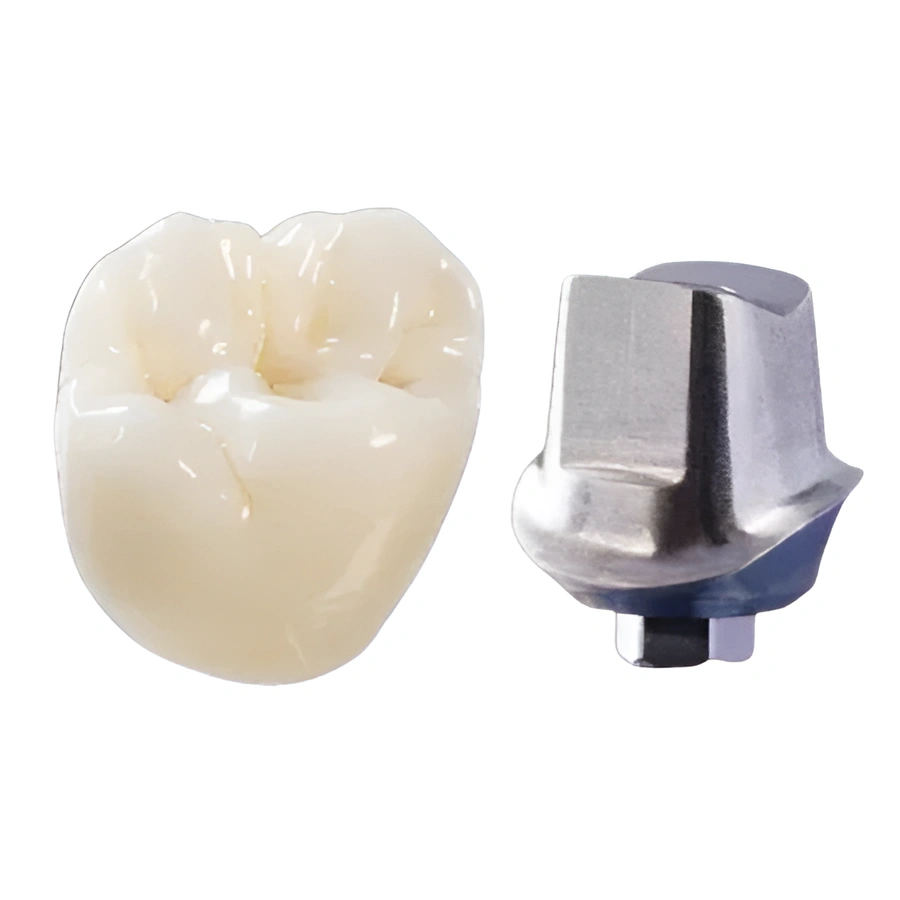
Dental implant restorations have changed the way practices serve patients with missing teeth. Among the available options, screw retained implant crowns stand out for their precision, retrievability, and long-term reliability. For dental practices in Gardnerville, NV, partnering with a high-quality digital dental lab makes all the difference.
At Dentek Digital, we specialize in CAD/CAM-fabricated implant restorations. We serve dental professionals across Phoenix, Arizona, and beyond. Our digital workflow delivers consistent, accurate results that support better patient outcomes.
In this post, we break down everything dental practices need to know about screw-retained implant crowns. We cover the benefits, the workflow, and how a trusted digital lab partnership can elevate your results.
What Are Screw-Retained Implant Crowns?
Screw-retained implant crowns attach directly to the implant fixture using a small retention screw. This means no cement is used to hold the crown in place. Additionally, the crown can be removed and re-accessed if needed.
This design is different from cement-retained crowns, which bond to the abutment with dental cement. Both have their place in implant dentistry. However, screw-retained designs offer some distinct clinical advantages.
How the Retention Screw Works
The screw passes through the crown body and threads into the implant or abutment below. A small access hole is left on the occlusal or lingual surface. Therefore, the restoration stays firmly in place during function but remains retrievable when necessary.
This retrievability is one of the most valued features for clinicians. For example, if the surrounding tissue changes or the restoration needs adjustment, the dentist can access the crown without destroying it. As a result, long-term maintenance becomes more straightforward.
Materials Used in Screw-Retained Crowns
Modern screw-retained crowns are typically fabricated from zirconia, PFM (porcelain-fused-to-metal), or full-contour zirconia. Each material has unique strength and aesthetic properties. Furthermore, the right material choice depends on the location of the implant and the patient’s bite forces.
At Dentek Digital, we use advanced CAD/CAM milling technology to fabricate these restorations. Our workflow begins with a precise digital scan and ends with a restoration that fits accurately. This process reduces remakes and chairside adjustment time for your practice.
Key Benefits of Screw-Retained Implant Crowns
Dental practices choose screw-retained designs for many clinical and practical reasons. Understanding these benefits helps you make informed decisions for your patients. Moreover, it helps you communicate the value of the restoration to patients clearly.
Retrievability and Long-Term Access
One of the top advantages is the ability to retrieve the crown after placement. This matters for soft tissue management, implant hygiene checks, and addressing any prosthetic complications. Because of this, many clinicians prefer screw-retained crowns in complex cases.
Cement-retained restorations can leave residual cement below the gumline. This excess cement can trigger inflammation and compromise the implant’s long-term health. On the other hand, screw-retained crowns eliminate this risk entirely.
Precision Fit Through Digital Fabrication
CAD/CAM technology allows our lab to design restorations with a high degree of accuracy. We work from digital implant scans or scan bodies to create a crown that seats passively. Additionally, this precision reduces the need for chairside adjustments during delivery appointments.
Practices in Gardnerville, NV benefit from the same digital workflow used by leading dental offices in Scottsdale, Gilbert, and Chandler, Arizona. The technology crosses geographic borders. Therefore, your patients receive restorations built to the same high standard regardless of location.
Reduced Risk of Cement-Related Complications
Peri-implant disease is a real concern in implant dentistry. Residual cement is a known contributing factor. Furthermore, cement can be difficult to detect and remove once it migrates subgingivally.
Screw-retained crowns sidestep this issue completely. There is no cement in the subgingival environment. As a result, the risk of inflammation and bone loss related to cement remnants is significantly reduced.
Simplified Maintenance and Recall
Because the crown is retrievable, maintenance visits become more efficient. The dentist can remove the restoration for a thorough cleaning or assessment. Then, the crown is simply re-torqued and returned to function.
This is especially valuable for patients who have challenging anatomy or limited access. Moreover, it gives the clinician greater control over long-term implant health. Patients in Gardnerville and beyond benefit from this ongoing accessibility.
The Digital CAD/CAM Workflow for Screw-Retained Crowns
At Dentek Digital, our process begins the moment we receive your case. We use a fully digital workflow from scan to delivery. This approach minimizes errors and speeds up turnaround for your practice.
Step One: Digital Impressions and Scan Body Data
The workflow starts with an intraoral scan or a scan of a physical impression using a scan body. This captures the implant position, adjacent teeth, and soft tissue contours. Additionally, we accept scans from all major intraoral scanner brands.
Accurate scan data is the foundation of a well-fitting screw-retained crown. Therefore, we recommend using scan bodies that match your implant system precisely. Our team can guide you through compatible options if needed.
Step Two: CAD Design and Crown Engineering
Our experienced technicians use CAD software to design the crown digitally. We account for occlusion, emergence profile, and screw access channel angulation. Furthermore, we review each design for fit, function, and aesthetics before milling begins.
This design phase is where our expertise as a national leader in digital dentistry truly shows. We were among the earliest adopters of the digital CAD/CAM workflow in the country. Because of this, our team brings deep experience to every case we handle.
Step Three: Milling, Finishing, and Quality Review
Once the design is approved, we mill the crown from the selected material block. Next, our technicians finish and characterize the restoration by hand. Finally, we conduct a thorough quality review before shipping the case back to your practice.
Practices across Phoenix, Mesa, Tempe, and Chandler rely on this process every day. Dental offices in Gardnerville, NV can access the same quality through our remote case submission platform. The result is a precisely crafted restoration delivered to your door.
Tips for Dental Practices Working with Screw-Retained Crowns
Working with screw-retained implant restorations is straightforward when the workflow is optimized. Here are some practical tips to help your practice get the best results from every case.
- Use a scan body that matches your implant system. Accurate implant position data is critical for a passive fit.
- Communicate the access hole location preference. Let your lab know if you prefer occlusal or lingual screw access when anatomy allows.
- Confirm torque specifications before delivery. Each implant system has specific torque values. Always follow the manufacturer’s guidelines.
- Plan your emergence profile early. A well-shaped emergence profile supports healthy peri-implant tissue long term.
- Review occlusion carefully at delivery. Even precisely milled crowns benefit from a careful occlusal check at the seat appointment.
- Document your cases digitally. Digital records support better communication with your lab and easier recall tracking.
Following these steps consistently helps your practice deliver excellent implant outcomes. Moreover, it builds a stronger collaborative relationship with your dental lab.
Why Partner with a Digital Dental Lab Like Dentek Digital?
Choosing the right lab partner is one of the most important decisions a dental practice makes. The quality of your restorations directly affects patient satisfaction and clinical outcomes. Therefore, working with a lab that leads in digital dentistry makes a measurable difference.
Dentek Digital is based in Phoenix, Arizona, and recognized as a national leader in CAD/CAM dental restorations. We offer a full range of solutions including fixed restorations, removables, splints, nightguards, dental implants, and advanced services like TattooTH and digital implant planning. Additionally, our team combines technology with skilled craftsmanship at every step.
Dental practices in Gardnerville, NV can easily submit cases remotely through our streamlined system. We work with offices across the country, including practices in Mesa, Scottsdale, Gilbert, and the greater Phoenix region. No matter your location, you receive the same level of precision and care.
Frequently Asked Questions About Screw-Retained Implant Crowns
Are screw-retained crowns better than cement-retained crowns?
Neither option is universally superior. However, screw-retained crowns offer key advantages including retrievability and the elimination of cement-related risks. Many clinicians prefer them for most implant cases, especially in the posterior region.
Can any implant system support a screw-retained crown?
Most modern implant systems support screw-retained restorations. The specific components vary by brand and implant platform. Therefore, it is important to communicate your implant system details clearly when submitting a case to your lab.
What happens if the access hole affects the crown’s aesthetics?
In most posterior cases, the access hole is barely visible. For anterior cases, the screw access channel can sometimes be positioned lingually to preserve aesthetics. Additionally, the access hole is sealed with a composite material after torquing, which further minimizes its appearance.
How long does it take to receive a screw-retained crown from Dentek Digital?
Turnaround time depends on the case complexity and the materials selected. We work efficiently to return your restorations as quickly as possible without compromising quality. Contact our team directly for current turnaround estimates.
Do I need special tools to deliver a screw-retained implant crown?
Yes, you will need a torque wrench calibrated to your implant system’s specifications. Most implant companies include this with their surgical kits. Furthermore, your implant manufacturer can provide guidance on the correct driver and torque values for your specific system.
Partner with Dentek Digital for Your Implant Cases
Screw-retained implant crowns offer powerful clinical advantages for dental practices. They are retrievable, cement-free, and fabricated with exceptional precision using CAD/CAM technology. Moreover, they support long-term implant health and patient satisfaction.
At Dentek Digital, we bring decades of digital dentistry expertise to every case we handle. Our Phoenix-based lab serves practices in Gardnerville, NV and across the country with the same commitment to quality. We partner with dental professionals to support better outcomes for their patients.
Ready to elevate your implant restorations? Contact Dentek Digital today to send us a case or explore your options. Our team is ready to support your practice with the precision and care your patients deserve.