
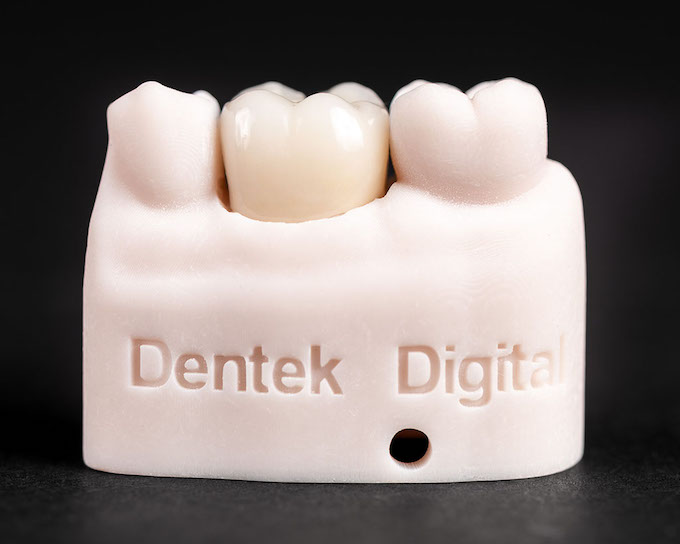
When it comes to implant restorations, screw retained implant crowns have become one of the most requested solutions among modern dental practices. They offer retrievability, a cleaner emergence profile, and a more predictable fit compared to cement-retained alternatives. For dentists in Atherton, CA, finding a reliable dental lab partner makes all the difference.
Dentek Digital is a digital dental lab based in Phoenix, Arizona. We are recognized as a national leader in CAD/CAM dental technology. We work with dental practices across the country to fabricate precise, high-quality implant restorations that support better patient outcomes.
Therefore, whether you are exploring implant crown options for the first time or looking to upgrade your current lab relationship, this guide covers everything you need to know about screw-retained implant crowns and how Dentek Digital can support your practice.
What Are Screw-Retained Implant Crowns?
Screw-retained implant crowns attach directly to the implant fixture using a screw. There is no cement involved. This design gives the restorative dentist easy access for retrieval if adjustments or repairs are ever needed.
Additionally, the screw-retained design eliminates the risk of excess cement migrating below the gumline. Residual cement is a known cause of peri-implant tissue inflammation and bone loss. Because of this, many clinicians prefer screw retention for its cleaner, more controlled delivery.
How Do They Differ from Cement-Retained Crowns?
Cement-retained crowns rely on dental cement to hold the crown to an abutment. On the other hand, screw-retained crowns use a central access channel and a small screw to lock the restoration in place. The access hole is then covered with composite material after seating.
Both options have their place in implant dentistry. However, screw-retained designs are often preferred in areas where retrievability and tissue health are top priorities. Furthermore, advances in CAD/CAM technology have made screw-retained restorations more accessible and consistently accurate than ever before.
The Role of CAD/CAM Technology in Implant Crown Fabrication
Modern CAD/CAM technology has transformed how dental labs fabricate implant restorations. First, a digital scan replaces traditional impressions. Next, design software allows technicians to engineer the crown with precise angulation and fit. Then, milling or printing equipment produces the restoration with exceptional accuracy.
At Dentek Digital, we were among the earliest adopters of the full digital CAD/CAM workflow in the country. This means our team has years of experience refining implant crown designs for optimal fit, function, and esthetics. As a result, dentists who partner with us benefit from a streamlined, reliable process from case submission to delivery.
Digital Scanning and Implant-Level Impressions
Accurate digital scanning is the foundation of a well-fitting screw-retained implant crown. Scan bodies communicate implant position and angulation to the design software. Because of this, the resulting crown fits the implant interface precisely without chairside adjustments.
Many practices across the greater Phoenix area — including those in Mesa, Scottsdale, Chandler, and Gilbert — have already transitioned to digital scanning workflows. Similarly, dental practices nationwide, including those in Atherton, CA, are embracing this shift. Dentek Digital is equipped to receive digital files in all major formats.
Materials We Use for Screw-Retained Restorations
Material selection plays a significant role in the long-term success of an implant crown. We work with a range of high-performance materials, including zirconia, PFM (porcelain-fused-to-metal), and full-contour options. Each material has specific advantages depending on the clinical situation.
For example, monolithic zirconia offers excellent strength and is ideal for posterior implant restorations. Meanwhile, layered zirconia or PFM options may be preferred when esthetics are the primary concern in the anterior zone. Our technicians help you select the right material for every case.
Why Dental Practices in Atherton, CA Choose Dentek Digital
Atherton, CA is home to discerning patients who expect the best. Dental practices in that community need a lab partner who delivers consistently — case after case. Dentek Digital has built its reputation on exactly that standard.
We combine advanced CAD/CAM technology with skilled, experienced craftsmanship. Additionally, our digital workflow allows for faster turnaround times without sacrificing quality. Dentists trust us because we are transparent, communicative, and genuinely invested in helping their cases succeed.
What Our Lab Partnership Looks Like
Working with Dentek Digital is straightforward. Here is how most partnerships begin:
- Case submission: You submit your digital scan files or physical impressions through our easy online portal.
- Design review: Our technicians analyze the case and begin the CAD design process.
- Fabrication: We mill or manufacture the restoration using industry-leading equipment and materials.
- Quality check: Every restoration passes a thorough inspection before it ships.
- Delivery: The finished case arrives ready for seating.
Furthermore, our team is always available to discuss complex cases, angulation challenges, or material questions. We believe strong communication is the foundation of a great lab-doctor relationship.
Common Clinical Considerations for Screw-Retained Crowns
Not every implant case is straightforward. Several clinical factors influence how a screw-retained crown is designed and fabricated. Understanding these factors helps you communicate more effectively with your lab.
Implant Angulation
Implant angulation can present a challenge for screw-retained designs. Ideally, the implant is placed so the access channel exits through the cingulum or occlusal surface. However, real-world cases sometimes involve off-axis implants.
In these situations, angled screw channel (ASC) abutments are a reliable solution. They allow the access hole to be redirected by up to a certain degree without compromising the structural integrity of the restoration. Our technicians are experienced in designing restorations around angulation challenges.
Emergence Profile and Tissue Management
The emergence profile of a screw-retained crown affects how the restoration interacts with surrounding soft tissue. A well-designed emergence profile supports tissue health and esthetics over the long term. Additionally, it makes hygiene easier for the patient.
We pay close attention to emergence profile design on every implant case. This is especially important for anterior restorations where tissue esthetics are visible and critical to patient satisfaction.
Occlusion and Load Distribution
Proper occlusion is essential for the longevity of any implant restoration. Screw-retained crowns must be designed with careful attention to bite forces and contact points. Because of this, accurate bite records and opposing arch scans are important components of every case submission.
We encourage dentists to include thorough occlusal records with every implant case. This helps our team engineer restorations that function well in the patient’s natural bite over time.
Advanced Services That Support Implant Cases
Dentek Digital offers more than just implant crown fabrication. We provide a full suite of advanced digital services designed to support complex implant cases from planning through restoration.
Digital Implant Planning
Our digital implant planning service allows clinicians to visualize implant placement before surgery. This improves accuracy and predictability. Moreover, it supports the fabrication of surgical guides that help place implants in the ideal position for the planned restoration.
Proper planning reduces the likelihood of angulation issues and helps ensure the final crown seats correctly. In addition, it gives the restorative dentist and the surgeon a shared roadmap for the case.
TattooTH Restorations
TattooTH is one of our most unique advanced offerings. It allows for custom artistic or decorative elements to be incorporated into dental restorations. While not specific to implant crowns, it reflects the level of innovation and craftsmanship that defines our lab’s capabilities.
Finally, our removable, splint, nightguard, and fixed restoration services round out a comprehensive catalog. We are a full-service digital lab equipped to handle virtually any case type your practice encounters.
Tips for Submitting a Successful Implant Crown Case
A well-prepared case submission leads to a better result and a faster turnaround. Here are some practical tips to keep in mind:
- Use a compatible scan body: Confirm that your scan body matches the implant system being used.
- Capture the full arch: Include both the implant arch and the opposing arch in your digital scan.
- Record the bite accurately: Provide a reliable bite registration to guide occlusal design.
- Note shade and material preferences: Include shade information and any specific material requests in your case notes.
- Flag angulation concerns early: If you know the implant is off-axis, note this upfront so our team can plan accordingly.
Moreover, do not hesitate to call or message our team before submitting a complex case. We are happy to talk through the clinical situation and help you plan the submission for the best possible outcome.
Frequently Asked Questions About Screw-Retained Implant Crowns
What is the main advantage of a screw-retained implant crown?
The primary advantage is retrievability. If the crown ever needs to be removed for repair, adjustment, or tissue management, it can be unscrewed without damaging the restoration or the surrounding structures. This makes long-term maintenance significantly easier.
Can screw-retained crowns be used in the anterior zone?
Yes. However, implant placement must be carefully planned so the access channel exits in a non-visible location. Digital implant planning helps ensure the implant is positioned ideally for a screw-retained anterior crown. Proper planning is essential in this area.
What file formats does Dentek Digital accept?
We accept all major digital scan file formats used by leading intraoral scanner brands. If you are unsure whether your scanner is compatible, contact our team and we will confirm quickly. We work to make the submission process as simple as possible for every practice.
How long does fabrication typically take?
Turnaround time varies depending on the complexity of the case and the materials selected. We work efficiently to deliver restorations as quickly as possible without compromising quality. Contact us for current turnaround estimates based on your specific case type.
Does Dentek Digital work with practices outside of Arizona?
Absolutely. While we are rooted in the greater Phoenix area — serving practices in Mesa, Scottsdale, Chandler, Gilbert, and Tempe — we partner with dental practices across the country, including those in California. Our digital workflow makes remote collaboration seamless and reliable.
Partner with Dentek Digital for Your Implant Crown Cases
Screw-retained implant crowns require precision, expertise, and a lab partner you can trust. Dentek Digital delivers all three. Our team brings years of CAD/CAM experience, advanced technology, and a genuine commitment to quality to every case we fabricate.
Therefore, if you are a dental practice in Atherton, CA — or anywhere across the country — looking for a dependable digital lab partner for implant restorations, we are ready to work with you. We make the process straightforward, communicative, and consistent.
Ready to get started? Contact Dentek Digital today to send us a case or discuss your implant crown needs with our experienced team. We look forward to supporting your practice and your patients.