
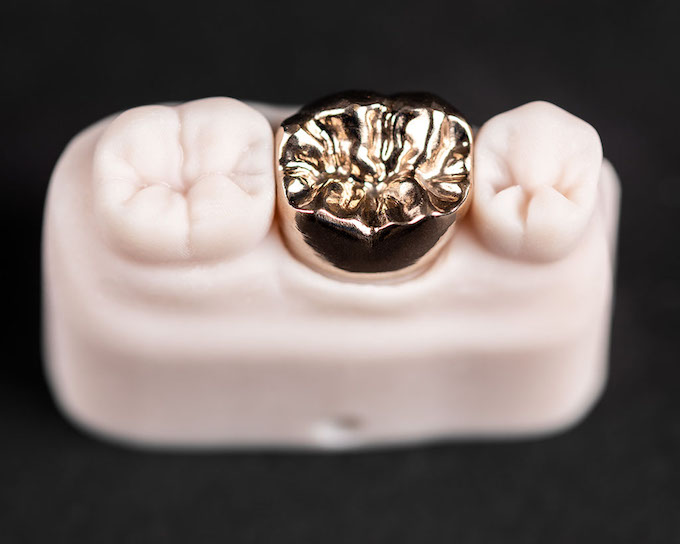
Patients seeking permanent dental implants deserve restorations that look, feel, and function like natural teeth. Whether you are a dentist in the Greater Phoenix area or a practice exploring implant solutions, understanding how modern digital labs support implant cases is essential. Today, digital technology has transformed the way dental labs fabricate implant components.
At Dentek Digital, we partner with dental professionals to deliver precision-crafted implant restorations. Our CAD/CAM workflow allows us to produce components with exceptional accuracy. As a result, your patients receive outcomes that are both reliable and aesthetically superior.
This guide covers everything dental professionals need to know about permanent dental implant restorations — from design and materials to workflow and lab support. Additionally, it explains how a trusted digital dental lab elevates implant outcomes for practices across Phoenix, Scottsdale, Mesa, Chandler, and Gilbert.
What Are Permanent Dental Implants?
Permanent dental implants replace missing teeth with a long-lasting, fixed solution. They consist of three core components: a titanium post, an abutment, and a crown. Together, these elements mimic the structure and function of a natural tooth.
Unlike removable dentures, implants are anchored directly into the jawbone. Because of this, they provide superior stability and comfort. Patients can eat, speak, and smile with confidence.
Furthermore, implants help preserve bone density over time. When a tooth is lost, the surrounding bone can deteriorate. However, an implant post stimulates the bone, slowing that process significantly.
Fixed vs. Removable Implant Solutions
Some patients choose implant-supported removable dentures. Others opt for fully fixed restorations. Therefore, the treatment plan must match the patient’s anatomy, bone density, and lifestyle.
Fixed implant restorations — such as implant crowns and bridges — are cemented or screw-retained in place. They do not come out. On the other hand, implant-supported overdentures offer removability with improved retention compared to traditional dentures.
At Dentek Digital, we fabricate both fixed and removable implant solutions. Our team works closely with dental professionals throughout the Phoenix metro to support every implant case type.
How CAD/CAM Technology Improves Implant Restorations
CAD/CAM stands for Computer-Aided Design and Computer-Aided Manufacturing. This technology allows dental labs to design and mill restorations with digital precision. As a result, the fit and accuracy of implant components improve significantly.
Traditional lab methods relied on manual impressions and hand-crafted components. However, digital workflows reduce human error. They also speed up production time without sacrificing quality.
Dentek Digital was one of the earliest adopters of the CAD/CAM workflow in the country. This experience gives our team a deep understanding of how to optimize digital designs for complex implant cases.
Digital Scanning and Design
The digital workflow begins with a scan. Dentists send us digital impressions captured with intraoral scanners. Next, our technicians use advanced CAD software to design the restoration in a virtual environment.
This design phase is critical. Every margin, contour, and contact point is carefully planned. Therefore, the finished restoration fits accurately from the first placement attempt.
Additionally, digital design allows us to visualize the restoration in context with adjacent teeth. This improves both function and aesthetics. Practices in Scottsdale and Tempe are increasingly adopting digital scanning, and we support that transition fully.
Milling and Material Selection
Once the design is approved, our milling units carve the restoration from a high-quality material block. Common materials include zirconia, lithium disilicate, and PMMA for temporaries. Each material has specific strengths depending on the clinical situation.
Zirconia, for example, is extremely durable and biocompatible. Moreover, it can be shaded and layered to match natural tooth color. For posterior implants that face heavy bite forces, zirconia is often the top choice.
Lithium disilicate offers excellent translucency for anterior cases. Because of this, it blends seamlessly with surrounding teeth. Our team selects the right material for each patient’s specific needs.
The Dentek Digital Implant Workflow
Our implant workflow is designed to be simple and efficient for dental practices. First, the dentist submits the case digitally through our streamlined case submission process. Then, our technicians review the file and confirm all necessary details.
Next, we design the abutment and crown using our CAD software. We account for implant platform, emergence profile, and occlusal clearance. Furthermore, we communicate with the submitting practice if adjustments are needed.
Finally, the restoration is milled, finished, and shipped with thorough documentation. Turnaround times are competitive. Meanwhile, quality is never compromised. Practices across Mesa, Gilbert, and Chandler rely on this consistent process every week.
Custom Abutments vs. Stock Abutments
One important decision in implant restoration involves abutment selection. Stock abutments come pre-fabricated by the implant manufacturer. Custom abutments, however, are designed specifically for each patient’s anatomy.
Custom abutments provide a better emergence profile from the gingiva. As a result, soft tissue response is improved. Additionally, they allow for more precise crown seating and occlusal positioning.
Dentek Digital fabricates custom abutments using titanium and zirconia. Our digital design capabilities make this process accurate and repeatable. Therefore, every custom abutment we produce meets the highest clinical standards.
Screw-Retained vs. Cement-Retained Crowns
Another key consideration is how the crown attaches to the abutment. Screw-retained crowns offer easier retrievability. Cement-retained crowns, on the other hand, can provide a cleaner emergence profile in some situations.
Each approach has clinical advantages. Therefore, the choice depends on implant angulation, aesthetic demands, and the clinician’s preference. Our lab supports both configurations with equal precision.
We also fabricate screw-retained crowns with angled screw channels when implant positioning requires it. This added capability gives dentists more flexibility in treatment planning.
Digital Implant Planning Support
Dentek Digital offers advanced digital implant planning services. This service helps dentists visualize the surgical and restorative phases before any procedure begins. Furthermore, it guides implant placement toward an ideal restorative position.
Implant planning uses cone beam CT (CBCT) data combined with digital impressions. Our technicians analyze bone volume, nerve position, and aesthetic goals. As a result, the surgeon can place the implant with greater confidence and precision.
Practices in the Phoenix metro area increasingly use this service to improve implant predictability. Moreover, it reduces chair time and enhances patient communication. A well-planned case is far easier to restore than one placed without restorative guidance.
Surgical Guides
Surgical guides are physical templates that direct the drill during implant placement. We design and fabricate these guides based on the implant plan. Therefore, the implant lands in exactly the right position.
Guided surgery improves accuracy for both single-tooth and full-arch cases. Additionally, it reduces surgical time and patient discomfort. Our guides are compatible with most major implant systems.
Dentists in Chandler and Gilbert have found guided surgery particularly useful for complex, multi-implant cases. We are proud to support these practices with reliable planning and guide fabrication.
Full-Arch Implant Restorations
Full-arch implant restorations replace an entire arch of missing teeth. These are often called All-on-4 or All-on-X restorations. They use a small number of implants to support a full bridge or denture.
These cases are technically demanding. However, digital workflows make them far more manageable. CAD/CAM design allows for precise fitting of large-span prostheses that would be difficult to fabricate by hand.
Dentek Digital has extensive experience with full-arch implant cases. We fabricate PMMA temporary arches, zirconia hybrid bridges, and implant-supported overdentures. Furthermore, we guide practices through every step of the restorative process.
Monolithic Zirconia Full-Arch Bridges
Monolithic zirconia is a popular material for full-arch implant bridges. It is milled from a single block of zirconia, making it extremely strong. Additionally, modern zirconia is highly aesthetic and can be polished or glazed for a natural appearance.
These restorations are long-lasting and resistant to chipping. Because of this, they are ideal for patients who grind or clench. Our lab mills full-arch zirconia bridges with exceptional fit and surface quality.
Practices across Scottsdale and Mesa regularly submit full-arch cases to Dentek Digital. We treat every case — no matter the complexity — with the same attention to detail and craftsmanship.
Frequently Asked Questions About Permanent Dental Implants
What makes CAD/CAM implant restorations better than traditional ones?
CAD/CAM restorations are designed digitally, which improves accuracy and reduces manual error. Additionally, digital milling produces consistent results across every case. The fit is typically more precise than hand-crafted alternatives.
How long does it take to receive an implant restoration from Dentek Digital?
Turnaround times vary based on case complexity. However, our digital workflow is optimized for efficiency. Most cases are completed and shipped within competitive timeframes. Contact our team for specific timelines based on your case type.
What implant systems does Dentek Digital support?
We work with a wide range of major implant systems. Therefore, most practices can submit cases without changing their implant brand. Our team confirms compatibility during the case review process.
Can Dentek Digital help with full-arch implant cases?
Yes. We have deep experience fabricating full-arch implant restorations, including zirconia hybrid bridges and implant-supported overdentures. Moreover, we offer digital implant planning to support both surgical and restorative phases.
Do you work with dental practices outside of Phoenix?
While we are based in Phoenix, Arizona, we partner with dental professionals across the region and beyond. However, our primary focus is supporting practices in the Greater Phoenix metro, including Scottsdale, Mesa, Tempe, Chandler, and Gilbert.
Partner with Dentek Digital for Implant Restorations
Choosing the right lab partner makes a real difference in implant outcomes. At Dentek Digital, we combine advanced CAD/CAM technology with skilled craftsmanship. As a result, dental practices receive restorations they can trust case after case.
We understand the clinical demands of implant dentistry. Therefore, we design every component with both function and aesthetics in mind. Our team is responsive, detail-oriented, and committed to your success.
Whether you are placing single implants or managing complex full-arch reconstructions, we are ready to support you. Contact Dentek Digital today to send us a case or discuss your implant restoration needs with our experienced team.