
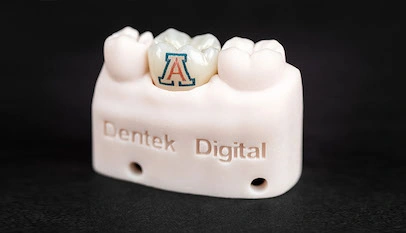
Permanent dental implants have transformed the way patients restore missing teeth. They offer a long-lasting, natural-looking solution that supports oral health for years to come. For dentists in Trophy Club, TX and beyond, understanding how implants are fabricated at the lab level can make a real difference in patient outcomes.
At Dentek Digital, we are a digital dental lab based in Phoenix, Arizona. We work with dental professionals across the country to deliver precision-crafted implant restorations. Our CAD/CAM workflow helps dentists provide restorations that fit accurately and look beautiful.
In this post, we explore what goes into creating high-quality permanent dental implants. We also explain how a trusted lab partner can elevate the results your patients experience every day.
What Are Permanent Dental Implants?
Permanent dental implants are titanium posts placed surgically into the jawbone. They act as artificial tooth roots. Over time, the bone fuses with the implant in a process called osseointegration.
Once the implant integrates, a dental crown is attached on top. This crown is the visible part of the restoration. It must fit precisely and match the surrounding teeth in both function and appearance.
Components of an Implant Restoration
An implant restoration typically has three parts. First, there is the implant fixture itself, which goes into the bone. Next comes the abutment, which connects the fixture to the crown. Finally, the crown sits on top and restores the visible tooth.
Each component must work together seamlessly. Therefore, precision at the lab level is essential. A poorly fitted crown or abutment can cause discomfort, bite issues, and early restoration failure.
Why Patients Choose Implants Over Other Options
Many patients prefer implants over dentures or bridges. Additionally, implants do not rely on adjacent teeth for support. This makes them a more conservative and health-friendly option in the long run.
Furthermore, implants preserve jawbone density. When a tooth is lost, the bone beneath it can shrink over time. An implant stimulates the bone the same way a natural tooth root does, helping to maintain facial structure.
How CAD/CAM Technology Elevates Implant Restorations
CAD/CAM stands for Computer-Aided Design and Computer-Aided Manufacturing. This technology allows dental labs to design and mill restorations with exceptional accuracy. As a result, the fit and aesthetics of implant crowns have improved dramatically.
At Dentek Digital, we were one of the earliest adopters of the digital CAD/CAM workflow in the country. We combine this advanced technology with skilled craftsmanship. Together, these two elements produce restorations that meet the highest clinical standards.
Digital Scanning and Design
The digital workflow often begins with an intraoral scan from the dentist’s office. This scan captures precise 3D data of the patient’s mouth. We then use that data to design the restoration digitally before any milling begins.
Because of this digital approach, we reduce the margin for human error. The design software allows our technicians to refine every detail. Moreover, digital records make it easy to reference case history if adjustments are ever needed later.
Milling and Material Selection
Once the design is approved, our milling machines carve the restoration from a solid block of material. Common materials include zirconia and lithium disilicate. Both offer excellent strength and a natural appearance.
Zirconia, in particular, is a popular choice for implant crowns. It is highly durable and resistant to chipping. On the other hand, lithium disilicate offers superior translucency for anterior cases where esthetics are a priority.
The Role of the Dental Lab in Implant Success
Many dentists focus heavily on the surgical side of implant therapy. However, the lab side is equally important. A high-quality restoration determines how well the implant functions and how long it lasts.
Dentek Digital partners with dental professionals to support better patient outcomes. We serve practices across the Greater Phoenix area, including communities like Mesa, Tempe, Scottsdale, and Chandler. Our team understands what it takes to deliver consistent, reliable results case after case.
Implant Planning and Collaboration
We also offer digital implant planning as an advanced service. This allows dentists and our lab technicians to collaborate before treatment even begins. As a result, the final restoration fits into a well-planned surgical outcome.
This collaborative approach reduces surprises at delivery. It also helps dentists communicate more clearly with their patients during the treatment planning phase. In addition, it supports more predictable implant placement and restoration design.
Custom Abutments vs. Stock Abutments
Not all abutments are created equal. Stock abutments come pre-made in standard shapes and sizes. Custom abutments, however, are designed specifically for each patient’s unique anatomy.
Custom abutments generally provide a better fit at the gum line. They also offer improved emergence profiles, which supports healthier gum tissue around the implant. Therefore, many leading clinicians prefer custom over stock when possible.
What Dentists Should Look for in a Lab Partner
Choosing the right lab is a critical business and clinical decision. Not every lab uses the same technology or holds the same standards. Here are key factors to consider when evaluating a dental lab for implant work.
- Digital workflow capability: Does the lab use CAD/CAM design and milling for implant restorations?
- Material quality: Does the lab use certified, high-grade materials from reputable suppliers?
- Turnaround time: Can the lab deliver consistently within your clinical schedule?
- Communication: Is the team responsive and willing to collaborate on complex cases?
- Implant planning services: Does the lab offer advanced services like digital implant planning?
At Dentek Digital, we meet all of these criteria. We are recognized as a national leader in digital dentistry. Moreover, our team is experienced, communicative, and committed to supporting the practices we serve.
Implant Restorations Beyond the Crown
Permanent dental implants are not limited to single-tooth replacements. They also support more complex restorations. These include implant-supported bridges and full-arch solutions.
Implant-Supported Bridges
An implant-supported bridge replaces multiple missing teeth using implants as anchors. Unlike a traditional bridge, it does not rely on natural teeth for support. This makes it a more stable and tissue-friendly option for many patients.
Fabricating an implant-supported bridge requires precise measurements and careful design. Additionally, the lab must account for occlusion, esthetics, and long-term durability. Our CAD/CAM technology helps us achieve all three with confidence.
Full-Arch Implant Solutions
Full-arch implant restorations, sometimes called All-on-X or implant-supported dentures, replace an entire arch of teeth. These cases are among the most complex in restorative dentistry. Therefore, they demand the highest level of lab precision.
Dentek Digital is fully equipped to handle these advanced cases. Our team works closely with dentists during the planning phase to ensure the restoration integrates seamlessly with the surgical plan. Finally, we deliver a result that patients can trust for years.
Frequently Asked Questions About Permanent Dental Implants
How long do permanent dental implants last?
With proper care, implants can last for many years — often decades. The longevity depends on oral hygiene, bone health, and the quality of the restoration. A well-fabricated crown from a quality lab helps protect the investment long-term.
What materials are used for implant crowns?
The most common materials are zirconia and lithium disilicate. Zirconia is preferred for posterior strength. Lithium disilicate is often chosen for anterior esthetics. Both offer excellent clinical performance when crafted with precision.
Can a dental lab help with implant planning?
Yes. Advanced labs like Dentek Digital offer digital implant planning services. This allows the lab and the dentist to collaborate before surgery. As a result, the final restoration fits into a well-coordinated treatment plan.
What is the difference between a custom and stock abutment?
A stock abutment is pre-fabricated and may not fit every patient’s anatomy perfectly. A custom abutment is designed specifically for the individual case. Therefore, custom abutments often provide a better fit, better esthetics, and healthier gum tissue response.
How does a digital lab improve implant outcomes?
Digital labs use CAD/CAM technology to design and mill restorations with high accuracy. This reduces fit errors and improves consistency. Additionally, digital records support better communication between the lab and the dentist throughout the case.
Partner with Dentek Digital for Implant Restorations
If you are a dental professional looking for a reliable lab partner for implant cases, Dentek Digital is ready to help. We bring together advanced CAD/CAM technology and experienced craftsmanship to deliver restorations you and your patients can count on.
We proudly serve dentists and dental practices across the Greater Phoenix area, including Gilbert, Scottsdale, Mesa, Tempe, and Chandler. Our team understands the clinical demands of implant restorations and is committed to exceeding your expectations on every case.
Ready to elevate your implant workflow? Contact Dentek Digital today to send us a case or request a consultation. Our team is here to support you and your patients every step of the way.