
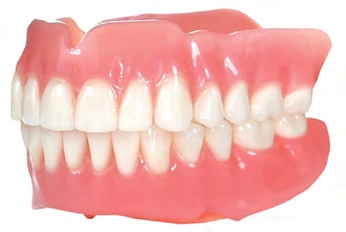
Permanent dental implants have transformed the way dentists restore smiles for patients who have lost one or more teeth. They offer a stable, long-lasting solution that closely mimics the look and feel of natural teeth. As a result, both dentists and patients are turning to implant-supported restorations more than ever before.
At Dentek Digital, we understand what it takes to fabricate implant restorations that perform at the highest level. Our digital dental lab in Phoenix, Arizona uses advanced CAD/CAM technology to deliver precise, reliable restorations. Therefore, dental practices across the Greater Phoenix area trust us to support their implant cases from start to finish.
In this post, we cover everything dentists should know about permanent dental implants from a digital lab perspective. We also share how our workflow helps dental professionals achieve better patient outcomes every time.
What Are Permanent Dental Implants?
Permanent dental implants are titanium posts that a dentist surgically places into the jawbone. They act as artificial tooth roots and provide a strong foundation for a crown, bridge, or full arch restoration. Because of this, they are considered the gold standard for replacing missing teeth.
Unlike removable dentures, implants integrate with the bone through a process called osseointegration. This creates a stable, permanent anchor for the restoration above the gumline. Moreover, this stability supports long-term oral health by preserving bone structure.
The Role of the Dental Lab in Implant Restorations
The implant fixture itself is placed by the dentist or oral surgeon. However, the crown, abutment, or full-arch prosthetic that attaches to the implant is fabricated by the dental lab. This is where precision and craftsmanship become critical.
At Dentek Digital, we use digital impressions and CAD/CAM design software to engineer each restoration with accuracy. Additionally, our team of skilled technicians reviews every case to ensure the fit, occlusion, and esthetics meet the highest standards. We serve dental practices throughout Phoenix, Mesa, Tempe, Chandler, and beyond.
How CAD/CAM Technology Elevates Implant Restorations
CAD/CAM stands for computer-aided design and computer-aided manufacturing. In short, it means we use digital tools to design and mill restorations rather than relying solely on traditional handcrafted methods. Furthermore, this technology allows us to achieve a level of precision that is difficult to match manually.
Dentek Digital was one of the earliest adopters of the digital CAD/CAM workflow in the country. Because of this, we have refined our process over many years to consistently deliver outstanding results. Our team combines technology with skilled craftsmanship to produce restorations that fit well, function properly, and look natural.
Benefits of Digital Workflow for Implant Cases
- Higher accuracy: Digital scans reduce human error and improve fit.
- Faster turnaround: CAD/CAM milling speeds up the fabrication process.
- Better communication: Digital files are easy to share and review remotely.
- Consistent quality: Each restoration is designed to precise specifications.
- Esthetic control: Digital design allows fine-tuning of shape, shade, and contour.
In addition, our digital workflow reduces the need for remakes and adjustments. Therefore, dentists spend less time on chair-side corrections and more time delivering care to patients.
Types of Implant Restorations We Fabricate
Dentek Digital offers a full range of implant-supported restorations. Each one is designed digitally and fabricated with materials chosen for strength and esthetics. Moreover, we tailor each case to the specific needs of the dentist and their patient.
Single-Unit Implant Crowns
A single-unit implant crown replaces one missing tooth. First, the dentist places the implant and allows it to heal. Then, once osseointegration is complete, our lab fabricates a custom crown to attach to the abutment.
We design these crowns to match the surrounding teeth in shape and shade. Additionally, we engineer them for long-term durability under normal biting forces. Practices in Scottsdale, Gilbert, and throughout Greater Phoenix regularly send us single-unit implant cases.
Implant-Supported Bridges
When a patient is missing multiple adjacent teeth, an implant-supported bridge is a strong solution. Two implants anchor the bridge on either end, eliminating the need to prepare neighboring natural teeth. Furthermore, this approach preserves more of the patient’s natural dentition.
Our digital workflow allows us to design bridges with exceptional accuracy across the full span. Because of this, the fit at each implant connection is precise and consistent. Dentists throughout Tempe and Chandler trust us with these multi-unit cases.
Full-Arch Implant Prosthetics
Full-arch restorations, such as implant-supported dentures or All-on-X cases, require the highest level of precision. These prosthetics replace an entire arch of teeth and are supported by multiple implants. As a result, patients experience a dramatic improvement in function, comfort, and confidence.
Dentek Digital has extensive experience fabricating full-arch implant prosthetics. We use advanced digital planning tools to ensure the restoration fits the implant positions accurately. In addition, we work closely with the dentist throughout the case to support a smooth workflow.
Digital Implant Planning: A Smarter Approach
One of the advanced services we offer at Dentek Digital is digital implant planning. This service allows the dentist to plan implant placement virtually before the procedure begins. Therefore, it reduces guesswork and supports more predictable outcomes.
Digital implant planning uses cone beam CT (CBCT) scan data combined with digital impressions. Our team processes this information and creates a virtual model of the patient’s anatomy. Next, we work with the dentist to plan ideal implant positions based on the planned restoration.
Why Implant Planning Matters for Restoration Quality
Implant position directly affects how well the final restoration fits and functions. If an implant is placed in a suboptimal location, the restoration may be compromised. However, when planning is done digitally in advance, the dentist can place the implant in exactly the right position.
This backwards-planning approach — starting with the restoration and working back to the implant — leads to better esthetic and functional outcomes. Moreover, it simplifies the restorative phase for the dentist. Our digital implant planning service is available to practices across the Phoenix metro area, including Mesa and Scottsdale.
Materials Used in Permanent Dental Implant Restorations
The material chosen for an implant restoration affects its strength, appearance, and longevity. At Dentek Digital, we use only high-quality, clinically proven materials. Additionally, we help dentists select the best material for each specific case.
Zirconia
Zirconia is one of the most popular materials for implant crowns and full-arch cases. It is extremely strong and offers excellent esthetic qualities. Furthermore, it is biocompatible, meaning the body tolerates it well over time.
We mill zirconia restorations in-house using our CAD/CAM equipment. This gives us tight control over the quality and accuracy of every piece. Because of this, our zirconia restorations consistently deliver outstanding results for dentists and their patients.
Titanium Frameworks
For full-arch implant cases, titanium frameworks provide exceptional strength at the implant connection points. We mill these frameworks digitally to match the patient’s implant positions precisely. In addition, a high-esthetic outer layer — such as acrylic or ceramic — is applied over the framework for a natural appearance.
PFM and Hybrid Options
Porcelain-fused-to-metal (PFM) and hybrid restorations are also available depending on the clinical situation. On the other hand, newer all-ceramic options have largely replaced PFM in many cases due to improved esthetics. We guide dentists in selecting the right material based on the patient’s needs and bite forces.
How Dentek Digital Supports Dentists Across Greater Phoenix
We are proud to serve dental practices across the Greater Phoenix area. Our clients range from solo practitioners to multi-location group practices. Therefore, we have experience handling a wide variety of implant cases with varying complexity.
Our team provides personalized support for every case we receive. First, we review the case details and any digital files the dentist submits. Then, our technicians design the restoration and communicate with the practice if any questions arise. Finally, we deliver a finished, high-quality restoration ready for placement.
Practices in Phoenix, Mesa, Tempe, Chandler, Gilbert, and Scottsdale rely on Dentek Digital as their trusted lab partner. We take pride in building long-term relationships with the dental professionals we serve. Moreover, we are always available to discuss specific case requirements or material recommendations.
Frequently Asked Questions About Permanent Dental Implants
What makes an implant restoration “permanent”?
The term “permanent” refers to the implant fixture being fixed in the jawbone and not removable by the patient. The crown or prosthetic attached to it is also fixed and designed for long-term use. However, components may need replacement or maintenance over many years with normal wear.
How does a digital dental lab improve the implant restoration process?
A digital lab like Dentek Digital uses CAD/CAM technology to design and mill restorations with exceptional accuracy. This reduces fitting errors and remake rates. Additionally, digital workflows allow for faster turnaround times and better communication with the dentist.
What information does a dentist need to submit for an implant case?
Typically, a dentist submits a digital scan or impression, an implant scan body scan, shade information, and a prescription form. Furthermore, any photos or notes about the patient’s bite and preferences are helpful. Our team is happy to walk new clients through our submission process.
Can Dentek Digital handle full-arch implant cases?
Yes, absolutely. We have extensive experience with full-arch implant prosthetics, including All-on-X cases. Moreover, our digital implant planning service helps dentists prepare for complex full-arch cases before surgery begins.
What materials do you recommend for implant crowns?
Zirconia is typically our top recommendation for implant crowns due to its strength and esthetics. However, the best material depends on the location of the implant, the patient’s bite forces, and esthetic goals. We work with each dentist to make the right recommendation for every case.
Partner With Dentek Digital for Your Implant Cases
Permanent dental implants represent one of the most impactful services a dentist can offer their patients. The quality of the restoration plays a major role in the long-term success of every implant case. Therefore, choosing the right dental lab partner matters enormously.
Dentek Digital is a nationally recognized leader in digital dentistry. Our advanced CAD/CAM technology, skilled technicians, and commitment to quality set us apart. Additionally, our digital implant planning service gives dentists a powerful tool to achieve more predictable outcomes.
We proudly serve dental practices throughout Greater Phoenix, including Mesa, Tempe, Chandler, Gilbert, and Scottsdale. Whether you have a single-unit crown or a complex full-arch case, our team is ready to help. Contact Dentek Digital today to send us a case or request a consultation with our team.