
When patients ask about replacing missing teeth, permanent dental implants consistently rise to the top of the conversation. They look natural, function like real teeth, and are designed to last for many years. For dental professionals, delivering that kind of result depends heavily on the quality of the lab work behind each restoration.
At Dentek Digital, we support dentists and dental practices throughout Greater Phoenix — including communities like Scottsdale, Mesa, Chandler, and Gilbert — with precision-crafted implant restorations. Our digital CAD/CAM workflow allows us to fabricate crowns, abutments, and full-arch solutions with exceptional accuracy and consistency.
In this post, we explore what goes into high-quality permanent dental implants, how digital technology is transforming the process, and how our Phoenix-based lab helps dental professionals deliver outstanding patient outcomes.
What Are Permanent Dental Implants?
Permanent dental implants are fixed tooth replacements anchored directly into the jawbone. Unlike removable dentures, they stay in place and do not require adhesives. Patients can eat, speak, and smile with confidence.
The implant itself is a small titanium post. It fuses with the jawbone through a process called osseointegration. On top of that post, a custom-fabricated restoration — usually a crown or bridge — is placed to complete the smile.
The Key Components of an Implant Restoration
Each permanent dental implant restoration involves several parts working together. Understanding these components helps dental professionals communicate clearly with their lab partners.
- Implant fixture: The titanium post placed surgically into the jawbone.
- Abutment: The connector piece that links the fixture to the final restoration.
- Crown or prosthesis: The visible tooth-colored restoration fabricated by the dental lab.
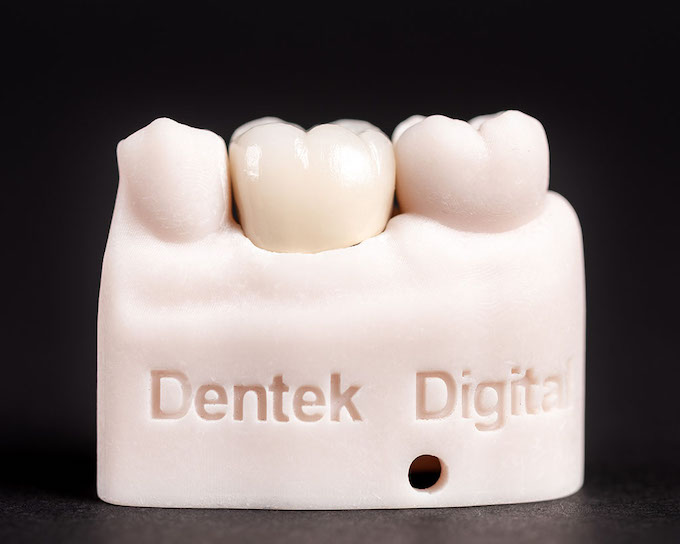
At Dentek Digital, we focus on the abutment and crown fabrication. We use advanced CAD/CAM technology to design and mill each piece with precise fit and natural aesthetics.
How CAD/CAM Technology Elevates Implant Quality
Traditional dental labs relied on manual processes that introduced variability. Today, CAD/CAM — computer-aided design and computer-aided manufacturing — has changed everything. As a result, restorations are more accurate, more repeatable, and more consistent.
Dentek Digital was one of the earliest adopters of the digital CAD/CAM workflow in the country. That experience gives us a deep understanding of how to optimize each step of the process. Moreover, our team combines that technology with skilled craftsmanship to ensure every case meets the highest standards.
Benefits of Digital Fabrication for Implant Restorations
Digital workflows offer significant advantages for implant cases. Here are some of the most important benefits for dental practices:
- Precise fit: Digital design reduces marginal gaps and seating issues.
- Consistent results: Milled restorations follow exact digital specifications every time.
- Faster turnaround: Digital files eliminate the delays common in traditional workflows.
- Fewer remakes: Better accuracy means fewer adjustments at the chair.
- Material versatility: CAD/CAM supports zirconia, lithium disilicate, PMMA, and more.
Furthermore, digital scans integrate seamlessly with our lab’s design software. This makes communication between dentist and lab faster and more accurate from the very first case.
Implant Solutions Offered by Dentek Digital
Our Phoenix lab fabricates a full range of implant-supported restorations. Whether you are restoring a single tooth or a full arch, we have the technology and expertise to support your cases.
Single-Unit Implant Crowns
Single-unit crowns are among the most common implant restorations. Therefore, precision in design and shade matching is critical. We mill each crown to your exact specifications using high-quality materials. Additionally, our team reviews every case for occlusion, emergence profile, and esthetics before shipping.
Implant-Supported Bridges
For patients missing multiple adjacent teeth, implant-supported bridges offer a strong and stable solution. We design each bridge digitally for optimal fit and load distribution. Our team works closely with referring practices in Scottsdale, Mesa, and Chandler to ensure each case is planned carefully.
Full-Arch Implant Restorations
Full-arch restorations — often referred to as All-on-4 or All-on-X cases — require precise planning and high-level fabrication. Dentek Digital offers digital implant planning services to support these complex cases. As a result, dentists can approach full-arch treatment with greater confidence and predictability.
We also offer PMMA provisionals for full-arch cases. These allow patients to wear a well-fitting temporary restoration while the final prosthesis is being fabricated. This step helps verify fit, function, and esthetics before the permanent restoration is delivered.
Digital Implant Planning: A Game-Changer for Complex Cases
One of the most advanced services we offer is digital implant planning. This process uses 3D imaging data to plan implant placement virtually before surgery. Therefore, the surgeon knows exactly where to place each fixture for the best possible outcome.
Digital planning also improves communication between the surgical and restorative teams. When everyone works from the same digital plan, the entire process becomes more coordinated. Additionally, it reduces surprises during treatment and supports better long-term results for patients.
Dental practices in Gilbert, Tempe, and across Greater Phoenix are increasingly adopting this technology. Our team is here to support that transition with expertise and responsive service.
How the Planning Process Works
The digital implant planning process typically follows these steps:
- The dentist submits CBCT scan data and intraoral scan files.
- Our team designs a virtual treatment plan based on the final restoration goals.
- A surgical guide is designed and fabricated for precise fixture placement.
- The restorative team uses the plan to design the final crown or prosthesis.
This restorative-driven approach ensures the implant is placed to support the ideal crown position. Consequently, the final restoration looks and functions exactly as planned.
Materials Matter: Choosing the Right Restoration
Material selection plays a major role in the long-term success of permanent dental implants. Different clinical situations call for different materials. Our team helps dental professionals navigate these choices based on the case.
Zirconia
Zirconia is one of the most popular materials for implant crowns and bridges. It is extremely strong, highly biocompatible, and delivers excellent esthetics. Moreover, full-contour zirconia eliminates the risk of porcelain chipping on posterior cases.
Lithium Disilicate
Lithium disilicate is a glass-ceramic material known for its lifelike translucency. It works especially well for anterior implant crowns where esthetics are the top priority. However, it requires careful occlusal consideration in high-load areas.
Hybrid and Implant-Grade PMMA
For full-arch cases and long-term provisionals, PMMA offers a lightweight and cost-effective option. It is easy to adjust and repair if needed. Additionally, implant-grade PMMA resists wear and maintains shape over extended use.
Frequently Asked Questions About Permanent Dental Implants
What makes a dental implant “permanent”?
The term permanent refers to the fact that the implant fixture fuses with the jawbone and is not designed to be removed. The crown on top can be replaced if needed. However, the implant itself is intended to last for many years with proper care.
How does a dental lab contribute to implant success?
The dental lab fabricates the abutment and crown — the visible, functional parts of the restoration. Precise fit and accurate design are critical. A well-made restoration reduces complications and improves long-term patient satisfaction.
What file formats does Dentek Digital accept for implant cases?
We accept all major digital scan formats from leading intraoral scanners. Additionally, we work with CBCT data for implant planning cases. Contact our team for specific submission guidelines for your system.
How long does it take to receive a finished implant crown?
Turnaround times vary depending on case complexity and material selection. Digital cases generally move faster than traditional impressions. We provide estimated timelines when you submit your case.
Does Dentek Digital work with practices outside of Phoenix?
Yes. While we are based in Phoenix and serve practices throughout Greater Phoenix — including Scottsdale, Mesa, Chandler, and Gilbert — we also partner with practices across the country. Our digital workflow makes remote collaboration straightforward and efficient.
Partner With a Lab That Understands Implants
Permanent dental implants represent one of the most important investments a patient can make in their oral health. Therefore, every component of the restoration must be fabricated with precision and care. Dentek Digital brings both the technology and the expertise to help you deliver results your patients will trust.
We are proud to be a national leader in digital dentistry, and we remain committed to supporting dental professionals with responsive service and exceptional quality. From single crowns to full-arch restorations, our Phoenix lab is equipped to handle cases of every complexity.
If you are ready to elevate the quality of your implant restorations, we invite you to contact Dentek Digital and send us your next case. Our team is ready to partner with your practice and support better outcomes for your patients.