
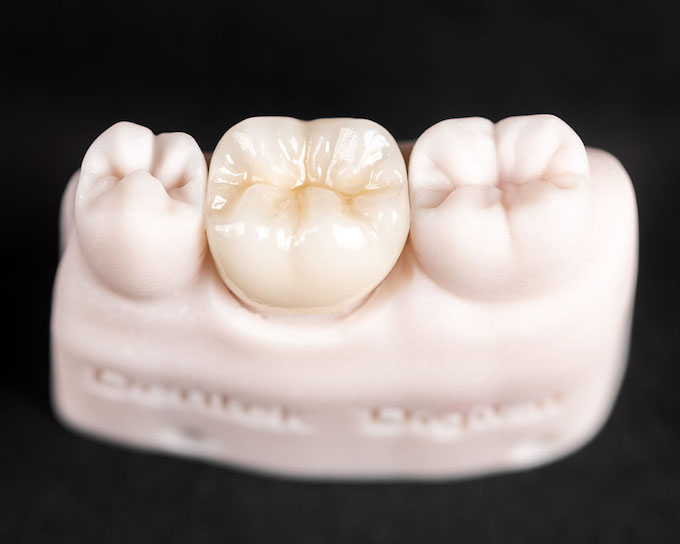
Dental practices everywhere are raising the bar on implant restorations. Cement retained implant crowns remain one of the most requested restoration types among implant patients. However, fabricating them at the highest level requires advanced digital tools and refined technique.
If your practice serves patients in or around Mount Charleston, NV, you already understand the demand for quality. Therefore, partnering with a trusted digital dental lab makes a real difference in outcomes. Dentek Digital, based in Phoenix, Arizona, delivers precision-milled implant crowns to dental practices across the country.
In this post, we cover what cement retained implant crowns are, why the digital workflow matters, and how outsourcing to Dentek Digital can elevate your practice results.
What Are Cement-Retained Implant Crowns?
Cement-retained implant crowns attach to a dental implant abutment using dental cement. This is different from screw-retained crowns, which lock in place with a screw. Both options serve implant patients well, but each has specific clinical advantages.
Because of this, many clinicians prefer cement retention in certain situations. For example, it can offer a cleaner occlusal surface and a more natural-looking result. Additionally, the margin placement can be easier to manage in some cases.
When Is Cement Retention the Right Choice?
Choosing cement retention depends on several clinical factors. First, consider the angulation of the implant. Next, think about the patient’s aesthetic goals and bite mechanics. Then, evaluate the gingival architecture around the implant site.
Moreover, cement retention often works well in posterior regions where screw access holes may compromise the occlusal surface. On the other hand, screw retention may be preferred when retrievability is a priority. A skilled lab partner can help you think through the best approach for each case.
Materials Used in Cement-Retained Implant Crowns
Modern cement-retained implant crowns use high-quality materials. At Dentek Digital, we commonly fabricate these restorations using zirconia, PFM (porcelain-fused-to-metal), and full-contour options. Each material has specific strengths based on the clinical situation.
For example, zirconia offers excellent durability and natural aesthetics. Furthermore, it performs exceptionally well in both anterior and posterior cases. We use advanced CAD/CAM milling technology to achieve tight tolerances and precise fits every time.
Why the Digital Workflow Elevates Implant Crown Quality
Traditional lab processes rely heavily on manual techniques. In contrast, a fully digital workflow uses CAD/CAM technology to design and mill restorations with computer precision. This results in consistently better fit, fewer remakes, and faster turnaround times.
Dentek Digital was one of the earliest adopters of the digital CAD/CAM workflow in the United States. As a result, our team has years of hands-on experience that most labs simply cannot match. We combine that experience with the latest milling and design software available today.
Scanning and Digital Impressions
The digital workflow begins with an accurate scan. Many practices now use intraoral scanners to capture the implant position and surrounding tissue. Additionally, scan body data allows our technicians to design the abutment and crown with precision.
However, we also accept traditional impressions when needed. Therefore, your practice does not need to be fully digital to work with us. We meet you where you are and build from there.
CAD Design and Precision Milling
Once we receive your case, our technicians use advanced CAD software to design the crown. We consider margin depth, emergence profile, occlusal contacts, and interproximal contours. Then, we send the design file to our precision milling machines.
Moreover, our milling units produce tight tolerances that manual wax-ups simply cannot replicate. As a result, your cement-retained implant crowns seat predictably and require minimal chairside adjustments. This saves your team valuable time at delivery.
Serving Dental Practices Beyond Phoenix, Arizona
Dentek Digital is headquartered in Phoenix, Arizona, and proudly serves dental practices throughout the Greater Phoenix area. We work with offices in Mesa, Tempe, Chandler, Gilbert, Scottsdale, and many surrounding communities. However, our reach extends far beyond Arizona.
We regularly partner with practices in Nevada, including those serving patients in and around Mount Charleston. Because of this, distance is never a barrier to accessing our lab services. We have a streamlined case submission process that makes shipping and communication simple.
How Remote Practices Can Work With Dentek Digital
Working with a Phoenix-based digital lab from Nevada is straightforward. First, you submit your case digitally or ship your impression or model. Next, our team reviews the case and confirms all details with you. Then, we fabricate the restoration and ship it back within the agreed turnaround time.
Furthermore, we are always available to discuss case details before fabrication begins. We treat every case as a true partnership. Your clinical success is our shared goal.
If you are ready to streamline your implant workflow, contact Dentek Digital and send us your next case today.
Benefits of Outsourcing to a Specialized Digital Dental Lab
Many practices try to handle complex restorations in-house. However, implant crowns require a level of precision and material expertise that most in-office milling setups cannot fully deliver. Outsourcing to a specialized lab is a smart clinical and business decision.
Additionally, it frees your clinical team to focus on patient care rather than lab work. As a result, your practice operates more efficiently. Moreover, you gain access to a broader range of materials and fabrication options than most in-house systems offer.
Consistent Quality Across Every Case
Consistency is one of the biggest advantages of working with Dentek Digital. Our technicians follow standardized digital protocols for every restoration. Therefore, you can expect the same high quality on your tenth case as you received on your first.
In addition, our quality control process reviews every restoration before it leaves our lab. We check margins, contacts, occlusion, and aesthetics. Finally, we confirm that every crown meets our strict standards before shipping.
Faster Turnaround Times
One common concern about outsourcing is turnaround time. Meanwhile, many dentists are surprised to learn how quickly our digital process moves. Because our workflow is fully digital, we eliminate many of the delays associated with traditional lab methods.
As a result, your patients spend less time waiting for their final restoration. This improves the overall patient experience and reflects well on your practice. Efficient delivery is a core part of what we offer.
Practical Tips for Submitting Cement-Retained Implant Crown Cases
Getting the best results from your lab starts with a strong case submission. Here are some practical tips to help your cases go smoothly:
- Use a proper scan body or impression coping. Accurate implant position data is essential for a well-fitting restoration.
- Capture clear margin detail. The better the impression or scan, the more precise the margin fit will be.
- Note the implant system and abutment type. Include the manufacturer name, platform size, and connection type in your case notes.
- Share shade information clearly. Use a reliable shade guide and provide photos when possible for aesthetic cases.
- Communicate occlusal concerns. Let us know if the patient has a heavy bite, bruxism history, or limited interocclusal space.
Furthermore, do not hesitate to call or message our team with questions before submitting. We would rather clarify details upfront than remake a case later. Open communication leads to better outcomes for everyone.
Frequently Asked Questions About Cement-Retained Implant Crowns
What is the difference between cement-retained and screw-retained implant crowns?
Cement-retained crowns attach to an abutment using dental cement. Screw-retained crowns are secured with a small screw through the occlusal surface. Each approach has distinct clinical advantages depending on the case.
Can cement-retained crowns be retrieved if needed?
Yes, in many cases they can. However, retrieval is generally more involved than with screw-retained restorations. Your clinician can help you weigh retrievability against other clinical priorities when choosing a retention method.
What materials does Dentek Digital use for implant crowns?
We fabricate implant crowns in zirconia, PFM, and full-contour options. Additionally, we work with various abutment materials depending on the system and aesthetic requirements. We can discuss the best material for each specific case.
Do I need an intraoral scanner to send cases to Dentek Digital?
No. We accept both digital scans and traditional impressions. Therefore, practices at any stage of their digital journey can work with our lab without additional equipment investment.
How long does fabrication typically take?
Turnaround times vary based on case complexity and current lab volume. However, our digital workflow is designed to be efficient. We provide estimated timelines when you submit your case and communicate any changes proactively.
Partner With Dentek Digital for Your Implant Crown Cases
Dentek Digital is a nationally recognized leader in digital dentistry. We serve dental practices in Phoenix, Mesa, Tempe, Chandler, Scottsdale, and beyond — including practices in Nevada serving communities like Mount Charleston. Our team brings deep expertise in cement retained implant crowns and a full range of digital restorations.
Furthermore, we are committed to being more than just a vendor. We act as a true clinical partner. We are here to help you think through cases, troubleshoot challenges, and deliver restorations that make your patients smile.
Whether you are exploring implant services for the first time or looking to upgrade your current lab relationship, Dentek Digital is ready to help. Explore your options and reach out to our team today to get started on your next cement-retained implant crown case.