Implant-supported full-arch restorations are among the most complex cases a dental practice can take on. Multi unit abutment restorations are at the heart of these cases. They create a stable, prosthetic-ready platform across multiple implants. When fabricated with precision, they deliver outstanding functional and esthetic results for patients.
Scottsdale dental practices are seeing growing patient demand for full-arch implant solutions. Because of this, having a trusted digital dental lab partner matters more than ever. Dentek Digital works with practices across the Greater Phoenix area to fabricate reliable, high-quality restorations with efficiency and accuracy.
In this post, we break down what multi-unit abutments are, how the digital workflow supports better outcomes, and why Scottsdale dentists are choosing Dentek Digital as their lab of choice.
What Are Multi-Unit Abutments?
Multi-unit abutments are specialized implant components. They connect directly to implant fixtures in the bone. From there, they serve as the foundation for a full-arch prosthesis, such as an implant-supported bridge or an All-on-X restoration.
Unlike single-tooth abutments, multi-unit abutments are designed to work together as a system. They allow the lab to fabricate a prosthesis that spans the entire arch. Additionally, they can be angled to compensate for implant positions that are not perfectly parallel.
How Multi-Unit Abutments Differ from Standard Abutments
Standard abutments support a single crown. Multi-unit abutments, on the other hand, anchor a bridge or full-arch prosthetic that loads across several implants at once. Therefore, precision at the abutment level is critical. Even small discrepancies can create fit issues across the entire restoration.
Multi-unit abutments also use a different connection interface. They typically feature a small-diameter ball or flat-top connection. This design allows the prosthesis to seat passively and securely, which is essential for long-term success.
The Role of Digital Technology in Multi-Unit Abutment Cases
Digital dentistry has transformed how multi-unit abutment restorations are designed and fabricated. Dentek Digital uses advanced CAD/CAM technology throughout the entire workflow. As a result, we deliver restorations with a level of accuracy that traditional methods simply cannot match.
The digital workflow begins with a precise scan. Practices in Scottsdale, Mesa, and Chandler send us digital impressions or scan bodies from the operatory. We then design the prosthesis in CAD software, mill or print the components, and finish each piece by hand before delivery.
CAD Design for Complex Arch Restorations
CAD software allows our technicians to visualize the full arch in three dimensions. We can evaluate occlusion, emergence profiles, and inter-arch spacing before a single piece is milled. Furthermore, digital design files can be refined quickly without starting from scratch.
This efficiency benefits the dental practice directly. Fewer remakes and faster turnaround times mean patients get their restorations sooner. Additionally, the digital record is stored and can be referenced if any adjustments are needed down the line.
Milling and Printing Precision Components
Once the design is approved, our milling units cut the restoration from high-quality materials. For multi-unit abutment cases, we commonly work with zirconia, titanium, and PMMA for temporaries. Each material offers specific advantages depending on the clinical goals of the case.
Zirconia, for example, provides excellent strength and natural esthetics. Titanium frameworks offer durability in high-load situations. Meanwhile, PMMA provisionals allow the patient and clinician to evaluate the bite and esthetics before committing to the final restoration.
Why Passive Fit Matters in Multi-Unit Restorations
Passive fit is one of the most important factors in any implant restoration. In multi-unit abutment cases, it becomes even more critical. The prosthesis must seat evenly across all abutments without tension or rocking. If it does not, stress can build at the implant-bone interface over time.
Digital fabrication helps achieve passive fit consistently. Because the design is based on precise scan data, the prosthesis is built to match the actual positions of the abutments in the mouth. However, skilled technician review at every stage is still essential.
Verification Jigs and Try-In Protocols
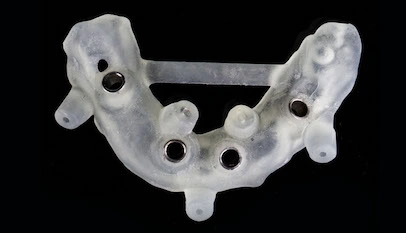
Many clinicians use a verification jig before finalizing the restoration. This is a rigid bar or splint that the patient tries in first. It confirms that the scan data accurately reflects the clinical situation. Therefore, any discrepancy is caught early, before the final prosthesis is fabricated.
Dentek Digital supports this protocol fully. We work closely with practices in Tempe, Gilbert, and across the Phoenix metro to develop clear communication workflows. Our goal is to make each case straightforward and predictable for the clinical team.
Types of Full-Arch Restorations We Fabricate
Dentek Digital fabricates a range of full-arch restorations on multi-unit abutments. Each option serves different clinical and patient needs. Understanding the differences helps practices recommend the right solution with confidence.
- Screw-Retained Zirconia Bridges: A popular choice for fully edentulous patients. These restorations are strong, esthetic, and easy to retrieve if needed.
- Metal-Fused or Titanium Frameworks: Ideal for high-load cases or patients with parafunctional habits. The metal core provides additional structural support.
- PMMA Provisionals: Used during the healing phase or for esthetic and occlusal evaluation before the final restoration is delivered.
- Hybrid Prosthetics: Combine an acrylic or composite tooth component with a titanium or zirconia bar. These offer a balance of esthetics, repairability, and durability.
Our team discusses each case individually with the clinician. Because every patient is different, there is no one-size-fits-all answer. We help practices select the right material and design for each unique situation.
Supporting Scottsdale Dental Practices with Fast, Reliable Turnaround
Scottsdale is one of the most competitive dental markets in Arizona. Patients there expect high-end results and efficient service. Therefore, dental practices need a lab partner that meets those expectations consistently.
Dentek Digital has built our reputation on precision and reliability. We serve practices throughout the Greater Phoenix area, including Scottsdale, Mesa, Chandler, and Tempe. Our digital workflow allows us to move cases efficiently without sacrificing quality.
Communication Is Part of the Process
We treat every case as a collaboration. When a new multi-unit abutment case comes in, our technicians review the scan data, case notes, and prescription form carefully. If anything is unclear, we reach out before fabrication begins. This proactive approach prevents delays and avoids costly remakes.
Additionally, we offer guidance on scan body selection, impression protocol, and case documentation. Practices that are newer to digital implant workflows benefit from our hands-on support. We want every case to go smoothly from start to finish.
Frequently Asked Questions
What scan bodies do you work with for multi-unit cases?
Dentek Digital works with a wide range of scan body systems. We support major implant platforms and their corresponding multi-unit abutment lines. When submitting a case, include the implant system and abutment specifications in your prescription. Our team will confirm compatibility before proceeding.
Can you fabricate both the abutments and the prosthesis?
Yes. In many cases, we fabricate custom milled titanium or zirconia abutments alongside the full-arch prosthesis. However, some cases use stock multi-unit abutments provided by the implant manufacturer. We work with both approaches. The best solution depends on the specific case and clinical goals.
How do I submit a digital implant case to Dentek Digital?
Submitting a case is straightforward. You can send digital files directly through our online case submission portal. Include your scan files, prescription form, and any relevant clinical photos or notes. Our team reviews each submission promptly and follows up if additional information is needed.
What materials do you recommend for full-arch restorations on multi-unit abutments?
Material selection depends on several factors. These include the patient’s bite force, esthetic goals, and budget. Monolithic zirconia is a common and reliable choice for many full-arch cases. For patients with heavy parafunctional habits, a titanium-reinforced option may offer greater long-term durability. We are happy to consult on material selection for any case.
Do you offer temporary restorations for immediate load cases?
Yes. We fabricate PMMA provisionals for immediate load protocols. These are designed to be placed the same day as surgery. They allow the patient to leave with a functional, esthetic restoration while the implants integrate. Accuracy and fast turnaround are both essential for these cases, and our digital workflow is well suited to deliver both.
Partner with Dentek Digital for Your Scottsdale Implant Cases
Multi-unit abutment restorations require precision at every step. From the initial scan to the final delivery, each detail matters. Dentek Digital combines advanced CAD/CAM technology with skilled dental craftsmanship to support exceptional outcomes for your patients.
We are proud to serve dental practices in Scottsdale, Phoenix, Mesa, Chandler, Tempe, Gilbert, and communities throughout the Greater Phoenix area. Whether you are placing your first full-arch case or managing a high-volume implant practice, we are here to support you.
Ready to get started? Contact Dentek Digital today to send us a case or request a consultation with our team. We look forward to partnering with your practice.