
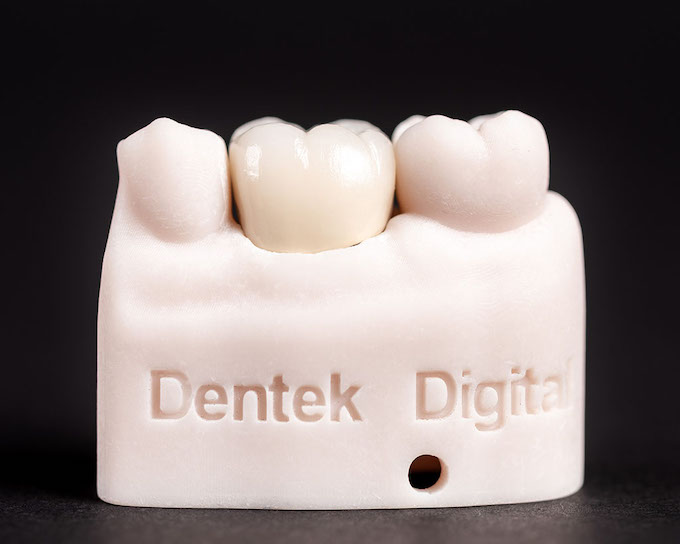
When your patients need implant-supported restorations that span multiple teeth, precision matters at every stage. Multi-unit abutment restorations are one of the most technically demanding solutions in modern implant dentistry. They require exact fit, reliable materials, and a lab partner who understands digital workflows from start to finish.
At Dentek Digital, we fabricate multi-unit abutment restorations using advanced CAD/CAM technology. Our digital dental lab in Phoenix, Arizona, serves dentists across the country. We combine skilled craftsmanship with cutting-edge digital tools to deliver restorations that fit accurately and perform reliably.
Whether you are restoring a full arch or a multi-unit implant bridge, this guide covers what you need to know. We will walk you through the process, the benefits, and how to get started with a trusted digital lab partner.
What Are Multi-Unit Abutments?
Multi-unit abutments are specialized components used in implant dentistry. They connect to implant fixtures in the bone and provide a foundation for prosthetic restorations. Unlike single-tooth abutments, these components support bridges or full-arch restorations across multiple implant sites.
Additionally, multi-unit abutments allow for angled corrections. This is especially useful when implants are placed at varying angles due to bone availability. The abutment corrects the angulation so the final restoration sits properly.
How Multi-Unit Abutments Differ from Standard Abutments
Standard abutments support one crown on one implant. Multi-unit abutments, however, are designed to work together as a system. They create a shared platform for a prosthetic superstructure.
Furthermore, multi-unit systems are commonly used in All-on-4 and All-on-X protocols. These are full-arch solutions that rely on just four to six implants to support an entire arch of teeth. The abutments in these cases must work in precise coordination.
Common Restoration Types Built on Multi-Unit Abutments
- Implant-supported full-arch bridges — zirconia or hybrid materials spanning a complete arch
- Multi-unit implant bridges — fixed restorations covering three or more missing teeth
- Screw-retained prostheses — restorations that attach directly to multi-unit abutments without cement
- Bar-retained overdentures — removable prostheses that clip onto a bar connecting multiple abutments
Each of these options requires a high level of accuracy. Therefore, working with a digital lab that uses precise CAD/CAM fabrication is essential.
The CAD/CAM Advantage in Multi-Unit Restoration Fabrication
Traditional dental labs rely on manual techniques to fabricate abutments and frameworks. These methods introduce more room for human error. CAD/CAM technology, on the other hand, uses digital design and computer-controlled milling or printing to produce components with exceptional precision.
At Dentek Digital, we were among the earliest adopters of the digital CAD/CAM workflow in the country. This experience gives us a deep understanding of how to fabricate multi-unit restorations that fit well and last.
How the Digital Workflow Works
First, your office captures a digital scan of the patient’s implants using a scan body. Next, that scan file is sent to our lab digitally. Then, our technicians design the abutments and framework using specialized dental CAD software.
After design approval, our milling machines fabricate the components from high-quality materials. Finally, our team inspects each case before it ships. This streamlined process reduces turnaround time and improves overall accuracy.
Materials We Use for Multi-Unit Restorations
Material selection matters greatly for long-term performance. We offer several options depending on the clinical case and patient needs.
- Zirconia — strong, tooth-colored, and highly biocompatible
- Titanium — ideal for abutment components requiring maximum strength
- PMMA (acrylic) — often used for provisional restorations during healing phases
- Hybrid ceramic — combines resin and ceramic for aesthetic full-arch cases
Moreover, our team will recommend the best material based on the specific case requirements. We are always available to discuss options with your team.
Why Accuracy Is Critical in Multi-Unit Cases
A small error in a single-tooth crown is manageable. However, in a multi-unit case, small errors compound across the span of the restoration. A poorly fitting framework can cause discomfort, bone stress, and implant failure over time.
Because of this, passive fit is the gold standard in implant prosthetics. Passive fit means the restoration rests on the abutments without any tension or rocking. Achieving passive fit requires both accurate scanning and precise fabrication.
Scanning Tips for Better Outcomes
Good outcomes start at the chairside. Here are some general best practices for capturing accurate implant scans.
- Use the correct scan bodies for your specific implant system
- Ensure scan bodies are fully seated before capturing the scan
- Capture a full-arch scan with opposing arch and bite registration
- Check the scan file for voids or distortions before submitting
- Include any relevant clinical notes about angulations or concerns
Additionally, if you are transitioning from impressions to digital scanning, our team can guide you through the process. We support offices at every stage of their digital journey.
Verification Jigs and Analog Confirmation
In complex multi-unit cases, some clinicians use a verification jig or index to confirm implant position accuracy before fabricating the final restoration. This extra step can save time and prevent remakes.
Our lab can work with verification records when provided. Furthermore, we are happy to discuss protocol recommendations with your team on a case-by-case basis.
Serving Dentists Across Phoenix and the Surrounding Region
Dentek Digital is based in Phoenix, Arizona, and proudly serves dental professionals across the region and nationwide. Our clients include implant specialists, periodontists, oral surgeons, and general dentists who place implants.
In communities like Scottsdale, Tempe, Chandler, and Mesa, dental practices are adopting digital workflows at a rapid pace. We work closely with offices across these areas to support their implant cases with fast, accurate lab work.
In addition, our national reach means that dentists far beyond Arizona can benefit from our expertise. We make it simple to submit cases digitally and receive restorations with reliable turnaround times.
Our Implant Services at a Glance
Beyond multi-unit abutment restorations, we offer a full range of implant services. These include custom abutments, implant crowns, full-arch bridges, and more. We also provide advanced services such as digital implant planning and TattooTH personalized tooth staining technology.
Moreover, our team stays current with evolving implant systems and materials. This means we can support a wide range of implant brands and workflows used by dentists today.
How to Submit a Multi-Unit Abutment Case to Dentek Digital
Submitting a case to our lab is straightforward. We have designed our process to be efficient and clear for busy dental practices.
- Capture your digital scan — use your intraoral scanner with the appropriate scan bodies
- Complete the case form — include implant system details, material preferences, and clinical notes
- Submit your files digitally — upload through our secure case submission portal
- Review and approve the design — our team will communicate with you during design if needed
- Receive your restoration — we ship finished cases carefully packaged and ready to seat
Our team is responsive and communicative throughout the process. You can contact Dentek Digital to submit a case or ask questions about your next multi-unit implant restoration.
Frequently Asked Questions About Multi-Unit Abutment Restorations
What implant systems does Dentek Digital support?
We work with a wide range of major implant systems. When submitting your case, include the implant brand, platform size, and connection type. Our team will confirm compatibility and proceed accordingly.
Can you fabricate restorations from analog impressions instead of digital scans?
Yes, we can work with traditional impressions and models when digital scanning is not available. However, digital scanning generally improves accuracy and reduces turnaround time. We encourage offices to explore digital workflows when possible.
How long does fabrication take for a multi-unit case?
Turnaround time varies based on the complexity of the case and the materials selected. Generally, digital cases move faster than analog ones. Contact our team for current turnaround estimates for your specific restoration type.
Do you offer provisional restorations for multi-unit implant cases?
Yes. We can fabricate PMMA provisional restorations for use during the healing and integration phase. These help protect the implants and allow the patient to function while the final restoration is being planned.
What if a case needs adjustment after delivery?
We stand behind our work. If a case does not fit as expected, contact us right away. We will work with your team to identify the issue and find a resolution. Passive fit and patient satisfaction are always our goals.
Partner with Dentek Digital for Your Implant Cases
Multi-unit abutment restorations require a lab partner who understands the complexity of implant prosthetics. At Dentek Digital, we bring together advanced CAD/CAM technology, experienced technicians, and a commitment to quality that dental practices trust.
We serve dentists across Phoenix, Scottsdale, Tempe, Chandler, Mesa, and practices nationwide. Our digital workflow is designed to make your cases easier, faster, and more predictable.
If you are ready to elevate your implant restorations, explore your options with our team today. Send us a case and experience the Dentek Digital difference firsthand.