
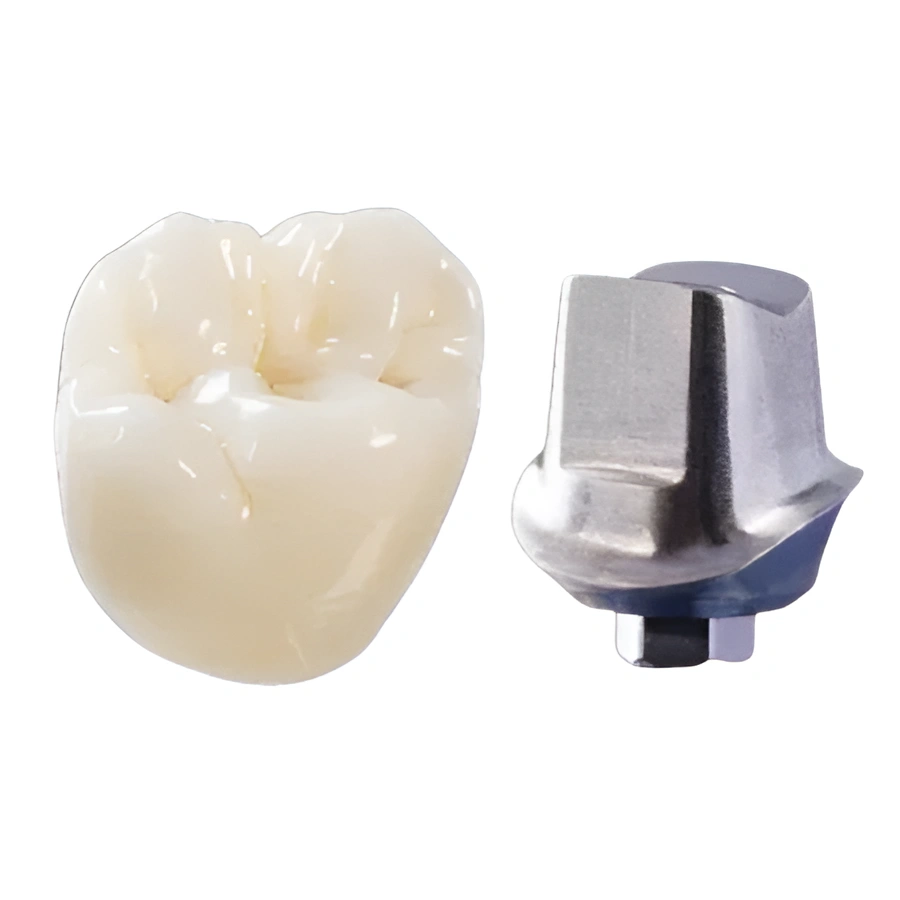
When a patient needs a full-arch or multi-implant restoration, precision matters at every step. Multi unit abutment restorations give dentists a reliable, scalable solution for complex implant cases. They allow a stable, angled connection between implants and the final prosthesis — even when implants aren’t perfectly parallel.
However, achieving a great result depends heavily on the quality of the lab you partner with. At Dentek Digital, we fabricate high-quality implant restorations using advanced CAD/CAM technology from our lab in Phoenix, Arizona. We work with dentists across the country, including practices in Saratoga, CA.
In this post, we’ll walk you through what multi-unit abutment restorations are, why they matter, and how a skilled digital lab can make your implant cases easier and more predictable.
What Are Multi-Unit Abutments?
Multi-unit abutments (MUAs) are small titanium connectors that attach to implant fixtures. They create a common platform for a multi-tooth or full-arch prosthesis. Because of this, they are essential in cases like All-on-4 or All-on-6 implant restorations.
MUAs come in angled versions — typically 17° or 30° — to compensate for tilted implant placement. This flexibility is one of their biggest clinical advantages. As a result, surgeons can place implants at angles that maximize bone support without compromising the final restoration’s emergence profile.
How Multi-Unit Abutments Differ from Standard Abutments
Standard abutments support single crowns or smaller restorations. Multi-unit abutments, on the other hand, are designed to support a full-arch or multi-unit bridge. They use a smaller-diameter connection at the top, which is sometimes called a “mini” or “narrow” platform.
This design keeps the gingival profile clean and manageable. Furthermore, it allows the lab to design a prosthesis that fits securely and looks natural. The prosthesis typically screws or snaps onto the MUAs rather than onto the implants directly.
Common Clinical Applications
- All-on-4 and All-on-6 full-arch bridges
- Implant-supported hybrid dentures
- Multi-unit implant bridges (3–6+ units)
- Immediate load protocols
- Cases with angled or tilted implants
Additionally, MUAs are compatible with most major implant systems, including Straumann, Nobel Biocare, Zimmer Biomet, and others. Always confirm compatibility with your implant system before submitting a case.
Why the Lab You Choose Matters
Multi-unit abutment restorations are among the most technically demanding work in implant dentistry. Therefore, the lab you choose plays a major role in your clinical success. A well-designed prosthesis fits passively, distributes occlusal load evenly, and looks esthetic.
At Dentek Digital, we were one of the earliest adopters of digital CAD/CAM workflows in the country. We combine precision digital design with skilled craftsmanship. Moreover, we fabricate restorations to the highest quality standards available today.
Our Digital Workflow for MUA Cases
Our process starts with a digital scan or physical impression. We then design the prosthesis using advanced CAD software. Finally, we mill or print it using state-of-the-art equipment in our Phoenix lab.
This workflow reduces human error at every step. As a result, you get a more accurate, better-fitting restoration. We also verify the design against your implant system’s specifications before we begin fabrication.
Materials We Use
We fabricate MUA restorations in a variety of high-performance materials, including:
- Zirconia — strong, esthetic, and highly biocompatible
- PMMA (acrylic) — ideal for temps and immediate-load prostheses
- Titanium frameworks — for hybrid or metal-reinforced cases
- PFM (porcelain-fused-to-metal) — a time-tested, durable option
In addition, we can discuss the best material for your specific case based on occlusal load, esthetics, and patient needs. We’re happy to consult before you submit.
Serving Dentists in Saratoga, CA and Beyond
Dentek Digital is based in Phoenix, Arizona, but we serve dental practices across the United States. We regularly partner with dentists in California, including those in the Saratoga area. Our fast turnaround and reliable results make us a preferred partner for complex implant cases.
We understand that your patients are counting on you. Therefore, we treat every case with the attention it deserves. Whether you’re in Saratoga or shipping from across the country, our process is designed to be seamless and stress-free.
Why Dentists Partner with Dentek Digital
Dentists across the Greater Phoenix area — from Scottsdale to Chandler, Tempe to Gilbert — trust Dentek Digital for their most demanding cases. Here’s why:
- National leader in digital dentistry — recognized expertise in CAD/CAM workflows
- Early adopter of digital technology — we’ve been refining our process for years
- Skilled lab technicians — craftsmanship paired with precision technology
- Broad material and system compatibility — we work with most major implant systems
- Clear communication — we’ll work with you through every stage of a complex case
Furthermore, we offer a full range of dental lab services beyond implants, including fixed restorations, removables, splints, and nightguards.
Tips for a Successful MUA Case Submission
Submitting a multi-unit abutment case requires careful documentation. First, accurate records help us design a prosthesis that fits and functions properly. Here are some best practices to follow:
Before You Submit
- Confirm your implant system and MUA brand. Include the exact model and angle if possible.
- Take a verification jig or index. This confirms implant position accuracy before fabrication.
- Include a bite registration. Accurate occlusal records are critical for full-arch cases.
- Photograph the case. Photos of the smile line, lip support, and arch form help us match esthetics.
- Note any special instructions. Midline, shade preferences, phonetics — include everything relevant.
Choosing the Right Prosthesis Type
There are several prosthesis designs that work with MUAs. The right choice depends on your patient’s anatomy, bone volume, and goals. For example, a screw-retained zirconia bridge is a popular choice for patients who want a fixed, low-maintenance solution.
Meanwhile, a hybrid denture with a titanium framework and acrylic teeth may be better suited for patients with significant tissue loss. On the other hand, if the patient needs an immediate load solution, a PMMA provisional bridge can be placed right after surgery.
When in doubt, reach out before you submit. We’re always glad to help you plan the best approach for your patient.
Frequently Asked Questions About Multi-Unit Abutment Restorations
What implant systems are compatible with multi-unit abutments?
Most major systems support MUAs, including Straumann, Nobel Biocare, Zimmer Biomet, BioHorizons, and Osstem. However, compatibility varies by platform and diameter. Always confirm the exact system and provide that information when you submit your case.
Can I send a digital scan instead of a physical impression?
Yes. We accept digital scans from most intraoral scanner brands. Additionally, we accept STL files from third-party scan bodies. If you’re unsure whether your scan format is compatible, contact us before submitting and we’ll confirm quickly.
How long does it take to fabricate an MUA restoration?
Turnaround time depends on the complexity of the case and the material selected. Generally, full-arch zirconia cases take longer than PMMA provisionals. Contact us directly for current turnaround estimates. We always aim to meet your clinical timeline.
Do you offer immediate load or same-day solutions?
We fabricate PMMA provisional bridges for immediate load protocols. These are designed to be placed the same day as surgery and later replaced with a final zirconia or other permanent restoration. Planning ahead is key for these cases.
What if my implants aren’t parallel?
That’s exactly what multi-unit abutments are designed to address. Angled MUAs — typically available in 17° and 30° options — compensate for implant divergence. As a result, you can achieve a passively fitting prosthesis even when implants are placed at strategic angles for bone support.
Partner with a Lab That Understands Your Cases
Multi-unit abutment restorations require a lab that understands both the clinical side and the technical side of implant dentistry. At Dentek Digital, we bring both to every case we fabricate. Our Phoenix lab is equipped with the latest CAD/CAM technology, and our team has deep experience with complex implant cases.
We serve dentists across Arizona — including Mesa, Tempe, Chandler, and Scottsdale — as well as practices throughout the country, including Saratoga, CA. No matter where you’re located, we make it simple to partner with us and get exceptional results for your patients.
If you’re ready to take your implant cases to the next level, contact Dentek Digital today to send us a case or request a consultation. Our team is ready to support your next multi-unit abutment restoration from start to finish.