
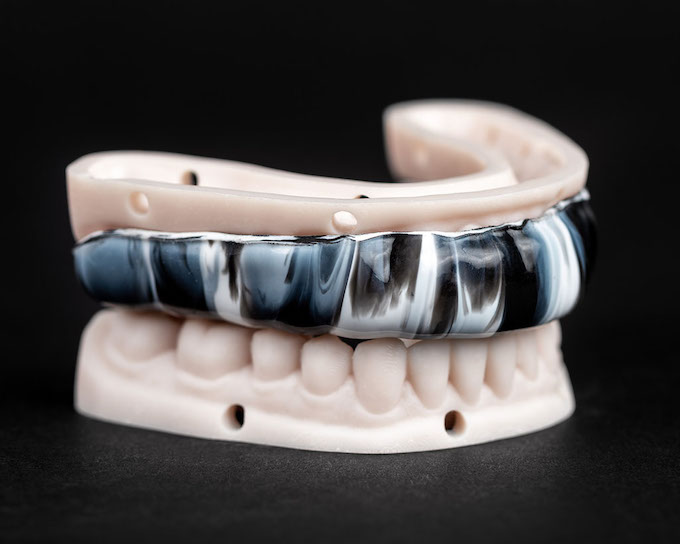
When a patient needs multiple implants restored, precision matters more than ever. Multi unit abutment restorations allow dentists to rehabilitate entire arches with confidence and consistency. They are one of the most technically demanding restorations in implant dentistry — and one of the most rewarding.
At Dentek Digital, we fabricate high-quality multi-unit abutment restorations using advanced CAD/CAM technology. Our digital lab is based in Phoenix, Arizona, and we partner with dental professionals across the country. We combine skilled craftsmanship with cutting-edge digital workflows to deliver restorations that fit, function, and last.
Whether you are treating a full-arch case or restoring several adjacent implants, understanding the multi-unit abutment process helps you deliver better outcomes. This post walks you through what you need to know.
What Are Multi-Unit Abutments?
A multi-unit abutment is a connector that attaches to an implant fixture and supports a multi-tooth or full-arch prosthesis. Unlike single-unit abutments, these components are designed to work together across multiple implants. They allow for angled corrections and create a shared platform for the restoration above.
Multi-unit abutments are commonly used in implant-supported bridges, full-arch fixed restorations, and All-on-X cases. They come in various angulations — typically ranging from straight to angled — to compensate for implant placement that is not perfectly parallel. This flexibility is one of their greatest advantages.
How They Differ from Single-Unit Abutments
Single-unit abutments support one crown. Multi-unit abutments support a connected prosthesis spanning two or more implants. The design requirements are different. The tolerances are tighter. Furthermore, the lab workflow demands higher precision to ensure passive fit across the entire restoration.
Because of this, digital fabrication is the ideal approach. CAD/CAM technology allows labs like Dentek Digital to design and mill these restorations with accuracy that manual techniques simply cannot match consistently.
The CAD/CAM Advantage in Multi-Unit Cases
Digital dentistry has transformed how multi-unit abutment restorations are planned, designed, and fabricated. Traditional methods relied heavily on analog impressions and manual adjustments. Today, digital workflows reduce errors and improve outcomes at every step.
At Dentek Digital, we were among the earliest adopters of digital CAD/CAM workflows in the country. Our Phoenix lab uses this technology every day to fabricate restorations for dentists across Arizona and beyond — including communities like Scottsdale, Chandler, Gilbert, and Mesa.
Digital Scanning and Case Submission
A precise digital scan is the foundation of every successful multi-unit case. Most modern intraoral scanners capture the implant positions and soft tissue accurately. Additionally, scan body positioning is critical for multi-unit cases — proper placement ensures the design software can correctly interpret implant angulation.
When you submit a case to our lab, our technicians review the scan data carefully. We flag any concerns before fabrication begins. This proactive approach saves time and helps avoid remakes.
Milling and Material Selection
Multi-unit abutment frameworks can be milled from several materials, including titanium, zirconia, and cobalt-chrome. Therefore, material selection depends on the case requirements, the patient’s bite, and the type of prosthesis planned. Our team helps you choose the right material for each situation.
Titanium is often preferred for the abutment components due to its biocompatibility and strength. Meanwhile, zirconia is a popular choice for the prosthetic superstructure when aesthetics are a priority. We fabricate both with the same commitment to precision.
Planning a Multi-Unit Case: Key Considerations
Successful multi-unit abutment restorations start with careful planning. The implant positions, angulations, and vertical space all affect the final result. Dentists who plan these cases digitally from the start tend to have smoother workflows and better outcomes.
Dentek Digital also offers digital implant planning services. This allows you to visualize the restoration before surgery and place implants in positions that support the planned prosthesis. For complex cases, this step can make a significant difference.
Evaluating Implant Angulation
Multi-unit abutments are designed to correct angulation discrepancies between implants. However, even with angled abutments available, there are limits to how much angulation can be compensated. For example, severely off-axis implants may require additional planning or a modified prosthetic design.
Our team reviews each case individually. We communicate clearly with referring dentists to ensure the planned restoration is achievable with the existing implant positions.
Occlusal Space and Vertical Dimension
Adequate vertical space is essential for multi-unit restorations. The abutment, framework, and prosthetic materials all require room. In addition, the occlusal design must distribute bite forces evenly across all implants. An experienced lab technician evaluates this during the design phase.
At Dentek Digital, our technicians flag cases where vertical space may be insufficient before fabrication begins. This prevents costly surprises at the time of delivery.
Working with a Digital Lab on Complex Implant Cases
Choosing the right lab partner for multi-unit abutment cases is one of the most important decisions a dentist can make. Not every lab has the equipment, training, or experience to handle these cases well. Moreover, the consequences of a poor fit in a multi-unit case are significant — both for the patient and for your practice.
Dentek Digital specializes in complex digital restorations. We serve dental practices across the Greater Phoenix area, including Tempe, Mesa, Scottsdale, and Chandler, as well as dentists across the country. Our team has deep experience with full-arch implant cases, angled abutment designs, and precision milling.
Communication Is Part of the Service
A great lab is also a great communicator. We review each case before we begin. If we have questions about angulation, material selection, or the prosthetic plan, we reach out before fabrication — not after. This collaborative approach saves time and improves the final result.
We also provide detailed instructions for seating and torquing multi-unit components when requested. Our goal is to make delivery day as smooth as possible for you and your patient.
Turnaround and Reliability
Dentists need reliable turnaround times, especially for patients who are in a provisional restoration. Our digital workflow allows us to fabricate restorations efficiently without cutting corners. Additionally, because we work digitally, we can store case files and reproduce components accurately if needed down the road.
Predictability is part of what makes a lab a true partner — and that is what we aim to be for every dentist who trusts us with their cases.
Frequently Asked Questions About Multi-Unit Abutment Restorations
What types of prostheses can be supported by multi-unit abutments?
Multi-unit abutments can support implant-retained bridges, full-arch fixed prostheses, and hybrid restorations. They are commonly used in All-on-4 and All-on-X cases. The specific prosthesis design depends on the number of implants, their positions, and the patient’s functional needs.
Can I send a digital scan instead of a physical impression?
Yes. Dentek Digital accepts digital scans from all major intraoral scanner platforms. In fact, digital submissions are preferred for multi-unit cases because they provide more accurate data. We also accept physical impressions when necessary and can work with your preferred workflow.
What angulations are available for multi-unit abutments?
Multi-unit abutments are typically available in straight, 17-degree, and 30-degree angulations, though this varies by implant system. Our team helps you select the appropriate angulation based on your implant positions and the prosthetic plan.
How do I know if there is enough vertical space for a multi-unit restoration?
Vertical space assessment is part of our case review process. We evaluate the scan data and flag cases where space may be a concern. In some situations, we may recommend design modifications to work within the available space.
Does Dentek Digital work with dentists outside of the Phoenix area?
Yes. While we are based in Phoenix and serve communities throughout the Greater Phoenix area — including Gilbert, Scottsdale, Mesa, and Chandler — we also partner with dental professionals across the country. Our digital submission process makes it easy to work with us regardless of your location.
Start Your Next Multi-Unit Case with Dentek Digital
Multi-unit abutment restorations are among the most complex and impactful procedures in modern implant dentistry. They require careful planning, precise fabrication, and a lab partner who understands the details. Dentek Digital has the technology, experience, and communication standards to support your most demanding cases.
We are proud to be recognized as a national leader in digital dentistry. Our Phoenix lab brings together advanced CAD/CAM technology and skilled craftsmanship to deliver restorations your patients can rely on.
Ready to get started? Contact Dentek Digital today to discuss your next multi-unit abutment case. Our team is ready to review your case details and help you find the right solution.