Every dentist wants to deliver dentures that fit well, look natural, and last. However, achieving that consistently requires more than skilled hands — it demands a disciplined, repeatable denture quality control process at every stage of fabrication. When a lab cuts corners, patients feel it.
At Dentek Digital in Phoenix, Arizona, quality control is not a final checkbox. It is woven into every step of the digital workflow. From the initial scan to the finished prosthetic, each case moves through structured checkpoints designed to catch errors before they reach your patient’s chair.
This post walks through what modern lab quality control looks like for dentures, why it matters for your practice, and what to look for when choosing a dental lab partner in the Greater Phoenix area.
Why Denture Quality Control Matters More Than Ever
Dentures are complex prosthetics. They must balance esthetics, function, and tissue support — all at once. Furthermore, a single error in any of these areas can lead to remakes, patient discomfort, and lost chair time for your practice.
Traditional lab workflows relied heavily on individual technician skill. That meant quality could vary from case to case. Today, digital workflows give labs powerful tools to reduce that variability. However, technology alone does not guarantee quality. Structured processes and trained eyes are still essential.
The Cost of Poor Lab Quality
Remakes are expensive. They cost your practice time, materials, and patient trust. Additionally, they delay treatment and can damage the dentist-patient relationship.
For practices across Mesa, Tempe, Chandler, and Scottsdale, turnaround time is critical. A denture that comes back wrong — even once — disrupts your entire schedule. Therefore, partnering with a lab that takes quality control seriously protects both your patients and your practice.
How the Digital Workflow Raises the Quality Standard
CAD/CAM dentistry has transformed how dental labs fabricate removable prosthetics. Digital design tools allow technicians to plan every dimension of a denture with precision. Measurements are stored, reviewed, and approved digitally before any milling or printing begins.
This creates a clear, traceable record for every case. As a result, if a question arises later, the lab can pull up the exact design file and review what was approved. That level of accountability is simply not possible with traditional wax-and-pour methods.
Digital Scanning and Model Accuracy
Quality control starts before the denture is ever designed. First, the digital impression or scan must be accurate. Any distortion at this stage will carry through to the final prosthetic.
At Dentek Digital, incoming cases are evaluated for scan quality before design begins. If a scan does not meet our standards, we reach out to the referring dentist right away. This early checkpoint prevents costly errors downstream.
CAD Design Review
Next, every digital denture design goes through an internal review before fabrication. Technicians check occlusal plane orientation, tooth position, flange contours, and midline alignment. Moreover, they verify that the design matches the dentist’s prescription and any supporting records provided.
This design review step is one of the most valuable parts of our quality control process. It is far easier to correct a design file than to remill a finished denture.
Key Quality Checkpoints in Denture Fabrication
A strong quality control program does not rely on one big inspection at the end. Instead, it builds checkpoints throughout the fabrication process. Here is how that looks in a modern digital dental lab:
- Incoming case review: Verify scan quality, prescription completeness, and case documentation before work begins.
- Design approval: Review the CAD file for accuracy against the prescription and clinical records.
- Material verification: Confirm the correct denture material and shade are selected before fabrication starts.
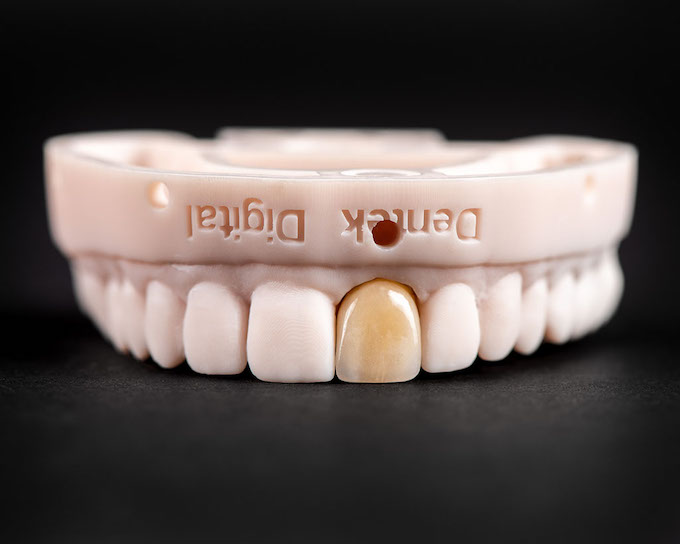
- Post-mill or post-print inspection: Check the milled or printed base and teeth for surface quality, dimensional accuracy, and any defects.
- Finishing and polish review: Evaluate surface finish, tissue surface detail, and overall esthetics before the case ships.
- Final pre-ship inspection: Confirm the case matches the original prescription and is packaged correctly for delivery.
Each checkpoint creates an opportunity to catch and correct an issue. Together, they form a system that dramatically reduces the chance of a remake.
Material Quality and Traceability
The materials used in denture fabrication directly affect the final result. High-quality milling blanks and resins produce better esthetics and durability. Additionally, using consistent, trusted materials makes it easier to predict outcomes across multiple cases.
Dentek Digital sources materials from reputable manufacturers and maintains records of the materials used in each case. This traceability supports quality control and gives dentists confidence in what they are delivering to patients.
The Role of the Dental Technician in Quality Control
Technology sets the foundation, but skilled technicians make quality control work. Even in a fully digital lab, experienced eyes are irreplaceable. A technician who understands denture biomechanics can spot a subtle problem that software might miss.
At Dentek Digital, our technicians are trained to evaluate each case critically — not just to complete it quickly. Furthermore, they are empowered to flag concerns and communicate directly with the referring dentist when something needs clarification.
Communication Between the Lab and the Dentist
Quality control does not stop at the lab bench. Clear communication between the lab and the dental practice is just as important. When records are complete and expectations are aligned from the start, the entire process runs more smoothly.
We encourage dentists in Gilbert, Scottsdale, Mesa, and across the Greater Phoenix area to include detailed prescriptions, bite records, and any relevant patient notes with every case. The more information we have, the better we can serve your patients.
If you are ready to experience a more reliable lab partnership, contact Dentek Digital and let us show you what a quality-focused digital workflow looks like.
Digital Dentures vs. Traditional Dentures: A Quality Perspective
Traditional denture fabrication involves multiple manual steps. Each step introduces the possibility of human error. On the other hand, digital fabrication reduces many of those manual variables through precise, computer-controlled manufacturing.
Digital dentures also offer a significant advantage in case archiving. Because the design file is stored digitally, a replacement can be fabricated quickly and accurately if a denture is lost or damaged. This is a meaningful benefit for patients and practices alike.
Consistency Across Cases
One of the greatest advantages of a digital workflow is consistency. When a lab uses standardized digital processes, results are more predictable from case to case. Therefore, dentists can set accurate expectations with their patients — and meet them reliably.
This consistency is especially valuable for practices with high denture volume. In markets like Phoenix and the surrounding East Valley communities, practices see a wide range of patients with varying prosthetic needs. A consistent, quality-controlled lab workflow supports better outcomes across all of them.
What to Look for in a Dental Lab’s Quality Control Process
Not all dental labs approach quality control the same way. When evaluating a lab partner, it helps to ask the right questions. Here are some things to look for:
- Clear communication protocols: Does the lab reach out proactively when something looks off?
- Digital design review: Does the lab review CAD designs before fabrication begins?
- Material documentation: Can the lab tell you what materials were used in your case?
- Remake policy: What is the lab’s process when a case does not meet expectations?
- Turnaround reliability: Does the lab consistently meet the timelines they promise?
A lab that can answer these questions confidently is one that takes quality seriously. Moreover, a lab that welcomes these questions is one that values transparency.
Frequently Asked Questions About Denture Quality Control
What is denture quality control, and why does it matter?
Denture quality control is the process of verifying accuracy and consistency at every stage of denture fabrication. It matters because errors caught early are far less costly than remakes — for the lab, the dentist, and the patient.
How does a digital workflow improve denture quality?
Digital workflows reduce manual variables, improve measurement precision, and create traceable design records. As a result, digital labs can produce more consistent results across a wider range of cases.
What should I send with my denture case to help the lab?
Send a complete prescription, accurate bite records, shade selection, and any relevant clinical notes or photos. Additionally, include information about the patient’s existing denture if applicable. The more complete your records, the smoother the process.
How do I know if my dental lab has a strong quality control process?
Ask about their fabrication checkpoints, communication protocols, and how they handle remakes. A quality-focused lab will answer these questions openly and confidently.
Can Dentek Digital work with dentists outside of Phoenix?
Yes. While we are based in Phoenix, Arizona, and proudly serve practices across the Greater Phoenix area — including Mesa, Tempe, Chandler, Gilbert, and Scottsdale — we also partner with dental professionals across the country.
Partner With a Lab That Gets Quality Control Right
Your patients deserve dentures that fit, function, and look great. That starts with choosing a lab that treats quality control as a core value — not an afterthought.
At Dentek Digital, we have built our reputation in Phoenix and across the country on precise, reliable digital restorations. Our structured quality control process, experienced technicians, and commitment to clear communication set us apart as a trusted lab partner for dental practices throughout Arizona and beyond.
Whether you are in Chandler, Scottsdale, Mesa, or the heart of Phoenix, we are here to support your practice with the highest standard of digital denture fabrication available today. Explore your options and reach out to our team — we would love to be your lab.